Digital Rupee or Dollar Diplomacy: India’s BRICS Dilemma
India's proposal to link BRICS central bank digital currencies faces geopolitical hurdles, as US opposition and trade pressures weigh on New Delhi's decision.

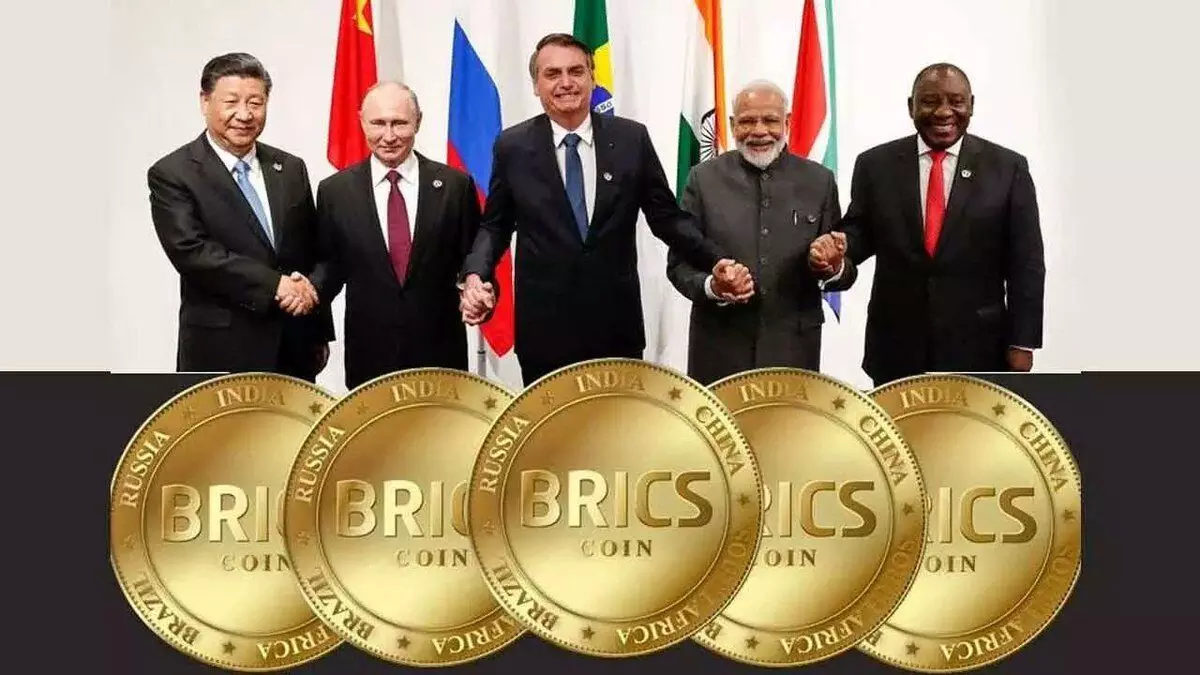
The Reserve Bank of India’s reported proposal to link the central bank digital currencies of BRICS members has opened a new front in India’s geopolitical balancing act. On the one hand lies the promise of a bold experiment in financial sovereignty, where India’s e-rupee could be interoperable with the digital yuan, digital ruble, and other emerging currencies to facilitate cross-border trade and tourism. On the other hand looms the shadow of U.S. President Donald Trump’s hostility toward any arrangement that bypasses the dollar, a hostility that could translate into tariffs, diplomatic pressure, or even a recalibration of Washington’s strategic embrace of New Delhi. The question is not merely whether the Modi government will push or overlook the RBI’s proposal, but whether India can afford to choose between economic innovation and geopolitical caution.
The idea of a BRICS-linked digital currency system is not new. Brazil once floated the notion of a common BRICS currency, only to see it collapse under the weight of divergent national interests. Yet the digital era offers a different kind of opportunity. Unlike a single currency, interoperability between central bank digital currencies allows each nation to retain sovereignty while reducing transaction costs and dollar dependence. For India, which has already rolled out the e-rupee to 7 million retail users since December 2022, the proposal is a natural extension of its domestic digital finance revolution. Offline payments, programmable transfers for subsidies, and fintech-enabled wallets have already given the e-rupee a foothold. Linking it with BRICS partners could elevate India’s currency into the global arena, a step long desired by policymakers who see the rupee as more than a domestic instrument.
But the geopolitical risks are undeniable. The United States has repeatedly warned against moves to bypass the dollar, and Trump has gone further, branding BRICS “anti-American” and threatening tariffs on its members. India’s trade talks with Washington remain delicate, with market access, technology transfers, and defense cooperation all hanging in the balance. Prime Minister Modi, advised by National Security Advisor Ajit Doval and External Affairs Minister S. Jaishankar, is reportedly reluctant to jeopardize these negotiations. The dilemma is stark: push the RBI’s proposal and risk U.S. retaliation, or shelve it and risk alienating BRICS partners who see digital currency linkages as a pathway to greater autonomy.
An analytical lens demands weighing the costs and benefits. On the benefit side, linking BRICS digital currencies could reduce transaction costs in trade and tourism, particularly with Russia and China, where dollar-based settlements have become politically fraught. Russia’s accumulation of rupee balances that it could not effectively use highlighted the inefficiencies of current arrangements. Bilateral swap mechanisms and interoperable CBDCs could solve such imbalances, allowing weekly or monthly settlements without the need for dollar intermediaries. For India, this could mean greater resilience against sanctions and a stronger bargaining position in global trade. Moreover, the symbolic value of leading such an initiative while chairing BRICS in 2026 would bolster India’s image as a shaper of global financial norms.
On the cost side, however, lies the risk of U.S. retaliation. India’s exports to the United States crossed $77 billion in 2024, making Washington one of New Delhi’s largest trading partners. Tariffs or restrictions could hurt sectors ranging from IT services to pharmaceuticals. More importantly, India’s strategic partnership with the U.S. has been a cornerstone of its Indo-Pacific strategy, counterbalancing China’s rise. Any perception that India is aligning too closely with BRICS’ anti-dollar agenda could weaken this partnership. The Modi government’s caution is therefore not merely about trade but about the broader architecture of India’s foreign policy.
The analytical story becomes sharper when one considers the global context. Central bank digital currencies are still in pilot stages across BRICS. China’s digital yuan has seen international trials, Russia is experimenting with cross-border settlements, and Brazil and South Africa are testing domestic pilots. India’s e-rupee is among the more advanced, but none of these currencies has yet achieved full-scale adoption. Linking them would require interoperable technology, governance rules, and mechanisms to settle imbalanced trade volumes. Hesitation among members to adopt platforms developed by others could delay progress. In other words, the RBI’s proposal is ambitious but fraught with technical and political hurdles.
Yet ambition itself can be a reason for debate. Should India, as chair of BRICS, seize the moment to push a digital currency linkage that could redefine global finance? Or should it prioritize its relationship with the U.S., accepting dollar dominance as the price of strategic alignment? The debate is not binary. India could, for instance, frame the proposal not as de-dollarisation but as efficiency enhancement, emphasizing that CBDCs reduce risks associated with stablecoins and unregulated private currencies. RBI Deputy Governor T. Rabi Sankar has already argued that CBDCs are safer alternatives. By positioning the initiative as a technical upgrade rather than a geopolitical challenge, India could soften U.S. opposition while still advancing its interests.
Data strengthens the analysis. India’s trade with BRICS members stood at over $162 billion in 2024, with China and Russia accounting for the bulk. Tourism flows between BRICS countries are also rising, with nearly 1.2 million Chinese tourists visiting India pre-pandemic. A digital currency linkage could make such flows smoother, reducing reliance on dollar-based payment systems. At the same time, India’s dependence on U.S. markets and technology remains critical. The U.S. is India’s largest source of FDI, with investments exceeding $60 billion. The stakes are therefore high on both sides.
The Modi government’s decision will ultimately be judged not only by economists but by strategists. If it pushes the RBI’s proposal, it signals a willingness to challenge dollar hegemony and align more closely with BRICS. If it overlooks it, it signals deference to U.S. pressure and prioritization of strategic ties. Either choice invites debate. For some, India’s leadership role in BRICS demands boldness; for others, pragmatism dictates caution. The analytical story lies in this tension, where economics, technology, and geopolitics intersect.
India’s dilemma is emblematic of a larger global shift. As digital currencies rise, the question of who controls the rails of international finance becomes more urgent. The dollar has long been the backbone, but BRICS seeks alternatives. Whether India pushes or overlooks the RBI’s proposal, the debate itself underscores the fragility of the current order. In the end, the story is not about pleasing Trump or defying him, but about whether India chooses to be a cautious participant or a bold architect of the future of money.