India-UK Free Trade Agreement: A New Era of Economic Collaboration
The India-UK FTA aims to double trade by 2030, benefiting both nations with reduced tariffs and enhanced market access.

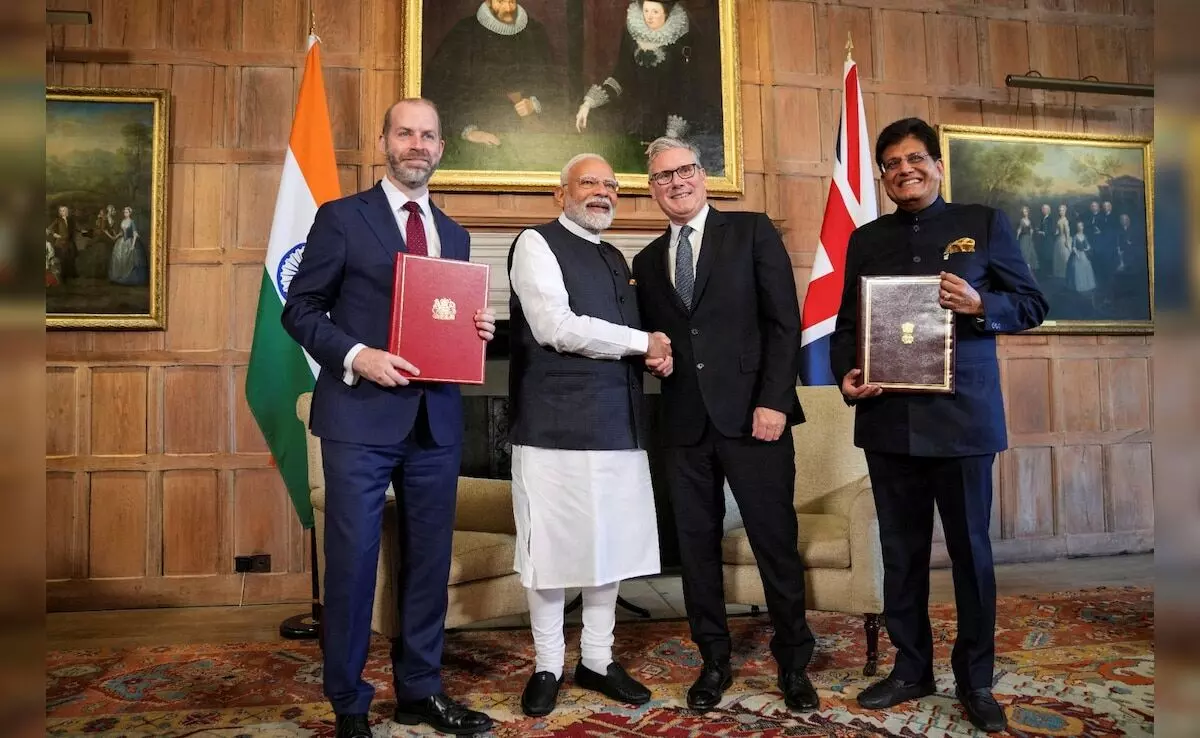
What Does the India-UK FTA Mean for Bilateral Trade? The recent signing of the Free Trade Agreement (FTA) between India and the UK marks a significant milestone in the history of economic relations between the two nations. In a ceremony attended by Indian Prime Minister Narendra Modi and UK Prime Minister Keir Starmer, the FTA aims to double bilateral trade to $120 billion by 2030. This agreement is not merely a trade pact; it represents a comprehensive framework for shared prosperity.
Boosting Indian Exports
One of the major highlights of the FTA is the facilitation of reduced tariffs on Indian exports, particularly those in labor-intensive sectors such as textiles, footwear, and leather. Indian Commerce Minister Piyush Goyal emphasized that 99% of Indian exports would gain duty-free access to the UK's markets. This is a game-changer for India's agricultural products, including specialty items like tea, mangoes, and seafood, which have a vast potential yet to be tapped in the UK market.
Opportunities for the UK
Conversely, the FTA will also benefit UK manufacturers by reducing import duties on products like whisky and automobiles. The tariffs on British whisky will see a significant drop from 150% to 75%, and further to 40% over the next decade. Such measures not only make UK goods more affordable for Indian consumers but also promote a stronger business relationship between the two nations.
A Shared Vision Against Terrorism
During the signing ceremony, PM Modi reiterated the importance of not allowing democratic freedoms to be misused in the fight against terrorism. He expressed gratitude towards the UK for its condemnation of terror attacks like the recent Pahalgam incident. The agreement includes a commitment to tackle terrorism collectively, ensuring that both countries stand united against extremist ideologies.
Future Prospects and Challenges
While the FTA opens new doors, it also requires significant legislative backing from the British Parliament before implementation. This process may take around one year. However, both nations have shown commitment and optimism that the agreement will not only enhance trade but also foster deeper economic ties. The FTA encompasses various sectors, including services, intellectual property rights, and government procurement, making it a comprehensive partnership.
A New Chapter
In conclusion, the India-UK Free Trade Agreement is poised to create numerous opportunities for both countries. From enhancing market access for Indian farmers and MSMEs to providing affordable British goods to Indian consumers, this agreement signifies a new chapter in India-UK relations. As we look ahead to 2030, the potential for growth and mutual benefit is immense, and it is an exciting time for economic collaboration between these two vibrant nations.