Unfolded by P. Sesh Kumar: The Book That Tells India’s Small Business Story Without the Spin
A detailed look at P. Sesh Kumar’s Unfolded, a hard-hitting book examining India’s MSME and startup ecosystem, policy gaps, credit crisis and institutional failures.

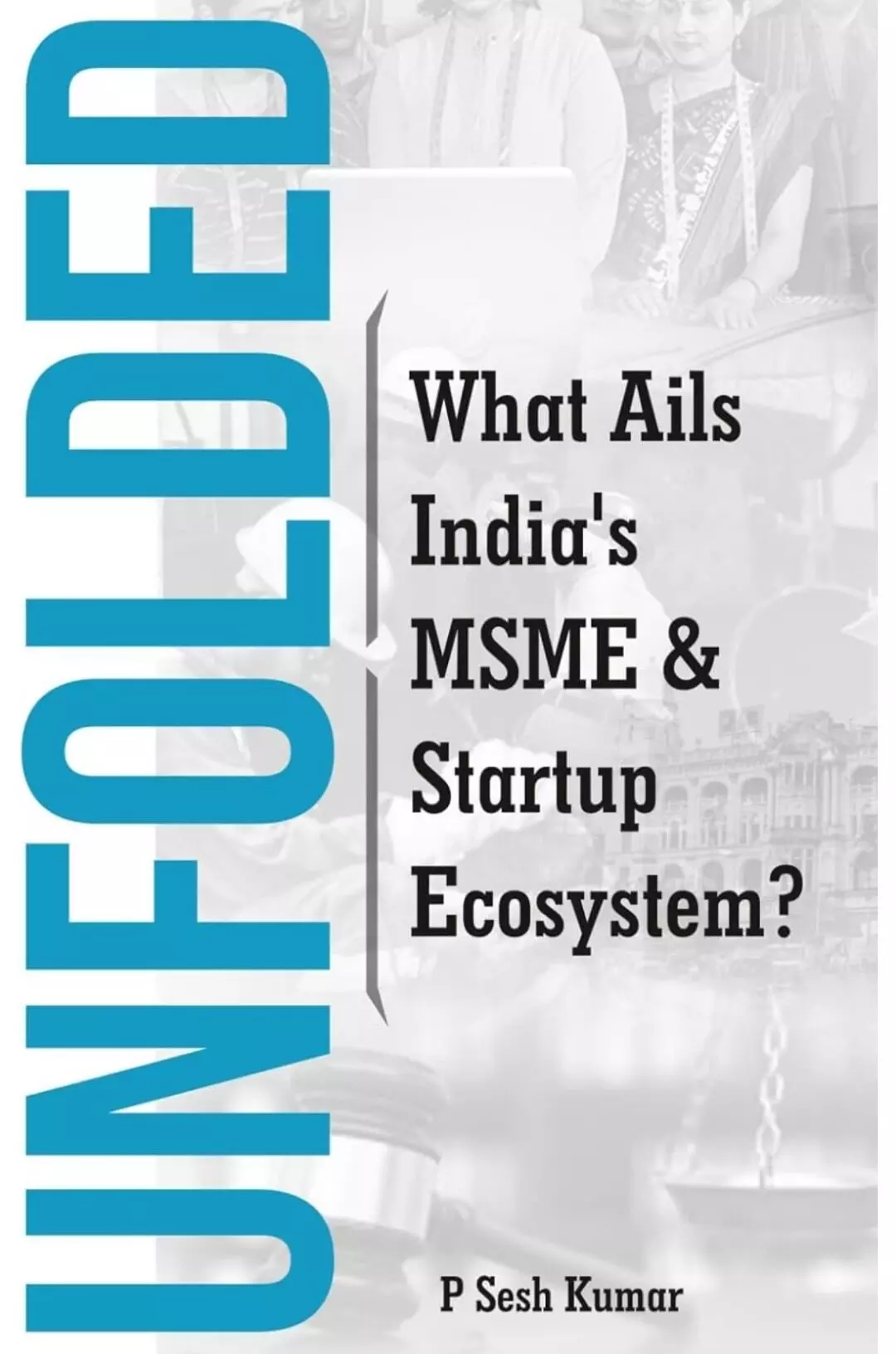
New Delhi, March 9, 2026 — Every few years, a book arrives that refuses to celebrate India the way India likes to be celebrated. P. Sesh Kumar’s Unfolded: What Ails India’s MSME and Startup Ecosystem? is that book for 2026 — and the sector it interrogates is one that India has long preferred to discuss in headlines rather than examine in hospitals.
The numbers alone should make us uncomfortable. MSMEs contribute over 30% to India’s GDP. They employ 110 million people. They are, as every Union Budget speech declares with unfailing enthusiasm, the backbone of the Indian economy. And yet, as Kumar shows across 26 meticulously researched chapters, only about 14% of these enterprises have access to formal credit. A $330–$530 billion credit gap persists. The last comprehensive MSME census was conducted in 2015. Demonetisation arrived without warning and broke thousands of small businesses. COVID-19 finished many that remained. And through all of it, the scheme announcements kept coming — MUDRA, RAMP, CHAMPIONS, Udyam — each greeted with press releases, each struggling quietly on the ground.
Kumar is not an outsider raging at the system. He served as Joint Secretary in the Ministry of MSME, helped frame the MSMED Act, revamped the KVIC Act, and pushed through the Prime Minister's Employment Generation Programme. He has sat in the room where policy is made, watched it unravel in execution, and spent the years since observing the gap between what is announced and what actually happens to a garment worker in Surat or a brassware artisan in Moradabad. That vantage point — the insider who became an auditor, then a writer — gives Unfolded: What Ails India’s MSME and Startup Ecosystem? a credibility that think-tank reports and ministry white papers cannot match.
The book’s opening section travels across continents before returning home. Kumar maps how Germany’s Mittelstand firms — medium-sized, family-owned engineering companies — access KfW’s low-interest financing and benefit from a dual vocational education system that actually produces workers employers want to hire. He shows how China’s “Little Giants” programme identifies high-tech small firms and builds targeted industrial support around them, and how Brazil’s Simples Nacional regime collapsed a nightmarish multi-layered tax structure into a single unified filing. Then he holds up the mirror to India: a country where an entrepreneur seeking support must separately approach Startup India for recognition, SIDBI for funding, the MSME Ministry for a capital subsidy, and the state government for local incentives — each with its own paperwork, its own criteria, and its own institutional indifference.
The startup section is where the book hits its most contemporary nerve. Kumar’s dissection of the Gensol–BluSmart collapse and the BYJU’S catastrophe are not schadenfreude exercises. They are careful autopsies of what happens when valuation replaces value, when investor euphoria substitutes for governance, and when a media ecosystem that profits from unicorn mythology has no incentive to ask hard questions. His point is not that Indian startups are fraudulent — it is that the ecosystem’s foundations are flawed: power cuts in Bengaluru’s tech parks force founders to budget for backup generators; India led the world in Internet shutdowns in 2022 with 84 blackouts; and India spends just 0.7% of GDP on R&D, against China’s 2.4% and Israel’s 5%. The ambition is real. The infrastructure beneath it is not always worthy of the ambition.
The most devastating chapters concern institutions: KVIC, the National Small Industries Corporation, the Coir Board, and the ministry itself. Kumar audits them with the precision of a former CAG officer and the sadness of someone who once believed in their potential. The recurring diagnosis is not malice but something more mundane and harder to fix — bureaucratic apathy, self-certified performance data, scheme duplication, and a structural inability to measure outcomes rather than inputs. One chapter, comparing DC-MSME's own reported achievements against CAG audit findings, is as close as a policy book gets to a controlled demolition.
Yet Unfolded: What Ails India’s MSME and Startup Ecosystem? is not a counsel of despair. Kumar documents the reformers who tried — often against institutional gravity — and the small interventions that worked: a simplified documentation tweak, a fair hearing for a cluster of artisans, a well-run incubator. He ends with an epilogue calling not for more schemes, but for a unified renaissance: fewer overlapping ministries, better data, honest evaluation, and the political will to treat MSMEs as partners in nation-building rather than mascots for budget speeches.
At 700-plus pages of analytical depth spread across five thematic sections, Unfolded: What Ails India’s MSME and Startup Ecosystem? demands a committed reader. But it rewards the investment fully. India’s MSME sector does not lack government attention. It lacks honest attention. This book provides it — in abundance, and without apology.