Maharashtra Launches Energy-Economy Modelling Tools for Green Growth
Explore Maharashtra’s new suite of advanced energy-economy modelling tools unveiled at Mumbai Climate Week, guiding the state’s transition to a low-carbon, sustainable economy while boosting growth.

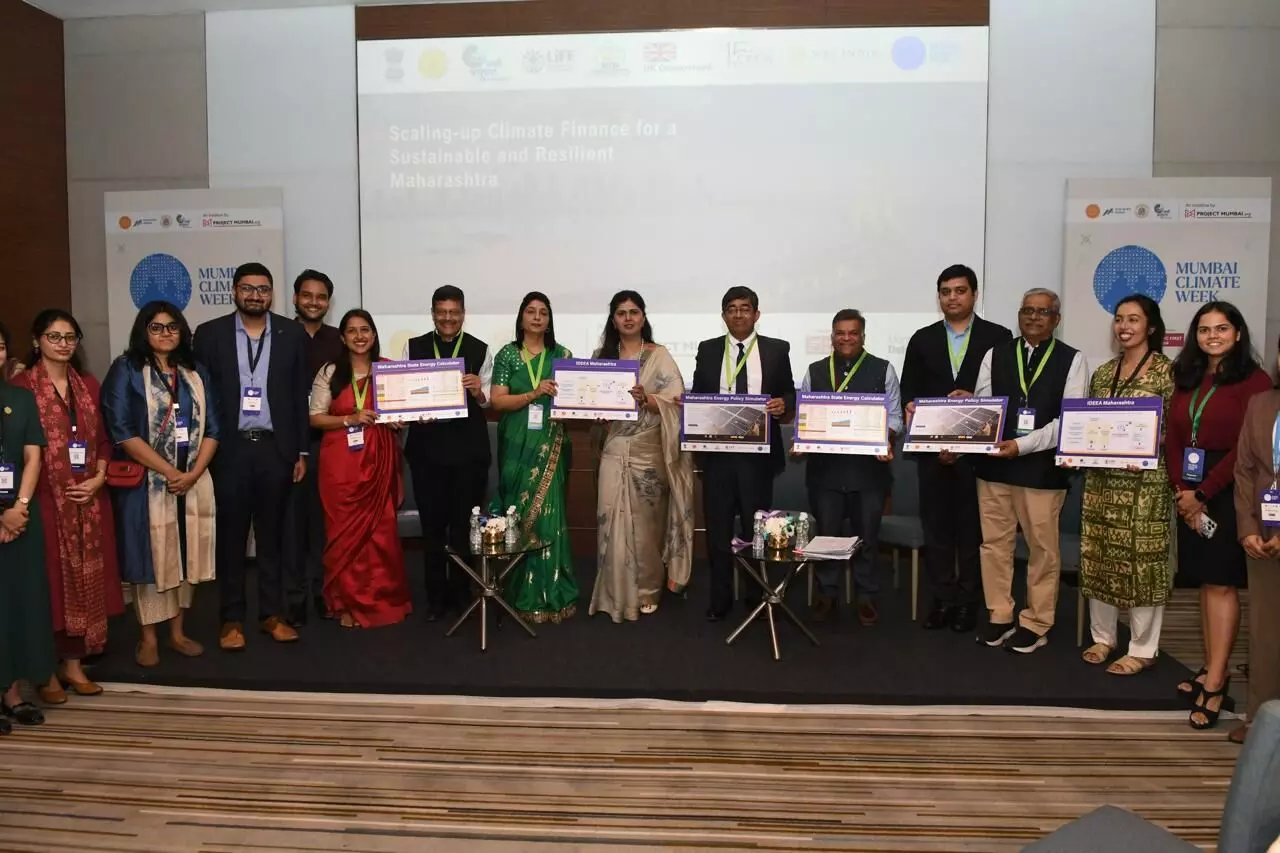
Mumbai, February 17, 2026: On the opening day of Mumbai Climate Week, Maharashtra unveiled a new suite of three state-level energy modelling tools designed to inform its transition towards a low-carbon economy while sustaining rapid economic growth.
The tools — launched by State Climate Action Cell under the Department of Environment and Climate Change, Government of Maharashtra and the Maharashtra Institution for Transformation (MITRA) — were developed with the support of WRI India to help navigate one of the state’s most pressing challenges: how to expand its economy without locking in high emissions growth.
The suite includes the Indian Zero Carbon Energy Pathways (IDEAA) model for Maharashtra, the Maharashtra State Energy Calculator and the Maharashtra Energy Policy Simulator.
At a time when Maharashtra stands at a critical crossroads, the stakes are high. The state contributes about 13% to India’s GDP, with a Gross State Domestic Product of Rs 45 lakh crore in 2024–25. Fossil fuels account for nearly 80% of its power generation mix — higher than the national average of around 75%. The new tools are designed to illustrate the trade-offs — and opportunities — embedded in the transition to a greener economy.
The IDEAA–Maharashtra model is an open-source energy system planning tool that shows how the state can meet rising electricity demand cleanly, reliably and cost-effectively. Using power demand curves and spatial maps of energy resources, the model helps answer practical questions: how much new generation capacity is needed, where can clean energy projects be located, and how grid reliability can be maintained as the state decarbonises. The goal is to support infrastructure planning that aligns with Maharashtra’s climate commitments without compromising affordability.
The Maharashtra State Energy Calculator is an Excel-based model, adapted from NITI Aayog’s India Energy Security Scenarios framework, that simulates how sector-specific climate actions could impact the state’s energy demand, fuel mix and emissions trajectory. By modelling scenarios such as higher electric vehicle adoption, more efficient appliances and cleaner industrial production, it enables policymakers to examine where emissions originate, which sectors are likely to drive future demand, and how different combinations of actions could help meet climate targets.
The third tool, the Maharashtra Energy Policy Simulator, goes further by linking energy and emissions outcomes with macroeconomic indicators. It models how policies across sectors affect economic growth, government revenues, employment, water use, air pollution and associated health outcomes. In doing so, it seeks to identify where the greatest emission reductions can be achieved, where new economic opportunities may emerge, and how climate action can reinforce long-term sustainable growth.
“These models are key to the state’s transition towards a $5tn Viksit Maharashtra economy by 2047,” said Praveen Pardeshi, CEO of MITRA and Chief Economic Adviser to the Maharashtra Chief Minister. “We should also be tracking how we are meeting our net zero targets,” he added.
Abhijit Ghorpade, Director of the State Climate Action Cell under the Department of Environment and Climate Change, said the tools were designed to translate evidence into policy. “Together these tools will help the state turn data into insights and insights into actions,” he said.
Madhav Pai, CEO of WRI India, said Maharashtra’s next phase of growth depends on informed decision-making. “These energy–economy tools support the state in assessing how climate action can go hand in hand with growth, jobs and energy security. Together, they turn data into practical insights and support Maharashtra’s green and Viksit development pathway.”