Assam’s Tea: Green Gold, Rusting Roots
Behind booming exports and glossy brochures, small growers bleed, workers remain underpaid, and politics shields a system of dependence over dignity.

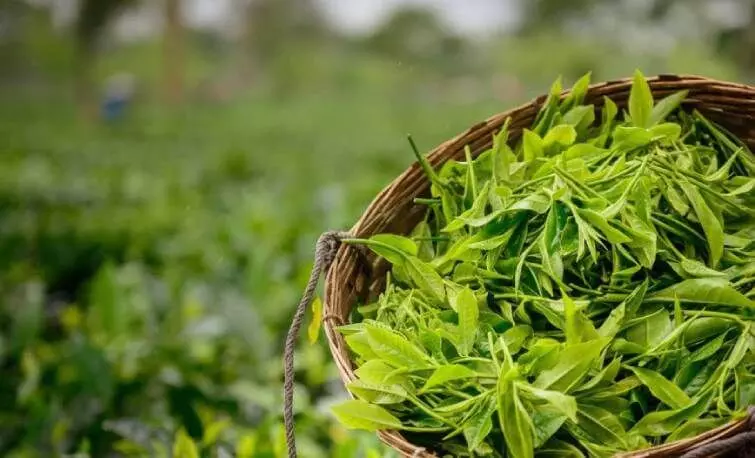
Walk through the hills and plains of Assam, and the sight of endless tea gardens appears like a portrait of prosperity. Tourists marvel at the glistening green, brochures celebrate the heritage of “Assam Tea,” and politicians raise a cup to toast the state’s pride. But behind this postcard image lies a deeper, more troubling truth — one of declining incomes, structural neglect, and lives built on invisible labour.
Assam’s tea industry, once called green gold, is now rusting under the weight of its own contradictions. While aggregate revenues rise and exports fetch higher prices, those who grow the leaf and pluck it with calloused hands remain trapped in poverty. This is not a story of market failure — it is a crisis engineered by the political economy of tea itself.
Small Growers: From Hope to Hardship
In Upper Assam, small tea growers — many of them first-generation entrepreneurs — now account for nearly half the state’s tea production. They were once seen as the new engine of rural prosperity. But the reality is far from that dream.
Small growers don’t own factories. They sell green leaf to “bought-leaf factories” at rates that fluctuate wildly — ₹15 one day, ₹12 the next. Fertiliser prices soar, transport costs drain pockets, and workers must be paid regardless of the market’s mood. In Borpathar, for instance, leaf prices in 2025 fell to ₹14–15 per kg, down from ₹28–30 earlier — turning margins negative.
They call tea green gold — but with a bitter laugh. Because this gold doesn’t glitter in their homes.
The Workers: Trapped in Time
Over a million tea workers live in and around the gardens, yet their lives remain stuck in a time warp. Officially, daily wages in the Brahmaputra Valley are ₹232. In many unorganised plantations, however, they receive only ₹150–180. Adjusted for inflation and basic living costs, even the higher figure is a fraction of a living wage.
An Oxfam study revealed that tea workers' families survive on an average monthly in-hand income of just ₹3,996 — while a living wage was estimated at ₹884 per day.
Their homes are crumbling, schools are sparse, hospitals are understaffed or absent. Children drop out to work. Tea may be Assam’s identity, but those who make it live without dignity.
Poverty here isn’t an accident. It is policy — a deliberate design to keep labour cheap and electorally captive.
Market Glimmers, Local Shadows
The paradox of Assam tea is visible in the numbers. While production has declined — from ~688 million kg in 2023 to ~650 million kg in 2024 — sales and exports have grown. In 2024–25, the Guwahati Tea Auction Centre sold 111 million kg of tea at an average price of ₹252/kg, generating ₹2,807 crore in revenue — up from ₹2,059 crore the previous year. Export prices averaged ₹292/kg in early 2025.
Yet this wealth does not trickle down. The value is captured at the top — by estates, factory owners, and intermediaries. Growers and workers remain spectators to the prosperity they generate.
Climate and the Changing Brew
Nature, once an ally, now feels like a threat. The Brahmaputra floods more frequently. Rainfall patterns grow erratic. Droughts and pest outbreaks hit yield and quality. Even the taste of Assam tea is reportedly changing, dulled by shifting soil and stressed leaves.
For the grower, it feels like punishment from the skies. For the worker, it adds yet another layer of insecurity.
The Politics of Decline
Blaming global competition — from Kenya, Rwanda, or Sri Lanka — is convenient but misleading. While cheaper African teas have taken global market share, they do not dictate the ₹14 per kg that small growers in Assam are paid. Assam’s own factories and intermediaries do.
This is where the political economy reveals itself. The tea industry is not just a business — it is a patronage system. Labourers are kept dependent, small growers are left vulnerable, and factory owners remain shielded. Government interventions are largely symbolic: wage hikes before elections, GI-tagging campaigns, branding slogans. Structural reform — on wages, pricing, sustainability — is avoided.
Silence here is strategy. Inertia is policy.
Green Gold, Rusting Wealth
Assam’s tea is more than an agricultural product — it is a textbook case of economic stagnation by design. The system persists on dependence, not dynamism:
* Workers remain poor to serve as a stable vote bank.
* Small growers are celebrated in statistics but sacrificed in markets.
* Estates and factories operate under political protection despite inefficiency.
* The state manages decline through symbolic optics and active neglect.
This is not a failure of capitalism alone, but of governance — a legacy of colonial extraction continuing under democratic rule.
A Cold Brew
At roadside stalls in Assam, tea still flows — but the culture is changing. Youngsters ask for cold drinks or coffee. The shopkeeper wonders aloud: “If even our own children stop drinking tea, what will happen to Assam?”
The question echoes far beyond his stall.
A cup of Assam tea may still warm the world. But for the people who grow it, pick it, and live by its rhythm, the brew has turned cold.
Unless structural reforms lift up the grower and the worker — not just the brand — Assam’s green gold will continue to corrode. And with it, the dignity of those who gave it life.
By weaving voices from the ground with the economics of decline, Assam’s tea crisis shows how legacy industries can wither not just from competition, but from within.