Betrayal of the Founding Fathers: A Nation Loses Its Way
Is India losing its moral compass? Explore how the ridicule of founding fathers like Gandhi and Nehru signals a deeper crisis in national identity and the erosion of the constitutional values that built the republic.

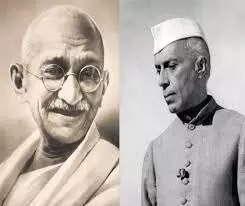
India was not handed its freedom; it was earned through sacrifice, resilience, and an unwavering belief in justice. The birth of the nation in 1947 marked the culmination of decades of struggle led by extraordinary individuals who envisioned an India rooted in liberty, equality, and unity. Today, however, there is growing unease that the moral and philosophical foundations laid by these leaders are being steadily undermined. The belittling and ridicule directed at stalwarts such as Mahatma Gandhi and Jawaharlal Nehru are not merely expressions of political disagreement; they signal a deeper contest over the soul of the nation.
These leaders were not flawless, nor did they claim to be. They were human, navigating an extraordinarily complex political landscape under colonial rule. Yet their contributions to India’s freedom struggle and nation-building remain undeniable. When their legacy is casually dismissed or reduced to caricature, it reflects more than ideological opposition. It reveals an attempt to reshape collective memory and redefine national identity.
The Foundations of Freedom
India’s independence movement was unique in modern history. At its core lay a moral philosophy that rejected violence as a means of liberation. Gandhi’s doctrine of non-violence, or ahimsa, was not passive submission but active resistance rooted in ethical conviction. His campaigns, including the Non-Cooperation Movement, the Salt March, and the Quit India Movement, mobilized millions without resorting to armed rebellion. He believed that true freedom required moral transformation as much as political change.
Nehru envisioned a modern India that was scientifically progressive, industrially capable, and socially inclusive. As the nation’s first Prime Minister, he laid the foundations of democratic institutions, an independent judiciary, parliamentary deliberation, and public sector development. Institutions of higher learning, scientific research centers, and major infrastructure projects were established during his tenure. He believed democracy was not merely a system of governance but a habit of mind sustained by tolerance, inquiry, and debate.
Together, Gandhi and Nehru represented complementary visions: one deeply ethical and rooted in grassroots mobilization, the other forward-looking and institution-building. Their partnership shaped the character of the republic.
The Politics of Historical Revisionism
In recent years, public discourse has witnessed increasing attempts to reinterpret or selectively present history. Critical examination of historical figures is essential in any democracy. However, when criticism devolves into ridicule, or when nuanced narratives are replaced with oversimplified accusations, intellectual integrity suffers.
History is inherently complex. Gandhi’s strategies were debated even during his lifetime. Nehru’s policies have been scrutinized by economists and political thinkers across ideological lines. But reducing their legacies to simplistic narratives serves little purpose beyond political expediency. It diverts attention from contemporary governance challenges by redirecting public discourse toward a distorted past.
Rewriting history is not merely about altering textbooks; it shapes public consciousness. A nation that loses sight of the context of its freedom struggle risks forgetting the principles that guided it. When divisive ideologies are elevated over inclusive ones, the foundational promise of pluralism weakens.
The Erosion of Core Values
The Indian Constitution reflects the ideals of the freedom movement: justice, liberty, equality, and fraternity. Secularism, democracy, and fundamental rights are not borrowed constructs; they emerged from the lived experience of colonialism and partition.
Gandhi’s emphasis on communal harmony was shaped by witnessing the devastating consequences of division. Nehru’s commitment to secular governance sought to ensure that no citizen would be marginalized on the basis of faith or identity. These were pragmatic responses to historical realities, not abstract theories.
When non-violence is dismissed as weakness, when secularism is portrayed as partiality, and when democratic dissent is equated with disloyalty, the philosophical foundations of the republic begin to erode. The founding leaders understood that diversity was India’s strength. Unity, they believed, could not be imposed; it had to be cultivated.
The Danger of Divisiveness
A healthy democracy thrives on debate. It also requires mutual respect and adherence to constitutional norms. The suppression of dissent: whether through legal pressure, social polarization, or media intimidation, weakens democratic resilience.
India’s freedom movement included liberals, socialists, revolutionaries, and reformers. Disagreements were frequent and often intense. Yet there was a shared objective: independence and nation-building. That spirit of principled disagreement remains worth preserving.
When ideological conformity replaces open dialogue, governance deteriorates. When historical figures are targeted to consolidate political narratives, society fragments. A nation cannot progress if it is perpetually fighting over its past rather than learning from it.
The Moral Responsibility of Citizenship
Reclaiming India’s heritage does not mean engaging in blind hero worship. It requires honest engagement with history, acknowledging achievements and shortcomings alike. Gandhi’s experiments with truth and Nehru’s economic planning were products of their time and context.
Citizens bear the responsibility of protecting democratic values. Honoring freedom fighters must go hand in hand with preserving historical memory through education and dialogue. Promoting communal harmony is essential to safeguarding institutions from political interference, and holding elected representatives accountable remains central to democratic vitality. Democracy does not sustain itself automatically; it depends on informed participation and moral vigilance.
The Forgotten Legacy
The legacy of Gandhi, Nehru, and countless other freedom fighters extends beyond political independence. They envisioned social justice through the eradication of caste discrimination, the empowerment of women, and the upliftment of the marginalized. They sought freedom not only from colonial rule but also from entrenched social inequities.
Gandhi championed rural self-sufficiency and local industry. Nehru emphasized scientific temper and rational inquiry. Their combined vision balanced tradition with modernity. Ignoring either dimension diminishes the richness of the national narrative.
When history is distorted, younger generations inherit oversimplified accounts that divide rather than enlighten. Education must cultivate critical thinking rather than ideological indoctrination.
Reclaiming Our Heritage
Reclaiming India’s heritage requires collective effort. It demands the courage to speak truthfully about history and the humility to accept complexity. It involves strengthening institutions instead of personalizing authority and encouraging scholarship, open archives, and diverse perspectives so that history remains an academic pursuit rather than a political weapon.
A forward-looking nation must also ensure the independence of the judiciary, transparency in governance, and accountability in public office. Communal harmony must be nurtured deliberately, recognizing cultural diversity as a source of resilience rather than division. Civic engagement—through voting, questioning, and participating in public discourse—must be treated not as a choice but as a duty. Above all, non-violence and tolerance must be upheld as practical necessities in a plural society.
A Nation at a Crossroads
India stands at a critical juncture. Rapid economic growth, technological advancement, and expanding global influence present immense opportunities. Yet material progress alone cannot sustain national integrity. Constitutional and moral principles must guide development.
A country that forgets its heroes risks losing its moral compass. Remembering them does not mean living in the past; it means drawing inspiration from their courage, inclusivity, and commitment to justice.
Gandhi’s spinning wheel symbolized self-reliance. Nehru’s vision articulated hope for a democratic future. Their legacies form essential threads in the fabric of modern India. Recklessly pulling at those threads risks weakening the fabric itself.
Choosing the Path Forward
The debate over history is ultimately a debate about identity and direction. Will India reaffirm pluralism, democratic dialogue, and constitutional values? Or will divisive narratives reshape its foundation?
Reclaiming the heritage of the freedom struggle is not an act of nostalgia. It is an act of preservation. It ensures that future generations inherit not only economic opportunity but also ethical clarity.
India’s strength lies in its diversity, democracy, and moral courage. The sacrifices of its founding leaders must not be trivialized for short-term political gain. Their vision of a just, equitable, and inclusive society remains unfinished but well within reach.
The responsibility rests with every citizen. A nation loses its way only when its people forget who they are. By remembering the ideals that shaped independence, India can reaffirm its path—grounded in dignity, united in diversity, and committed to democratic values.
The legacy of its founding fathers is not a relic of the past; it is a guidepost for the future.