Bomb Explosion” Against the Chief Election Commission: Assault on the Fabric of Democracy
A reckless “bomb explosion” remark against the Chief Election Commission raises serious concerns, undermining electoral integrity and India’s democratic fabric.
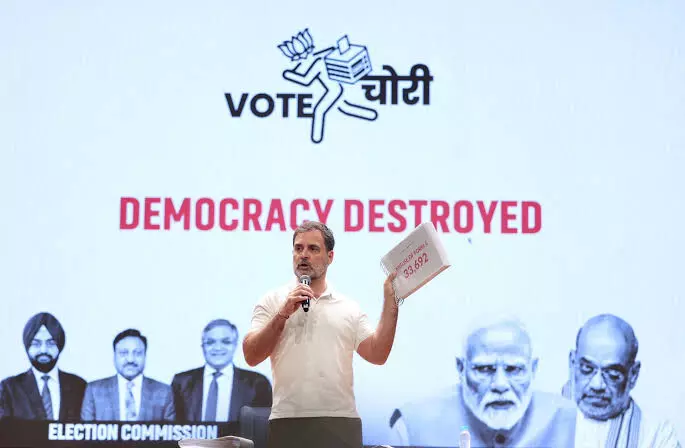
Democracy thrives on dissent, but dissent degenerates into danger when rhetoric crosses into threats against constitutional bodies. Dissent if not embellished with well-defined contours of limits and reasonable restrictions ceases to enrich democracy and instead begins to erode it. In a constitutional republic, questioning authority is a right, even a duty but dissent cannot be accepted to turn reckless rhetoric. A worrying trend in recent years is the tendency to accord political colours to every governmental exercise, be it any, including revision of electoral rolls and resort to battle cries of partisanship. It diverts attention from genuine policy critique, weakens institutional credibility, and most dangerously, turns every national reform into a matter of suspicion. When a political leader casually speaks of a “bomb explosion against the Chief Election Commission,” it turns out to be a perilous assault on the very heart of India’s democratic order.
The Role of Election Committee
The Election Commission of India (ECI) is vested with powers under Article 324 of the Constitution, it is the guardian of free and fair elections, endowed with responsibility to emerge effectively as instrument which translates the will of the people into governance. When the festival of elections is celebrated anywhere in Bharat, it turns out to be a collective act of democracy much above the political game man ship. Every five years, and often more frequently in states, the people reaffirm their sovereignty through the ballot. At the heart of this festival stands the Election Commission of India (ECI) which commands the entire administrative machinery with civil servants, police of the concerned state, be it be ruled by any political set up and paramilitary forces, of course with complete authority. From the highest official to the polling booth volunteer, the apparatus works with a single purpose that is to guarantee that the will of the people is freely and fairly expressed. To target it with violent imagery is not political rhetoric; it is an attack on the Constitution itself.
Transgression of Limits
The current controversy over the Special Intensive Revision (SIR) of electoral rolls in Bihar illustrates this dangerous trend. The SIR, an administrative exercise to update and cleanse voter lists, became the target of incendiary rhetoric. Instead of addressing procedural grievances such as voter deletions, timelines, or documentary proof, the debate degenerated into allegations of partisanship and attacks on the CEC himself. The Opposition has diverted the main theme of Special Intensive Revision from the cleansing and correctness of electoral roll to the question of citizenship which is natural and consequent fall out of the legally and constitutionally correct election exercise. There was a time (between independence and framing of Constitution) homeless and nameless were included in the electoral roll; Constitution in the midst of draft process; meaning of citizenship was not crystal clear but Today’s Bharat is the world’s largest democracy, a rising economic power, and a nation of global achievements. In such a context, electoral roll purification is a routine administrative necessity, not a conspiracy.” but Alas! When the government initiates action against illegal migrants, the opposition is often seen standing shoulder to shoulder with them as witnessed during the CAA drive and now, when false narratives ushered in to unprecedented heights." The demonstrated respect and overzealous concern of Opposition for the Constitution does not get confirmed by the disparaging remarks and derogatory language against the Constitutional Offices. Electoral roll cleansing is a legal necessity, not a conspiracy.
The Election Commission’s Independence
The independence of the Election Commission is cornerstone of our grand Constitution. In Election Commission v State of Haryana (1984), the Supreme Court reaffirmed that the EC enjoys plenary powers to safeguard the “purity of elections.” If politicians demonize a constitutional body & uses anarchic imagery, they not only undermine the Commission but also weaken the very threads of precious democracy, it sustenance and legitimacy of elections. Once faith in the ECI collapses, so too does faith in the ballot. Any attack on the Chief Election Commission or the institution itself strikes at the very bedrock of electoral legitimacy and tantamount to undermining the people’s sovereignty.
Potential Legal Consequences
Such rhetoric can attract provisions under the Indian Penal Code:
Section 505 (statements conducing to public mischief),
Section 153A (promoting disharmony), and potentially,
Section 124A (sedition – though now read down post- Kedar Nath Singh and subsequent rulings).
It may also be seen as conduct unbecoming of a public representative under the Representation of the People Act, 1951.
Between the Lines
Since 2000, EVMs have been used in all elections: 4 Lok Sabha and 122 State Legislative Assemblies. Till date, more than 315 crore votes cast on EVMs. In 1988, the 1988: Representation of People ‘s Act was amended: enabling use of EVMs wef 15.03.1989. In a meeting of all political parties held on 4th October, 2010, the parties expressed satisfaction with the EVM but some parties requested the Commission to consider introducing Voter Verifiable Paper Audit Trail for further transparency and verifiability in poll process. The Government of India notified the amended Conduct of Elections Rules, 1961 on 14th August, 2013, enabling the Commission to use VVPAT with EVMs. The EC has invited all political parties for demonstration of the voting machine and VVPAT however they are found frequent in declining exercising their fundamental right of not attending the exercise only to challenge the EC soonest they lose elections. Of course the rising trajectory of seats of main Opposition party from 44 to 99 from 2014 to 2024 remains unanswered and best suited to be subtle and concealed. The Apex Court has already rejected the move sponsored by the Opposition going back form the EVM to ballot papers in 2018.
India’s political class must remember that freedom of speech is not endless and a process of disruption and disorder. The CEC, like judges of the Supreme Court, represents the constitutional will of the people. To suggest a “bomb explosion” against such an office is an act of verbal desecration and wrecking legal and constitutional edifice. Political battles must be fought with arguments, evidence, and ballots not with threats of bombs. If the Opposition truly seeks to hold the Election Commission accountable, it must do so through plausible reason, befitting law and constitutionally mandated legal trajectory. The Opposition’s role is to question, not to threaten; to hold accountable, not to destabilise. A “bomb explosion” against the Chief Election Commission is no less than constitutional betrayal. Despite EC repeating to produce application, complaint, with proofs, no opposition party has advanced to submit any cogent application or tangible evidence complaining against the removal of any voter except for raising incendiary slogans and now embarking upon a Yatra on a selective trajectory in the state of Bihar. Incidentally, there is no complaint for addition but the grouse goes against the removal of dead and migrated; the names of whom continued to be available only to be misused. Mumbai High court has already rejected the charge of “vote chori”. The Apex Court has not found grounds to reject the SIR outright, but has stressed transparency, access, and legal safeguards for affected voters. The Court has not found grounds to reject the SIR outright, but has stressed transparency, access, and legal safeguards for affected voters. The SC has directed the Election Commission (EC) to publicize the list of names deleted from the draft voter roll. On the other hand, the SC has supported the EC that Aadhaar is not conclusive proof of citizenship. Kabil Sibbal though does not hesitate in making a sweeping statement that most of the population of Bihar does not possess the document only to be checked by the SC.
Conclusion
Democracy demands debate, dissent and dialogue not detonation. The Supreme Court’s jurisprudence reminds us that respect for institutions is non-negotiable. By indulging in such dangerous rhetoric, leaders not only weaken their own moral credibility but also risk pushing India’s democracy towards a perilous path where allegations replace debate, and threats replace dialogue. The Supreme Court has long warned against the damaging power of reckless speech in politics. In Pravasi Bhalai Sangathan v. Union of India (2014), the Court noted that hate speech “strikes at the root of equality” and gnaws faith in democratic institutions. Political leaders, are bestowed with higher responsibility; their words can ignite, incite and inflame the politically charged environment to affect the subtle and fragile fabric of democracy. A statement invoking “bombs” against a constitutional authority is not witty exaggeration; it is incitement. The political leaders are entrusted with the faith of millions must not misuse their offices and command. From Lal Babu Hussain v Electoral Registration Officer 1995 to Association for democratic Reforms V Election Commission of India 2025, the SC has made an endeavour to balance out electoral integrity with democratic inclusion.
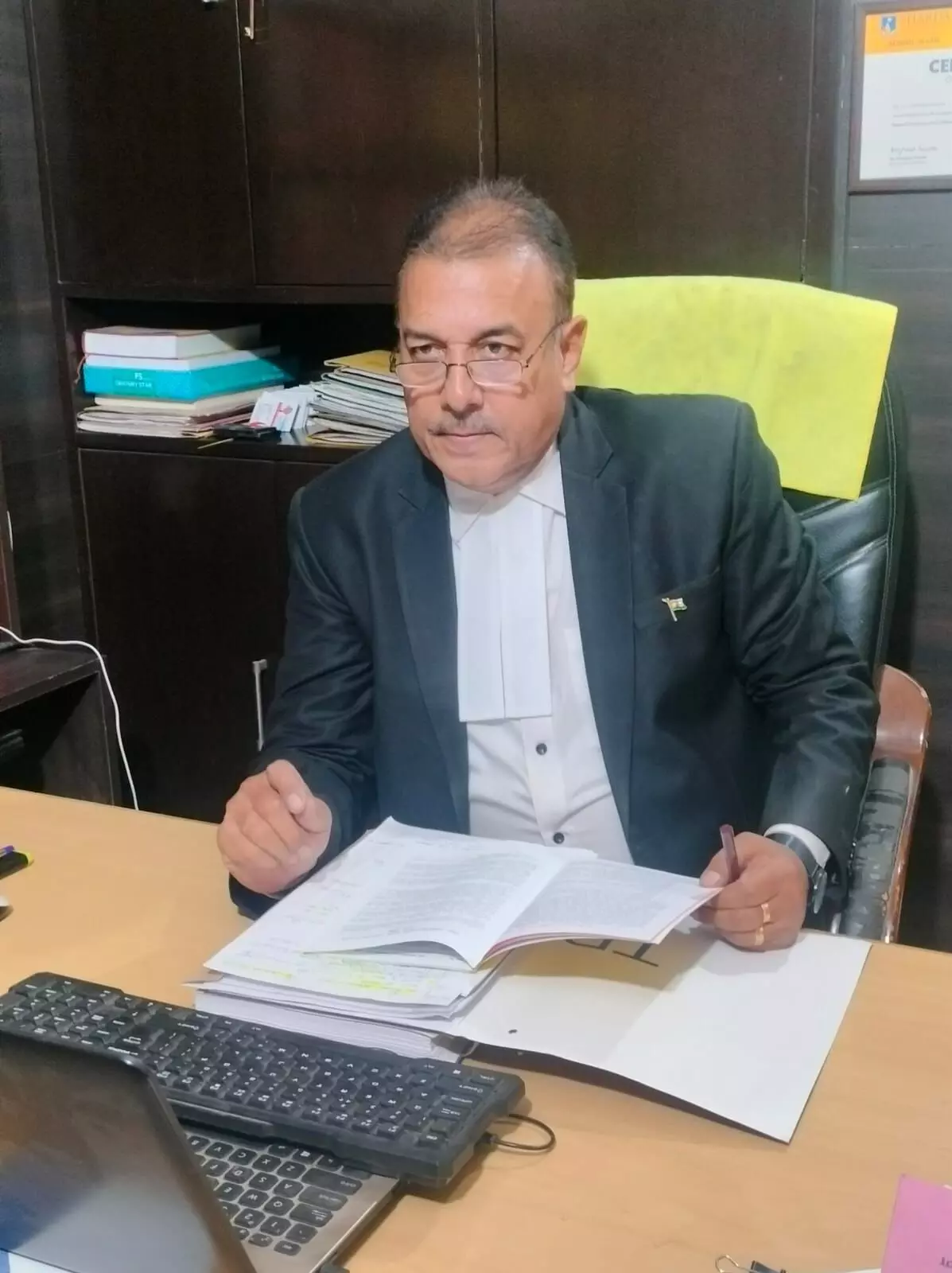
Dr (Lt Col) Atul Tyagi, A Practicing Advocate, mob no 9540652090