Modi at 75: Power, Delivery, and the Question of Depth
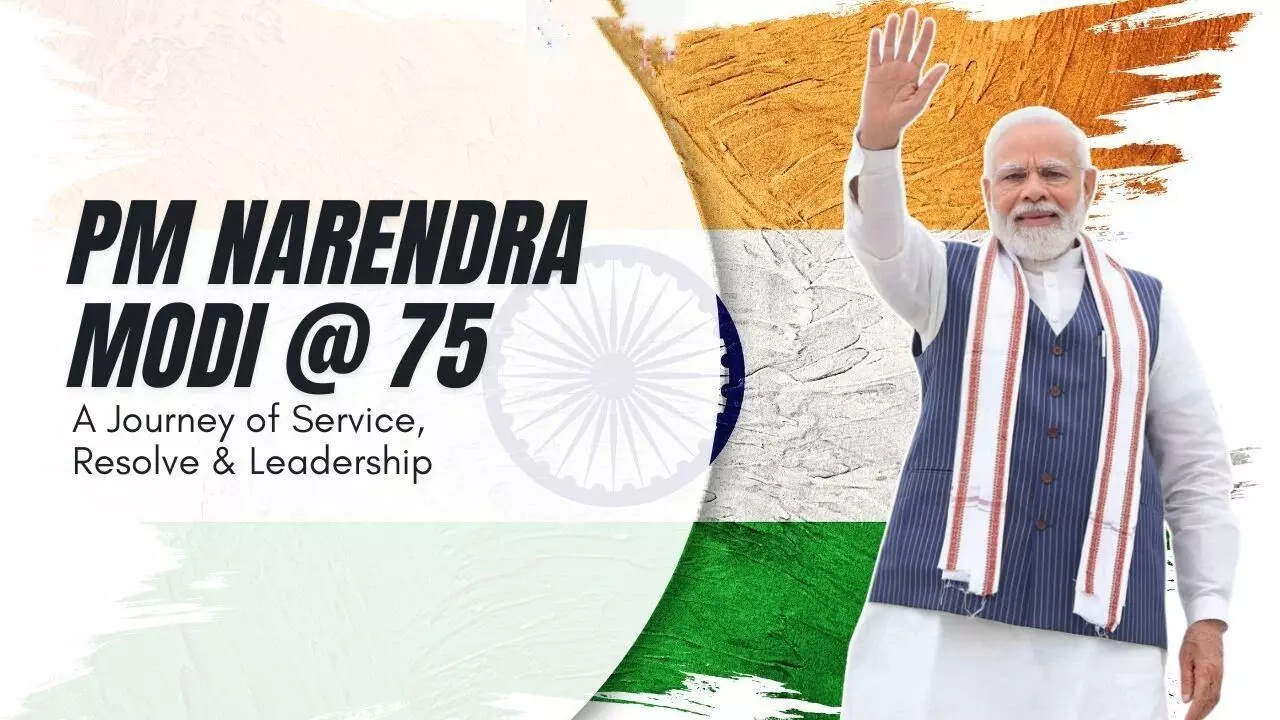
Narendra Damodardas Modi turned 75 this month, marking 23 uninterrupted years in elected office—12 as Gujarat’s chief minister and more than 11 as India’s prime minister. That longevity is itself a political argument: India’s most restless democracy has chosen continuity, not once but twice, and shows little sign of tiring of him.
Longevity, however, is not legacy. Modi’s years in power have been crowded with the big, the bold and the headline-grabbing. Article 370 was scrapped; GST was rolled out and now simplified; Digital India wired a billion citizens; Swachh Bharat sought to change everyday habits; Ayushman Bharat promised health security to half the population; yoga became a UN-endorsed global movement. Infrastructure has been turbo-charged—expressways, airports, high-speed rail. India’s economy now ranks fourth in the world.
Each of these carries a footnote. GST collections are healthy but rate tinkering continues. Ayushman’s reach is wide but its last-mile delivery is patchy. Digital India empowers and exposes—cybercrime is rampant. The bullet train inches forward.
The prime minister’s instinct is to centralise and to surprise. Railway and Union budgets were merged, 76 colonial-era laws junked, and a slew of welfare schemes directly seeded into bank accounts opened under Jan Dhan. He works 18-hour days, avoids the press conference, and prefers the monologue of Mann ki Baat to the give-and-take of the reporter’s question. It has worked for him.
But the ledger has another side. The Beti Bachao, Beti Padhao programme shows only glimmers of success. The Manipur blockade has stretched to 28 months, defying central packages and presidential rule. Farmers camped on Delhi’s borders for a year before the farm laws were rolled back. NITI Aayog has yet to justify the scrapping of the Planning Commission. Foreign policy wins—from vaccine diplomacy to deft G-20 stewardship—sit alongside strains with the US, Turkey and a studied silence on Gaza.
The Modi decade has re-shaped India’s political common sense: welfare is direct, nationalism is assertive, spectacle is governance. Yet the next stretch will test something subtler. After years of headline reform and relentless self-projection, delivery must deepen, publicity must recede. “Virtual inaugurations and foundations pay only in the short run. In the long run, we are all dead,” as the old economist’s quip goes.
There is, still, no visible alternative—inside the BJP or outside. That is Modi’s greatest political asset and India’s democratic challenge. At 75, the question is less about how long he can keep power, and more about how deeply he can make it count.
Alok K. Shrivastava
Former Chief Secretary, Government of Sikki
m