AI and Nuclear Medicine: India’s Next Leap in Cancer Care
India's growing cancer burden necessitates innovative solutions. AI-enhanced nuclear medicine can improve diagnostic accuracy, increase access to quality care, and bridge gaps in specialist availability.

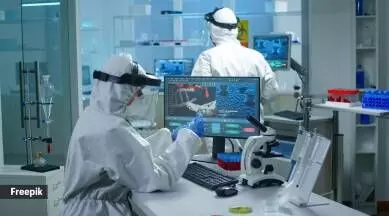
India’s cancer burden is growing at an alarming pace. According to the ICMR-NCDIR 2023 report, India saw over 14.6 lakh new cancer cases in 2022, a number expected to cross 18 lakh by 2030. Yet, more than 80% of these cases are diagnosed in advanced stages, where treatment becomes costlier and less effective. Early detection is not just a clinical necessity; it’s a national priority.
In this context, the intersection of artificial intelligence (AI) and nuclear medicine presents a critical opportunity, one that can enhance diagnostic accuracy, bridge gaps in specialist availability, and bring precision care closer to India’s underserved regions.
The Case for AI in Nuclear Medicine
Nuclear medicine, particularly PET-CT and SPECT imaging, plays a central role in oncology. It allows clinicians to detect metabolic changes in tissues, often before structural abnormalities appear on conventional imaging. However, the interpretation of nuclear scans is complex and time-intensive, requiring trained nuclear medicine physicians and radiologists. India has fewer than 1,000 certified practitioners for a population of over 1.4 billion, a fact that makes the diagnosis and detection a difficult process.
Recent advances in AI, especially in deep learning models trained on medical imaging, have shown immense potential in this space. A 2024 study by the Tata Memorial Centre and the Indian Institute of Science (IISc) demonstrated that AI-enhanced PET scan analysis improved early lesion detection in non-small-cell lung cancer by 22%, while reducing false positives by 15%.
These algorithms can identify subtle patterns in scan data, predict tumour progression, and even suggest probable malignancy levels, all of which will support clinicians with data-driven second opinions in real time and bring renewed hope for the patients.
Expanding Reach, Not Just Capability
The true promise of AI in nuclear medicine lies in its ability to democratize access to quality diagnostics. AI models, once trained, can be deployed across cloud platforms or embedded into portable diagnostic units, allowing district hospitals and tier-2 cities to access high-end interpretation without relying on urban referral centres.
Pilot projects under the Ayushman Bharat Digital Mission (ABDM) and collaborations between AIIMS Delhi, DRDO, and startups like Qure.ai and CARPL.ai are already exploring AI-led scan interpretation for oncology workflows. In Tamil Nadu and Maharashtra, these pilots have reduced average reporting time for PET-CT scans from 48 hours to under 8 hours in selected centres, a development that is no less than a game-changer for time-sensitive cancer therapies.
Challenges: Data, Trust, and Regulation
However, several challenges remain. High-quality, anonymised, and annotated imaging datasets from Indian patients are still scarce, limiting the robustness of AI models trained on Western data. The Indian Society of Nuclear Medicine (ISNM) has called for a national imaging repository to address this issue, but efforts are still in early stages.
Moreover, unlike the US FDA or EU MDR, India’s regulatory framework for AI in medicine is still evolving. The Central Drugs Standard Control Organisation (CDSCO) is yet to establish clear approval pathways for AI-enabled diagnostic tools, though draft guidelines have been floated in 2024 under the Medical Devices Rules amendment.
There is also the issue of explainability. Clinicians must be able to trust and challenge the AI’s interpretation. Black-box models that output results without interpretability can raise ethical concerns, especially in oncology, where decisions carry life-altering implications.
The Road Ahead: A Public Health Imperative
If developed responsibly, AI could help India leapfrog traditional limitations in cancer care, reducing dependence on physical infrastructure and manpower, while enhancing accuracy and access.
What’s needed now is a coordinated push involving:
Public–private research partnerships to build India-specific AI datasets.
Skilling programmes to train radiologists and nuclear medicine physicians in AI-augmented workflows.
Robust policy frameworks from CDSCO and MoHFW for AI validation, clinical testing, and post-market surveillance.
This is not just about embracing innovation. It’s about building a system that doesn’t leave cancer patients waiting for diagnosis or care, based on their PIN code.
(The writer is a versatile content professional with 20+ years of experience, specializing in customized, high-impact writing across education, PR, corporate, and government sectors.)