A Diplomatic Assessment of the Sheikh Hasina Crisis and the Paresh Baruah Contrast

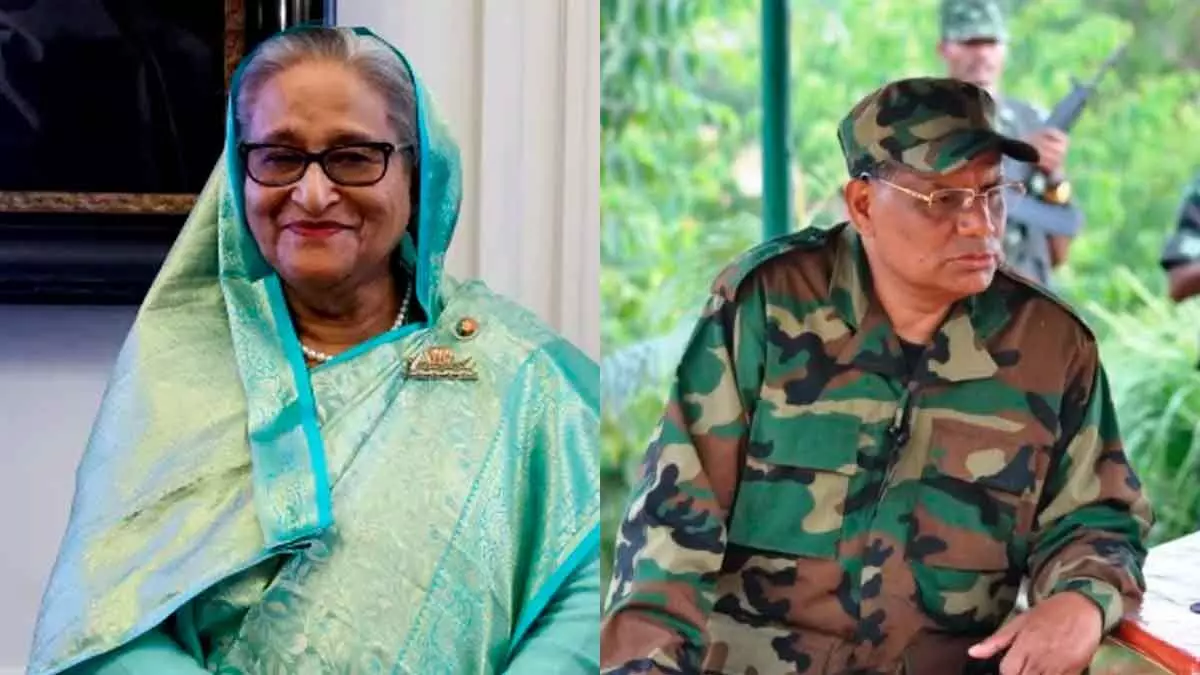
The developments surrounding Sheikh Hasina’s death sentences and the continued survival of ULFA(I) leader Paresh Baruah present two contrasting realities of regional politics.
From a diplomatic standpoint, these cases reveal the limits of India’s influence and the complex nature of cross-border strategic balances in South Asia and the eastern Himalayan arc.
1. India and Bangladesh: Limits of a Personality-Driven Policy
India’s relationship with Bangladesh over the past decade and a half was anchored strongly in leadership-level trust between New Delhi and Sheikh Hasina.
While this partnership produced exceptional outcomes in counterterrorism and connectivity, it also resulted in:
insufficient engagement with alternate political constituencies,
a thin presence within Bangladesh’s emerging power groups, and
a perception of overt reliance on one political figure.
With the recent shift in Dhaka’s political environment, these limitations became visible.
The sentencing of Sheikh Hasina—regardless of judicial framing—is widely interpreted as a politically charged development rooted in new alignments within Bangladesh’s civil-military spectrum.
India’s ability to influence outcomes has therefore become constrained not by lack of intent, but by the structural reconfiguration of Bangladesh’s internal power equation.
2. External Actors and the Strategic Realignment in Dhaka
The evolving situation in Bangladesh reflects a broader regional realignment, wherein:
China,
Turkey,
Qatar, and
certain Islamist sociopolitical networks
have gained significant influence.
These actors have established multiple points of engagement—ranging from the military to business groups—creating a multi-vectored foreign policy landscape in Dhaka.
India is now required to navigate a more pluralistic and fragmented decision-making environment compared to the earlier period of centralized authority under Hasina.
This shift explains why India’s traditional channels for stabilisation or moderation are less effective in present circumstances.
3. The Paresh Baruah Question: Why Non-State Actors Survive
In contrast, Paresh Baruah’s ability to evade punitive actions or capital sentences in neighbouring states is not a sign of strength of his organisation alone, but a reflection of regional geopolitical calculations.
3.1 A Longstanding Cross-Border Equilibrium
Baruah operates within a transnational ethnic and insurgent ecosystem that extends across:
northern Myanmar,
Yunnan province of China, and
parts of the Sagaing region.
Local authorities and external powers find tactical advantage in maintaining relationships—formal or informal—with influential non-state actors, including ULFA(I).
These groups serve as:
intermediaries,
sources of local intelligence, or
stabilising partners in areas outside full state control.
3.2 A Diplomatic Reality: Non-State Actors Can Become Instruments of Leverage
From a diplomatic perspective, it is a recognised reality that non-state armed actors sometimes acquire functional utility for host states, especially in frontier regions with complex ethnic compositions.
This utility ensures that punitive actions such as executions are not always pursued, even when legal provisions exist.
Thus, the survival of figures like Baruah reflects not ideological support, but strategic calculations within host countries who balance local stability, ethnic equations, and their broader relations with India and China.
4. Comparative Insight: Why One Case Moves and the Other Freezes
The apparent contradiction between the vulnerability of a former prime minister and the resilience of an insurgent leader is rooted in three diplomatic factors:
4.1 Nature of Leverage
Hasina’s leverage declined with the change of government.
Baruah’s leverage persists because his network remains operational across borders.
4.2 Nature of the Actors
States operate within public and institutional constraints.
Non-state actors operate in informal, fluid, and deniable spaces.
4.3 Regional Geopolitical Context
Bangladesh is undergoing a power transition involving multiple external stakeholders.
The China–Myanmar frontier remains a zone where strategic ambiguity is often preferred over definitive action.
5. Broader Implication for Indian Diplomacy
The simultaneous emergence of these two developments signals the need for India to:
1. Recalibrate its Bangladesh outreach beyond single-leadership dependence,
2. Strengthen alternative channels including civil society, military dialogues, and economic partnerships,
3. Develop structured engagement mechanisms with regional powers operating in South Asia, and
4. Enhance its presence in the eastern trans-border insurgency belt, where non-state actors continue to influence strategic stability.
In diplomatic terms, the current contrast is not a failure of policy but a reminder of the volatility of political transitions and the importance of diversified engagement strategies across the neighbourhood.