Aadhaar and the Illusion of Control: When Identity Becomes a Burden, Not a Right

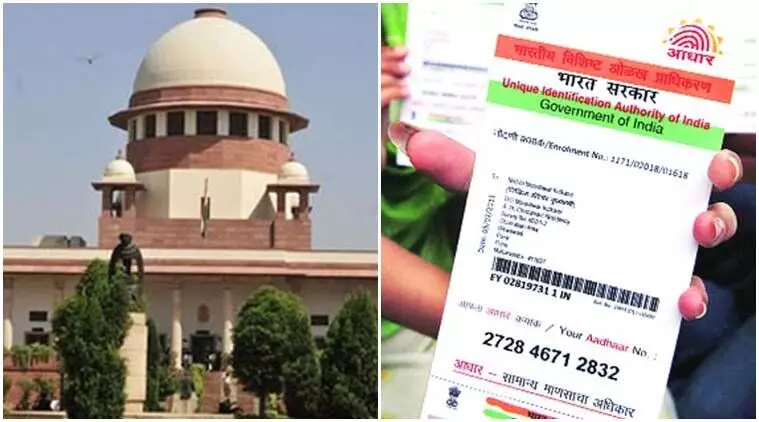
Starting November 1, the Unique Identification Authority of India (UIDAI) will roll out a new system allowing citizens to update their Aadhaar details—name, address, date of birth, and mobile number—online, without visiting enrollment centers. On the surface, this appears to be a progressive step toward digital convenience. But beneath the veneer of efficiency lies a deeper question: what exactly does the government want from its citizens? And why, despite Supreme Court verdicts and constitutional safeguards, are people still being harassed in the name of identity?
The Supreme Court’s landmark judgment in Justice K.S. Puttaswamy (Retd.) vs Union of India (2018) upheld the constitutional validity of Aadhaar but placed clear restrictions on its mandatory use. The Court ruled that Aadhaar cannot be made compulsory for services like mobile connections, school admissions, hotel bookings, or railway reservations. Yet, in practice, Aadhaar continues to be demanded across these very sectors. Citizens are routinely denied services or forced into bureaucratic loops when Aadhaar authentication fails or data mismatches occur. The contradiction between law and lived reality is not just ironic—it is oppressive.
The government’s insistence on linking Aadhaar with PAN cards, bank accounts, and now even voter IDs is justified in the name of curbing financial fraud and ensuring targeted delivery of subsidies. But where is the data to support this claim? According to a 2024 report by India Today, a gang in Bhopal was arrested for creating fake Aadhaar and PAN cards to open fraudulent bank accounts. In another case, a ₹382 crore tax evasion scam in Thane involved Aadhaar-linked identities being misused. These incidents prove that Aadhaar is not immune to manipulation—it is, in fact, being weaponized by criminals. So if the system is porous enough to be exploited, why is it being tightened only for the common citizen?
The government claims Aadhaar is a tool for empowerment. But for many, it has become a source of exclusion. Elderly citizens, daily wage workers, and rural populations often struggle with biometric mismatches, lack of digital access, and repeated document verification. The new online update system may benefit the urban middle class, but it does little for those without smartphones, stable internet, or digital literacy. In effect, the very people Aadhaar was meant to uplift are the ones most burdened by it.
Moreover, the Aadhaar-PAN linkage, which is now mandatory by December 31, 2025, raises further concerns. How many financial criminals have been arrested or sentenced because of this linkage? Has it led to the unmasking of political corruption or black money hoarders? Or is it merely a tool to monitor and discipline the salaried class while the powerful continue to operate with impunity? When politicians caught in raids walk free and continue to contest elections, the public is forced to ask: is Aadhaar a shield for the state or a sword against the citizen?
The irony deepens when we recall that India once envisioned identity as a means of dignity. The Aadhaar Act was introduced under the promise of inclusion, not surveillance. But today, it has become a gatekeeper to basic rights. The government’s Digital India mission may be ambitious, but without accountability, it risks becoming a digital prison.
In a democracy, identity should empower, not entrap. The Supreme Court’s verdict was clear: Aadhaar cannot be made a condition for living a dignified life. Yet, the state continues to act as if the verdict was a suggestion, not a binding judgment. Until this gap between law and governance is bridged, Aadhaar will remain less a symbol of progress and more a reminder of how easily rights can be repackaged as obligations.