Ancient Stone ‘Chakravyuh’ Discovered in Solapur May Reveal Rome–India Trade Links
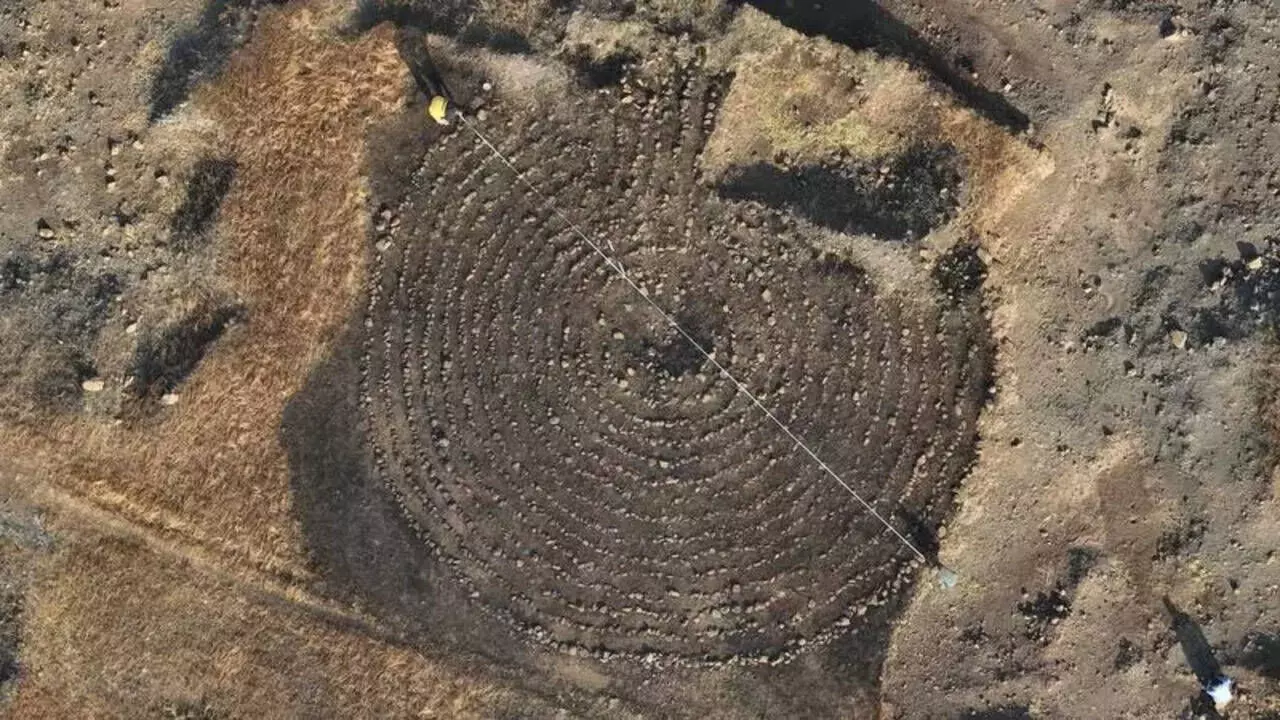
A remarkable discovery in Solapur district has left archaeologists and historians astonished.
A massive stone labyrinth (chakravyuh) with 15 concentric circles has been found in the grasslands of Boramani, believed to be not only the largest stone labyrinth ever discovered in India but also a potential living proof of ancient trade links between Rome and India.
What makes the discovery even more fascinating is that it was not found during an excavation, but accidentally during a wildlife observation exercise. A team from the NGO Nature Conservation Circle was monitoring rare goldfinches and wolves in the Ramani forest area when members Pappu Jamadar, Nitin Anvekar, Dhananjay Kakade, Bharat Chheda, Aditya Zhingade and Sachin Sawant noticed an unusual stone formation. They immediately informed archaeologist Sachin Patil, after which the historical significance of the structure came to light.
Experts from Pune’s renowned Deccan College conducted a detailed study of the site. Their report notes that while smaller labyrinth structures with fewer circles have been found in India earlier, a 15-circle labyrinth of this scale has been discovered for the first time. Scholars believe the structure dates back to the 1st to 3rd century AD, nearly 2,000 years old.
The labyrinth is constructed using small stone fragments, laid on a layer of soil and rising about 1 to 1.5 inches above ground level. It features a clearly defined path leading from the outer edge to the center. Interestingly, its design closely resembles symbols found on Roman Cretan coins from the same period.
Archaeologists believe the structure was not merely a religious or cultural symbol. During the early centuries AD, Solapur is thought to have been an important global trade hub. Experts suggest Roman traders may have used this labyrinth as a navigational marker along ancient trade routes. Between the 1st and 3rd centuries AD, spices, silk and indigo were exported from India to Rome, while gold and precious stones were brought to India from the Roman Empire. The Boramani region may have played a crucial role in this historic trade network.
The discovery opens up exciting new possibilities for understanding India’s ancient global connections and places Solapur firmly on the archaeological map.