Andhra Pradesh Announces India's First Population Management Policy; Rs 25,000 for Third Child
Naidu Unveils Sweeping Incentives Including Free Education, 12-Month Maternity Leave, and IVF Support to Reverse Falling Fertility Rate

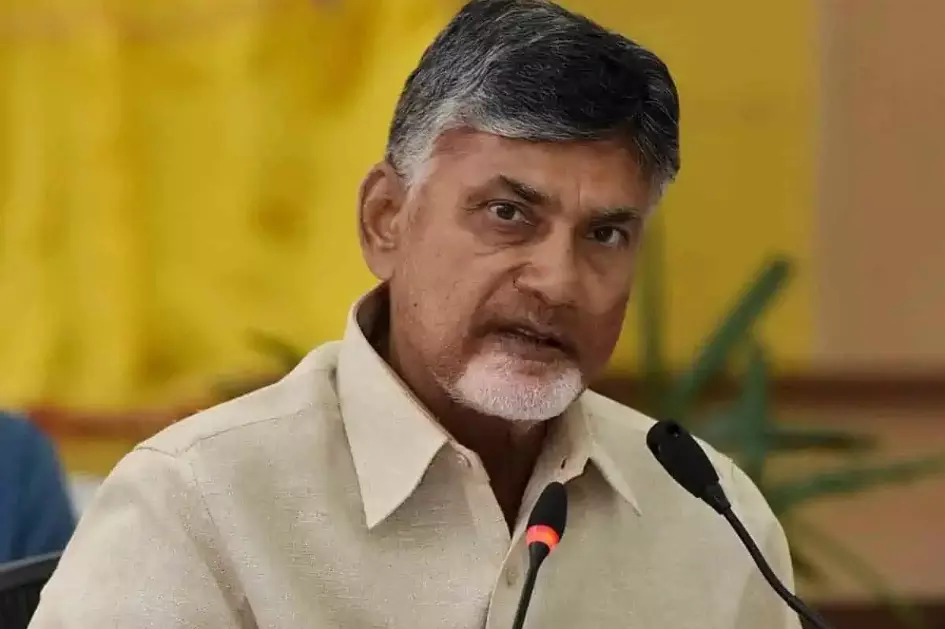
Andhra Pradesh Chief Minister N. Chandrababu Naidu on Thursday announced what could be India's first comprehensive population management policy, unveiling a draft framework on the floor of the state assembly that offers a wide range of financial and social incentives to encourage couples to have more children — including a direct payment of Rs 25,000 for the birth of a third child.
The policy, aimed at reversing Andhra Pradesh's alarmingly low Total Fertility Rate (TFR) of 1.4 — among the lowest in the country — is expected to be finalised by March-end and introduced from April 1.
The centrepiece of the draft policy is the Rs 25,000 payment under the Poshana-Siksha-Suraksha package for third-child births, supplemented by a monthly stipend of Rs 1,000 for the third child. Beyond direct financial support, the policy proposes free education for the third child up to the age of 18, subsidised IVF services under a public-private partnership model, 12 months of maternity leave and two months of paternity leave for the birth of a third child, and special wellness leave and a Rs 50,000 health fund for government employees with three children approaching retirement.
Infrastructure support is also part of the package — the state plans to construct working women hostels and child care centres, and provide specialised training for child care teachers. An awareness campaign titled 'Equal Responsibility of Parents' will also be launched to promote shared family responsibilities.
Naidu presented stark data to explain the urgency. Andhra Pradesh's TFR has collapsed from 3.0 in 1993 to just 1.4 today — well below the replacement level of 2.1. At current birth rates, approximately 23 percent of the state's population could be elderly by 2047, posing severe challenges to economic productivity. "The fall in fertility rate poses a threat to economic growth with a fall in the number of young working people, and the state will face ageing problems like Japan, South Korea, and Italy," Naidu warned.
He also flagged that women's workforce participation in Andhra Pradesh stands at just 31 percent — a figure he said must rise to 59 percent to achieve the state's target of 15 percent GSDP growth.
The timing of the announcement is not incidental. With the 16th Census expected next month and the subsequent delimitation of Lok Sabha seats looming, southern states are acutely aware that their falling fertility rates could cost them parliamentary representation. Andhra Pradesh's TFR of 1.4 compares unfavourably even with Telangana (1.6), Kerala and Karnataka (both 1.7), and Tamil Nadu (1.82), while India's national TFR stands between 1.9 and 2.
Placing women at the centre of the policy, Naidu outlined a five-tier lifecycle framework built around five pillars — motherhood, empowerment, welfare, skill development, and rejuvenation — designed to support women from pregnancy through to old age. The government also intends to establish a centre of excellence for maternity care, reduce unnecessary caesarean deliveries, and bring down teenage pregnancies from the current 8.8 percent to under 3 percent.