Arming the Weak: Assam’s Risky Gamble in a Volatile Frontier
On this shifting frontier, weapons in weak hands are not deterrents; they are invitations.

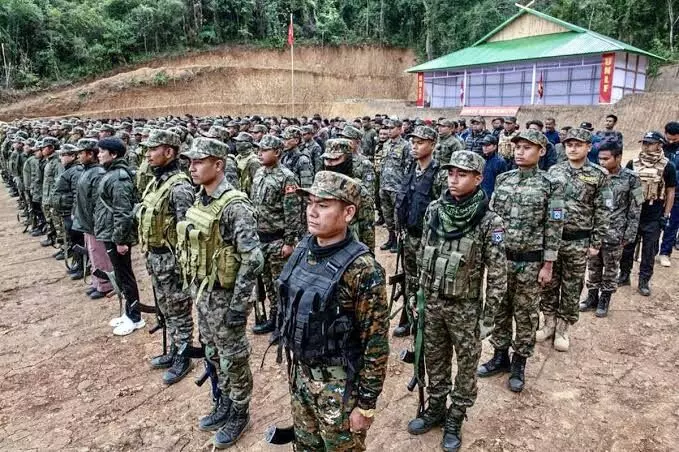
History in Northeast India has an uncanny way of repeating itself — first as a desperate measure, then as a costly mistake.
In 1977, during the early surge of insurgency in Manipur, the state government, alarmed by the rising ferocity of the People’s Liberation Army (PLA), decided to issue pistols and revolvers to police drivers. The logic was simple: protect those who often ferried senior officers through ambush-prone zones. The PLA, led by the Lasha group returning from training in Lhasa, Tibet’s capital, had re-entered Manipur with renewed aggression.
But the reaction from the public was swift and fierce. Common sense prevailed — the drivers, armed but untrained, would be easy prey for insurgents. Instead of deterring attacks, these weapons would become trophies for the underground. The Manipur government quietly withdrew the decision, learning that in a war zone, arming the vulnerable is an invitation, not a solution.
Fast forward to present-day Assam. In the backdrop of a volatile political climate and a porous Indo-Bangladesh border — where Assamese are already a minority in several districts — the government’s plan to arm “local Assamese” as a measure of community protection is treading on dangerously familiar ground.
The idea may sound empowering, but reality says otherwise. In an environment where armed gangs, insurgent remnants, and cross-border syndicates operate with impunity, weapons in untrained civilian hands will likely serve as magnets for trouble. A revolver in the home does not neutralize the threat of an AK-47 in the field.
Beyond the security calculus lies the demographic and political danger. Assam’s political turf is already strained by identity conflicts, migration pressures, and competitive populism. The proposed civilian arming program could easily deepen fault lines — painting some as “defenders” and others as “suspects” — in a state where the ground reality is far more complex than official rhetoric.
History has shown that such moves rarely produce security; they produce statistics — of stolen arms, ambushed civilians, and growing distrust. The armed robbers and syndicates along this frontier will have a field day, while the “protected” communities find themselves marked targets.
And as in Manipur’s 1977 fiasco, this experiment risks ending not with safer villages, but with a quieter withdrawal and an unspoken admission of failure. The only difference now is that the Assamese — politically cornered, numerically shrinking, and socially fragmented — stand to lose far more than just their weapons.
Because in this borderland, the fight is not just over territory — it’s over the future of who gets to call it home.