Assam BJP: Between Sonowal’s Silence and Sarma’s Saturation
As the BJP’s once-formidable Assam unit shows signs of exhaustion, a quiet recalibration may be underway — embodied in Shantanu Bharali’s emerging, conciliatory voice.

I. The Political Fatigue of a Dominant Regime
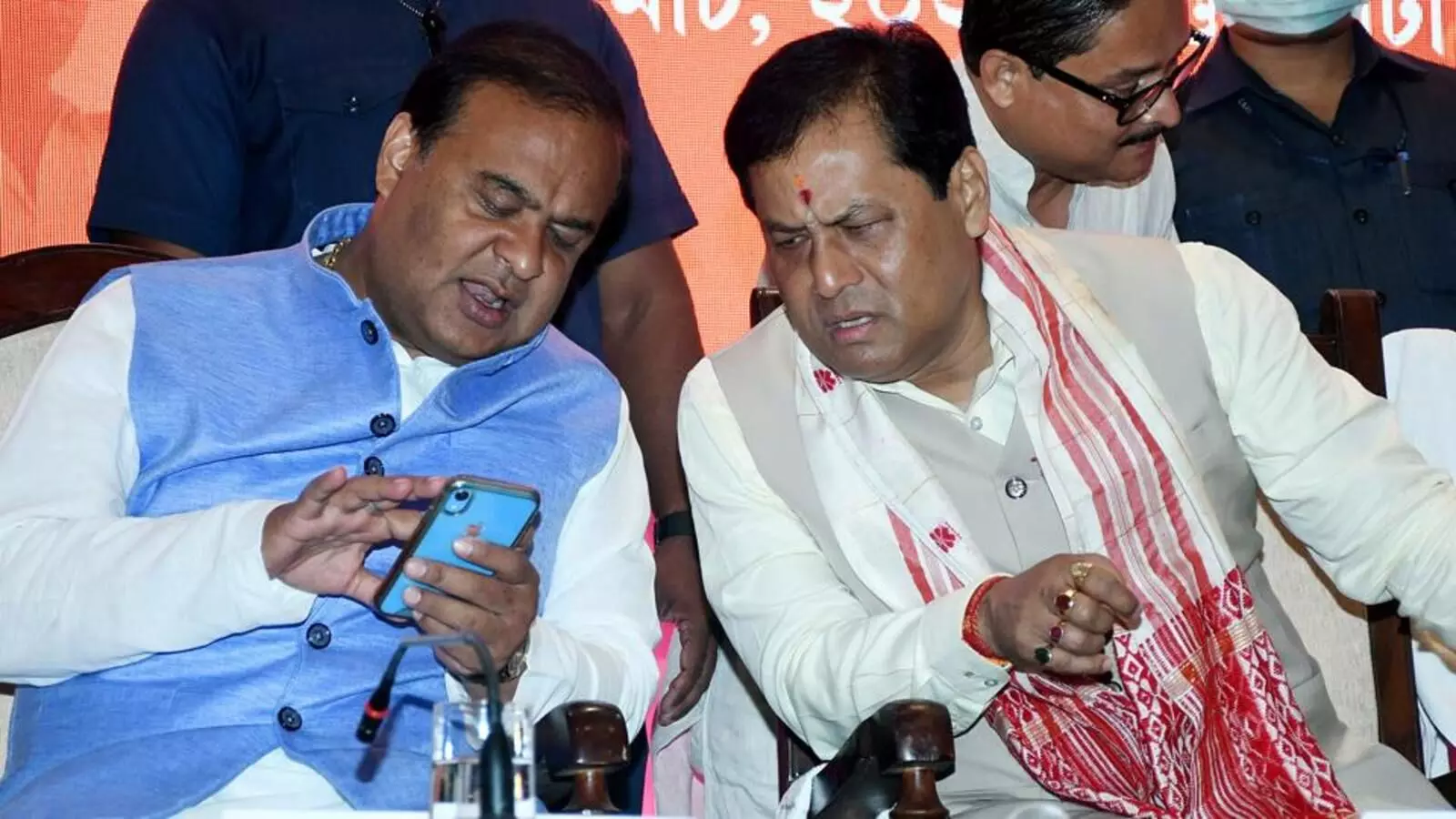
Assam’s ruling dispensation, once the most vibrant and communicative unit of the Bharatiya Janata Party (BJP) in the Northeast, now shows unmistakable signs of political exhaustion. The state’s two most visible leaders — Chief Minister Himanta Biswa Sarma and Union Minister Sarbananda Sonowal — seem caught in opposite but equally ineffective orbits.
Sonowal’s silence, once interpreted as stoicism, now borders on disengagement. His absence from the state’s pressing discourses — from the floods and border issues to the emotional fallout of singer Zubeen Garg’s death — has distanced him from the public mood. Sarma, in contrast, has maintained a hyper-visible style of governance: a daily parade of announcements, directives, and symbolic visits. Yet, the once-charismatic urgency of his approach now appears fatigued, repetitive, and performative.
The BJP’s political machine in Assam, once defined by its messaging discipline and social media precision, seems to have lost both narrative control and moral edge. Even routine administrative decisions are now wrapped in controversy. The government’s obsession with optics — eviction drives, “Miya” identity politics, and cultural wars over food and religion — increasingly looks like a substitute for governance rather than its extension.
II. The Monotony of Manufactured Issues
The political rhythm of Assam has become one of ritualized conflict. Each week, new symbolic issues are inflated to crowd out real debates — price rise, unemployment, declining tea industry revenues, and urban discontent.
Instead, the discourse has been diverted to smaller but louder theatres:
The Gaurav Gogoi controversy, repeatedly invoked to vilify the opposition through personal insinuations;
Pork-beef debates, used as tools to polarize rather than clarify cultural coexistence;
Eviction drives, framed as development, executed as displacement;
And finally, the broad invocation of “Miya politics” — an elastic term stretched to include anyone inconvenient to the ruling narrative.
These tactics once worked because they were fresh and forceful. Now, they feel mechanical. The political choreography of outrage has lost its novelty, and the audience — the Assamese public — appears to be watching with weary eyes.
III. The Media and the Myth of Control
Behind the scenes, the BJP’s tight grip on Assam’s media ecosystem is showing cracks. A handful of print and television houses dominate public discourse, their ownerships directly or indirectly tied to political or bureaucratic interests. What was once a symbiotic relationship between government and media has now turned into quiet coercion.
Reporters whisper of “no-go topics.” Investigative stories vanish after newsroom meetings. Opinion columns are quietly replaced by PR-style narratives. Yet, paradoxically, this overreach has bred mistrust rather than control.
With corruption charges emerging against several close aides and confidants of Chief Minister Sarma — especially in sectors such as land development, police recruitment, and health procurement — the government’s defensive reflexes have only deepened the perception of opacity. The administration now appears more focused on information management than public management.
IV. Sonowal’s Silence: From Dignity to Distance
Former Chief Minister Sarbananda Sonowal remains the most enigmatic figure in Assam’s political theatre. Once hailed as “Mr. Clean” and the face of the BJP’s disciplined image in the Northeast, Sonowal today operates in deliberate silence. His public appearances are ceremonial, his statements diplomatic, and his political signals — almost indecipherable.
Within the party, this silence has dual interpretations. His supporters call it maturity; his detractors see it as detachment. Either way, the effect is the same: a slow erosion of political relevance.
Sonowal’s silence, however, is not neutral. It amplifies the loneliness of power surrounding Himanta Biswa Sarma. In the absence of credible internal dialogue, the BJP’s Assam unit has become a one-man operation — frenetic at the top, fragmented below.
V. Sarma’s Saturation Point
Chief Minister Himanta Biswa Sarma, the BJP’s most dynamic political export from the Northeast, seems to be confronting his first sustained phase of public fatigue. His governance model — centralized, combative, and media-saturated — once gave him an aura of authority. But that model depends on momentum, and momentum is difficult to sustain indefinitely.
The Nixonian counterattack — his instinct to respond to every criticism with aggression — has started revealing its limits. His rhetoric, once sharp, now sounds rehearsed. His political moves, once strategic, now appear reactive. The controversies surrounding the SIT probe into Zubeen Garg’s death, the alleged mismanagement in welfare disbursements, and the opaque handling of public contracts have all chipped away at the “smart CM” brand he carefully built.
To many in Assam’s political circles, Sarma’s government looks increasingly like a high-voltage circuit — impressive in display but unstable in current.
VI. The Bharali Intervention: A Liberal Voice in a Polarized Party
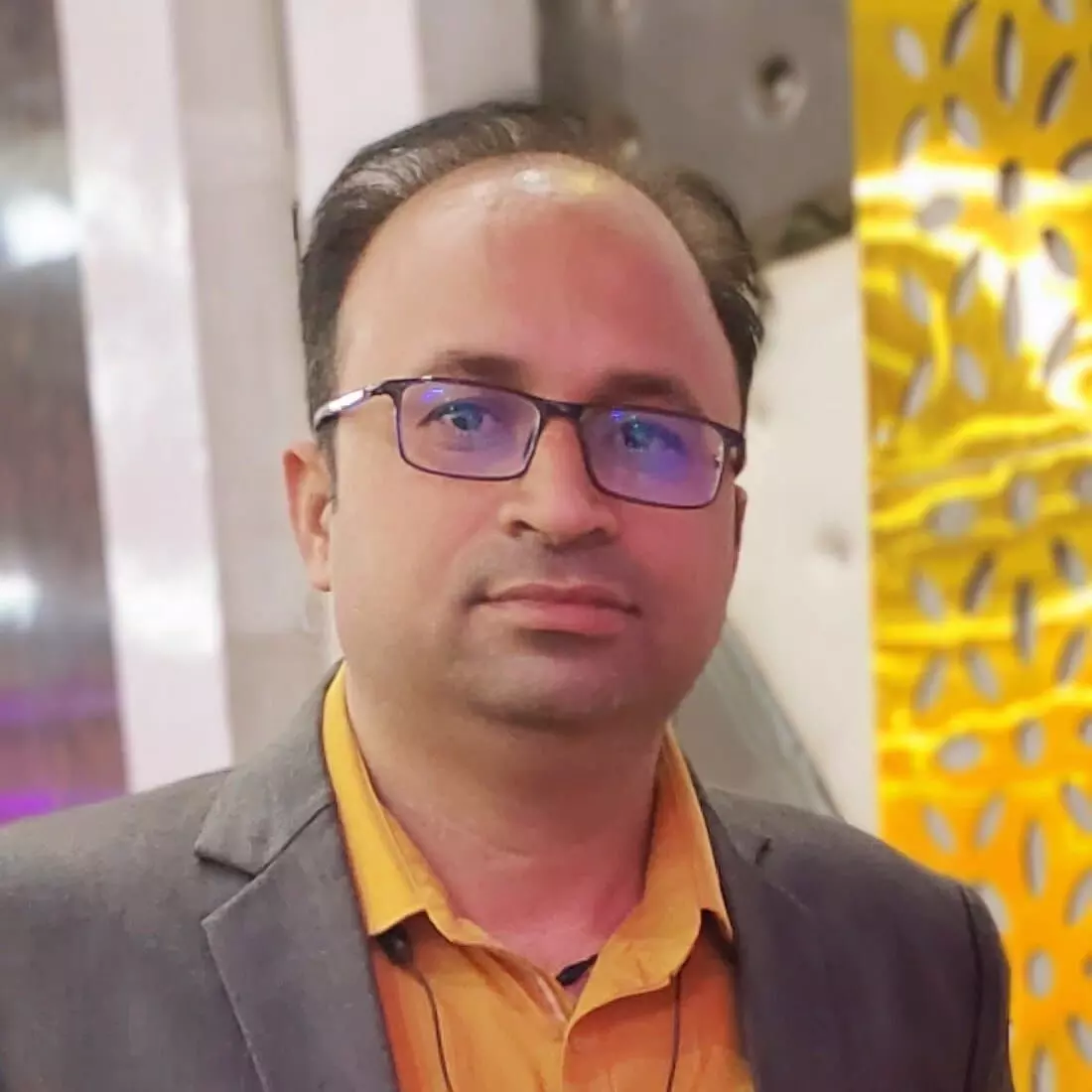
Into this atmosphere of weariness has stepped Shantanu Bharali, a senior party figure and former legal adviser to the Sonowal government. Known for his intellectual restraint and solution-driven approach, Bharali represents the liberal strand within the BJP — pragmatic, constitutional, and conciliatory.
His recent remarks questioning the conduct and intent of the Special Investigation Team (SIT) probing Zubeen Garg’s death have rippled through Assam’s political circles. Bharali’s critique was not reckless; it was methodical. But in the current climate, even mild dissent resonates as rebellion.
Political observers quickly noted a subtler signal behind his words. As one analyst put it:
> “When Bharali speaks, Delhi listens — or perhaps, Delhi speaks through him.”
This reading has gained traction in both Guwahati and Delhi. At a time when the BJP’s Assam leadership is caught between its aggressive face (Sarma) and its absent one (Sonowal), Bharali’s calibrated voice presents a third way — a figure who can restore balance between power and persuasion.
VII. The Delhi Equation and the Search for a Corrective
The 2026 Assam Assembly election is shaping up not only as a state contest but also as a referendum on the BJP’s internal discipline and direction. The central leadership in Delhi has grown increasingly wary of regional overreach — where charismatic state satraps become liabilities rather than assets.
Assam, once a showcase of the BJP’s northeast expansion model, now looks like a warning case of over-concentration of power. The Centre’s political managers — ever attentive to perception — may seek a reset through moderation, not confrontation.
In that scenario, a liberal and legally grounded leader like Shantanu Bharali fits the requirements:
He carries the administrative legacy of Sonowal but without the baggage of inertia.
He respects the central command yet maintains a technocratic distance from factional games.
He can bridge the gap between the party’s nationalist tone and Assam’s regional sensitivities.
If the BJP wishes to project renewal without rupture — to convey change without chaos — Bharali offers that precise optic.
VIII. The Liberal Counterbalance
The political air in Assam is thick with paradox. The Chief Minister’s relentless energy is now indistinguishable from exhaustion. The former Chief Minister’s restraint has become near invisibility. The government’s control over the narrative has yielded a credibility crisis.
In this milieu, Shantanu Bharali’s emergence is not merely a political footnote; it is a potential pivot. His voice — calm, reasoned, yet firm — signals a possible recalibration within Assam BJP: from confrontation to consultation, from charisma to competence.
And in Delhi’s strategic imagination, where symbolism often outweighs substance, the logic seems almost inevitable —
> Suave Shantanu Bharali is the ultimate choice for Delhi.