Assam BJP on Fragile Ground: The Looming Battle of 2026
Welfare fatigue, identity anxieties, corruption whispers, and cultural setbacks weaken Himanta Biswa Sarma’s dominance as opposition regroups.

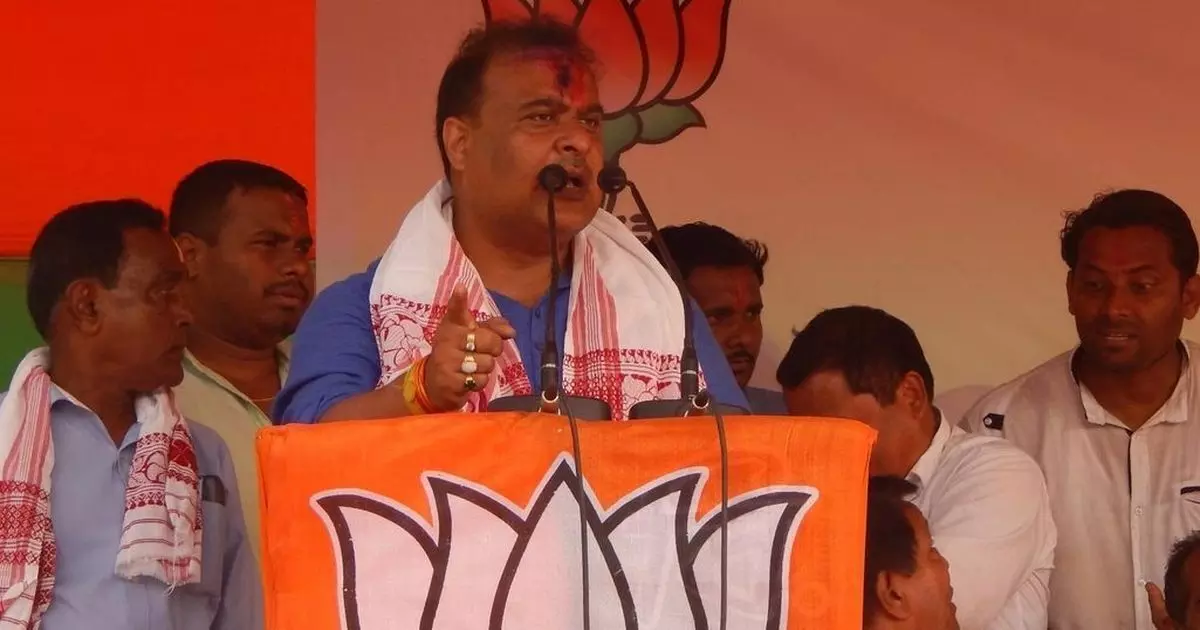
The Bharatiya Janata Party (BJP) in Assam, once electorally dominant under Chief Minister Himanta Biswa Sarma (HBS), now faces a convergence of vulnerabilities ahead of the 2026 assembly elections. A brittle leadership structure, diminishing returns from welfare politics, intensifying ethnic and demographic anxieties, corruption undercurrents, and reputational damage from cultural-symbolic failures expose the limits of BJP’s Assam model. Simultaneously, the opposition—though uneven—shows signs of reawakening, while Delhi and Nagpur’s subtle pressure on HBS signals unease within the party’s central command. For the first time since 2016, Assam’s political trajectory points toward a genuine contest rather than a foregone conclusion.
Leadership Fragility and Organizational Bottlenecks
The BJP in Assam operates as a leader-centric structure dominated by HBS. While his tactical acumen and political charisma remain unrivalled, the absence of autonomous second-rung leadership creates overdependence. Sycophancy substitutes for merit in decision-making, producing a fragile organizational chain where grassroots discontent simmers quietly. In strategic terms, this poses a dual risk: electoral mobilization becomes overly reliant on a single individual, and the party risks institutional stagnation once voter fatigue with HBS sets in.
The Saturation of Welfare Politics
Since 2016, the BJP’s electoral consolidation has rested heavily on welfare delivery—direct benefit transfers, health coverage, and subsidy-driven schemes. However, by 2025, welfare has transitioned from being a differentiator to an expectation. The diminishing marginal returns of welfare as political capital are now visible: schemes no longer generate gratitude, only entitlement. Without an ideological or visionary narrative to supplement welfare, the BJP risks facing an electorate that views handouts as routine governance rather than transformative leadership.
Identity Politics Reasserted
Assam’s politics remain anchored in the axes of ethnicity, demography, and land. Current trends suggest a re-sharpening of these anxieties:
Ethnic Assertion: Indigenous groups are reasserting political demands, often in tension with state-level policy.
Demographic Fears: Immigration-linked anxieties continue to shape political discourse, particularly in border districts.
Land Rights: Land policy decisions risk triggering conflicts across communities.
These are high-volatility issues that cannot be defused through welfare schemes or PR. For the BJP, managing these identity triggers without alienating core constituencies is its greatest balancing act.
Exposed Vulnerabilities: The BTR and the Zubeen Factor
Two developments illustrate the BJP’s vulnerability in Assam:
1. Bodoland Territorial Council (BTC) Elections: The resurgence of the Bodoland People’s Front (BPF) underscores the limits of BJP dominance in the Bodo heartland. For a region strategically vital to state-level arithmetic, the result reflects erosion of trust and the persistence of sub-regional satraps.
2. The Zubeen Garg Case: The prolonged delay in delivering justice on Zubeen Garg’s death has undermined public trust. Zubeen was more than an artist—he was a cultural icon and an emotional touchstone for Assamese identity. Government inaction risks alienating youth and middle-class voters, constituencies that have historically amplified BJP’s urban and semi-urban gains.
Opposition: Fragmentation to Reawakening
While the opposition remains structurally weaker than the BJP, its leadership profile has improved compared to 2021:
Gaurav Gogoi emerges as a credible challenger, combining national recognition with regional resonance. His intellectual legitimacy and generational appeal make him a focal point for anti-BJP sentiment.
Lurin Jyoti Gogoi’s declining threat profile reduces the space for anti-HBS mobilization, indirectly aiding the BJP.
Akhil Gogoi, though inconsistent, retains disruptive capacity in pockets of rural Assam, particularly where agitation remains potent.
The re-emergence of opposition leadership indicates that 2026 may not be a one-sided electoral battle but a competitive, multi-polar contest.
Decline of Symbolic Mobilization
The BJP’s past success in transforming symbolic issues—temple politics, dress codes, cultural flashpoints—into mobilizing narratives is losing traction. Electorates are increasingly preoccupied with governance failures, corruption allegations, and identity-linked concerns. This erosion of symbolic politics weakens the BJP’s ability to dominate the emotional register of elections, a space it once monopolized.
Corruption: The Silent Volatility
While corruption is not the most publicly debated issue in Assam, it remains a volatile undercurrent in state politics. Allegations surrounding the “kitchen cabinet” of HBS—where close associates are seen to benefit disproportionately from proximity to power—have eroded the government’s moral credibility.
This is a least-discussed yet multidimensional threat:
For HBS personally, corruption chatter tarnishes his image as a decisive administrator.
For the BJP organization, it creates disenchantment among cadres excluded from inner circles of influence.
For the 2026 elections, it offers the opposition a latent but powerful line of attack that could resonate if tied to governance failures and the erosion of credibility.
Increasingly, ministers and functionaries appear reluctant to engage openly with the public, reflecting a loss of confidence in defending the government’s integrity. Though corruption has not yet crystallized as a dominant electoral issue, its potential to destabilize the BJP narrative makes it one of the most unpredictable variables of the coming contest.
Signals from Delhi and Nagpur
The shifting media discourse on HBS’s credibility reflects not only local discontent but also central unease.
Delhi’s Lens: For the party high command, increased media scrutiny signals conditional support—HBS remains vital but not indispensable. Central monitoring implies a demand for accountability and alignment with broader electoral strategy.
Nagpur’s Lens (RSS): The Sangh is concerned about organizational health. Excessive dependence on HBS, rising sycophancy, and a weakening grassroots cadre threaten long-term ideological consolidation. The RSS seeks a recalibration of party-organization balance to ensure sustainability beyond individual charisma.
These pressures suggest that HBS is simultaneously indispensable and under scrutiny—a paradox that defines BJP’s Assam strategy going into 2026.
Toward a Genuine Contest
The BJP enters the 2026 Assam elections not as a comfortable incumbent but as a party navigating fragile ground. The convergence of welfare fatigue, identity reassertion, organizational fragility, corruption undercurrents, reputational crises, and central unease produces a volatile electoral environment. HBS’s tactical maneuvering and personal charisma remain the BJP’s strongest assets, but over-reliance on these factors without institutional depth risks electoral slippage.
For the first time in a decade, Assam’s electorate appears poised not for reaffirmation of dominance but for a genuine contest. Whether HBS can recalibrate strategies and convert vulnerabilities into opportunities will define the future trajectory of BJP’s Assam model.