Assam’s Political History and the Legacy of 27 July 1991: A Turning Point in Insurgency and Statecraft

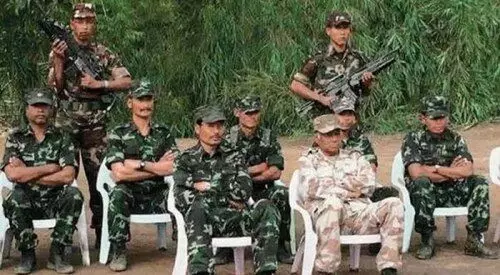
Background: The Rise of ULFA and the Gun Narrative
Assam in the late 20th century became a crucible of identity politics, resource exploitation, and centralized neglect. The birth of the United Liberation Front of Asom (ULFA) in 1979 was not an isolated event, but the product of cumulative historical grievances — unemployment, illegal immigration, and cultural marginalization.
ULFA’s early ideology borrowed heavily from Maoist revolutionary lines, most notably the dictum:
“Political power grows out of the barrel of a gun.”
The movement positioned itself as the vanguard of Assamese nationalism, promising sovereignty and dignity through armed revolution. By the late 1980s, ULFA had established strongholds across the state, gathering both support and fear.
1991 Sipajhar Incident: The Breaking Point
On 27 July 1991, a roadside IED blast targeted a BSF convoy near Sipajhar. In retaliatory firing, BSF troops killed 5 local civilians working in their fields. The incident caused a seismic shift in public sentiment.
In a quick political move, ULFA declared the deceased as “Swahid” (martyrs) to contain public anger and prevent a rupture between the outfit and the Assamese society.
However, this was not an act of heroism — it was an act of desperation. For the first time, ULFA’s credibility was questioned not just by the state, but from within the Assamese civil society.
Paresh Baruah’s Decline and Strategic Crisis
The Sipajhar episode exposed the moral vulnerability of ULFA’s military wing. Paresh Baruah, the military commander who had until then enjoyed unchallenged dominance, began to lose ground. His hardline stance — rooted in armed struggle without accountability — became increasingly difficult to justify.
The political wing of ULFA sensed this erosion. In January 1992, just six months after Sipajhar, they initiated direct peace talks with the Indian government in New Delhi — a significant departure from ULFA’s previous dogma of armed secession.
This was a turning point in Assam’s political history: the ideological fracture between ULFA’s political and military wings became public. It marked the beginning of the end of ULFA’s revolutionary romance, and the start of a new chapter of negotiated nationalism.
Cultural Frame: The Mahabharata and Assam’s Kurukshetra
In the Mahabharata, war is not just a battle of weapons, but of dharma (moral duty). The Sipajhar incident represents a similar Kurukshetra for Assam — a moment when moral lines were blurred.
Paresh Baruah becomes a figure akin to Karna: loyal, skilled, but undone by ethical miscalculations.
The civilians at Sipajhar mirror characters like Abhimanyu or Eklavya — victims of political decisions made in ivory towers or jungle hideouts.
The Indian state, post-Operation Bajrang, plays a Krishna-like role — combining strategic patience with psychological warfare, breaking the enemy not just by force but by exposing their contradictions.
Implications for Assam’s Political Evolution
The events of 27 July 1991 and the early 1992 talks helped:
1. Break the myth of ULFA’s invincibility.
2. Expose the gap between militant ideology and ground reality.
3. Reinforce civil society’s power to influence insurgent narratives.
4. Create space for moderate voices, eventually leading to later splits (e.g., ULFA (Pro-Talks) vs ULFA (I)).
This period also redefined public expectations — from sovereignty through violence to dignity through dialogue.
Conclusion: A Political and Moral Reckoning
Assam’s political history cannot be told through electoral maps alone — it must include the psychological battlegrounds like Sipajhar. The 27 July episode stands as a pivotal moment where armed nationalism met ethical collapse, and diplomacy emerged not from trust, but from necessity.
In Assam, as in the Mahabharata, the struggle is never just between state and rebel — it is between