Ayodhya Verdict Based on Law, Not Faith: Ex-CJI Chandrachud Clears Air on Babri Masjid Remarks
At India Today Conclave, former Chief Justice DY Chandrachud defends Supreme Court’s Ayodhya judgment, addresses controversy over Babri Masjid comments, and speaks on judicial independence and personal faith.

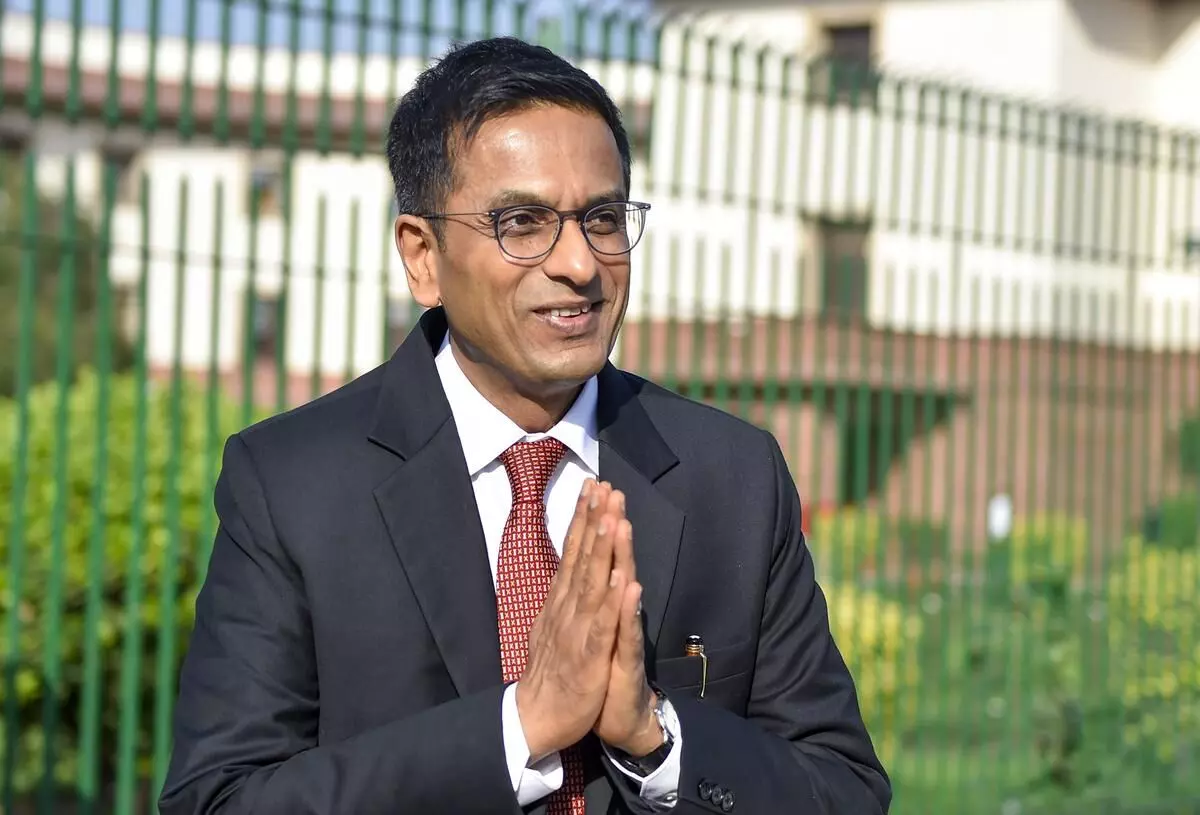
At the India Today Conclave in Mumbai, former Chief Justice of India (CJI) DY Chandrachud addressed the recent controversy surrounding his remarks on the Babri Masjid and clarified the basis of the Supreme Court’s 2019 Ayodhya verdict. He emphasized that the decision was rooted in legal evidence and constitutional principles, not religious belief or faith.
Chandrachud, who was part of the five-judge bench that unanimously ruled in favour of constructing a Ram temple at the disputed site, said the judgment was the result of detailed scrutiny of historical and legal records. “The judgment was 1,045 pages long because the case record ran over 30,000 pages. Most critics haven’t read it. It’s easy to form opinions on social media without understanding the full context,” he said.
Responding to backlash over his reported comment that the “erection of the Babri Masjid was a fundamental act of desecration,” Chandrachud clarified that his words were taken out of context. He explained that selective quoting had led to misinterpretation, noting, “What is happening on social media is that people lift one part of the answer and combine it with another, completely removing the context.”
On the broader issue of judicial independence, Chandrachud expressed concern over how public perception is increasingly shaped by ideological bias. “Unless a judge decides every case in line with a netizen’s ideological view, they’re not seen as independent. If you rule even once in favour of the government, you're called pro-government,” he said. He pointed to several landmark rulings that went against the government, including the electoral bonds case, the Aligarh Muslim University minority status case, and the Aadhaar verdict, as proof of the judiciary's impartiality.
When asked whether personal prayer could undermine judicial neutrality, Chandrachud said spiritual practices are a personal means to maintain balance. “Judges enter a zone of conflict every day. I pray or meditate each morning to bring peace and clarity to my work,” he said, sharing that during his career he had recited the Navkar Mantra, visited dargahs in Allahabad, and attended church services in Goa.
He stressed that belief and prayer are constitutionally protected and do not interfere with fairness. “My faith allows room for others to believe differently. Quiet reflection helps judges deliver justice with an even hand,” he concluded.