Bandhwari Landfill: Gurugram’s Toxic Secret Beneath the Shine
Once an isolated dumping site, the Bandhwari landfill has grown into a full-blown environmental crisis, posing serious health and ecological risks to nearby villages and even upscale residential communities in Gurugram.

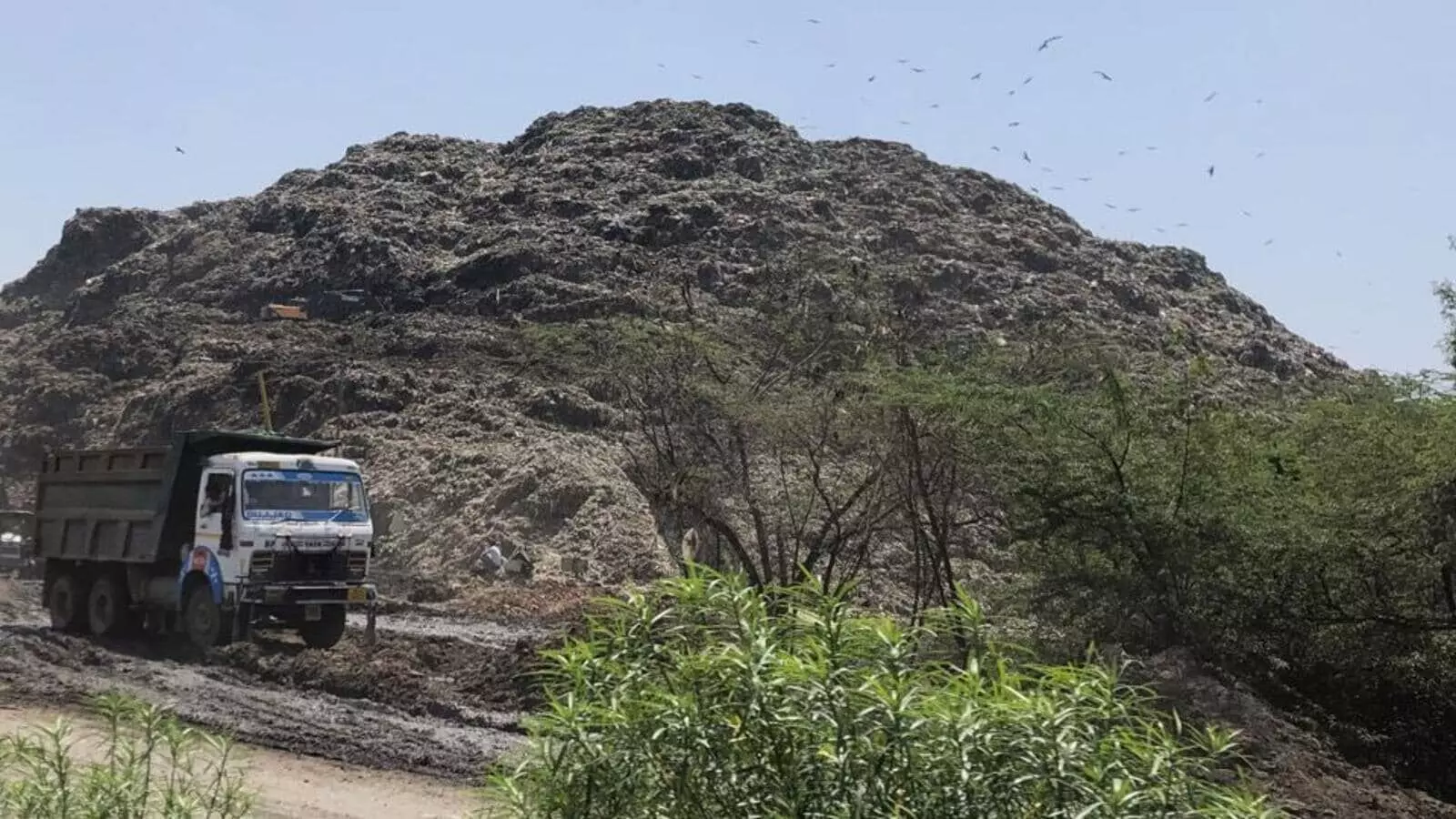
Just beyond the glitzy skyline of Gurugram — with its towering condos, sprawling golf courses, and glass-clad offices — lies a grim reminder of the city's underbelly: the Bandhwari landfill.
Located off the Gurugram-Faridabad Road, this 30-acre garbage mountain now stands nearly 37 metres high — a towering monument to environmental neglect and the unchecked costs of rapid urbanisation. What was once a serene area bordering the Aravalli hills has been transformed into one of the region’s worst ecological and public health nightmares.
Every single day, over 1,600 tonnes of mixed waste are dumped here — 1,000 tonnes from Gurugram and 600 from Faridabad. Originally planned in 2010 as a "scientific waste management facility," Bandhwari has instead become an open dumping ground, where less than half the waste is treated. The rest is left to fester — seeping into groundwater, poisoning the air, and threatening the health of both humans and animals alike.
The impact isn’t just on the environment — it’s on people’s lives.
Residents of nearby villages like Bandhwari, Baliyawas, and Gwal Pahari — along with high-end housing societies such as Ansal Valley View Estate, Paras Quartier, and Suncity Vatsal Valley — are facing the brunt of this crisis. Toxic air, foul-smelling groundwater, and a sharp rise in respiratory illnesses and even cancer have left these communities reeling.
“Before the dumping yard, our air was clean. Now, the stench is constant, and people are falling sick,” said Mahipal, a Bandhwari villager.
Nihal, another resident, added grimly, “The groundwater smells bad. Many here have cancer. Even our cattle are dying.”
Gurugram’s real estate boom has hit a wall — quite literally. The constant fires and toxic smoke from the landfill have not only impacted public health but also stifled investment in areas that were once pegged to be future urban hotspots.
“Our society is a few kilometres away, but when the landfill catches fire, we can’t breathe. You can see the smoke from our terrace,” said Varun Kalra, a resident of Ansal Valley View Estate.
Garbage occasionally spilling onto the main road connecting Gurugram and Faridabad has made things worse — creating traffic hazards and further diminishing the area’s appeal.
In a bid to cover the growing trash heap, a metal shed is being hastily installed along the road — more for optics than impact. A group of 15 labourers, many without safety gear, toil in brutal conditions under the sun and the stench.
“Working here is very tough,” said Harsh, a minor among the team. “But we don’t have any other way to earn.”
This thin veil of metal may hide the garbage from passing vehicles, but it does nothing to protect those forced to live and work here.
In 2023, the National Green Tribunal slapped a ₹100 crore fine on the Haryana government for failing to manage the Bandhwari landfill. The ruling triggered fresh promises, including new commitments from the Urban Local Bodies Minister. Yet, real progress has been slow.
Out of the 2 million tonnes of legacy waste that was supposed to be treated by June 2025, only half has been processed so far. Meanwhile, the daily dumping of new waste continues — unchecked and largely unsegregated.
Basic waste management practices like door-to-door collection and segregation at source remain inadequate, if not absent altogether.
The government has proposed a waste-to-energy plant to tackle the mess — but environmentalists say that’s a disaster waiting to happen.
“Burning waste in a city already choking on pollution is the worst idea,” said environmentalist Nishant Verma. Instead, he argues for decentralised waste segregation — a community-first approach that could reduce landfill loads by up to 80%.
Despite being in a politically significant constituency — Sohna, a BJP stronghold — Bandhwari remains low on the action list. In an attempt to calm public anger, the state recently floated a ₹96 lakh tender to ‘beautify’ the landfill frontage. But critics say this is like putting lipstick on a toxic wound — the real problem lies deep within the waste management system itself.
Unless waste segregation becomes a household norm and systemic changes are introduced at every level — from collection to treatment — the crisis will only grow.
For now, the garbage mountain continues to rise, slowly leaking poison into the soil, air, and water of a city that prides itself on being the face of new India.
Beneath Gurugram’s polished façade lies Bandhwari — a festering, growing wound that no metal sheet can hide.