Beedi Politics: GST Cut Sparks NDA vs INDIA Row Ahead of Bihar Polls
“Why has a GST cut on beedis become a hot election issue in Bihar 2025? NDA vs INDIA spar over rural jobs, tobacco trade and Maoist economy.”

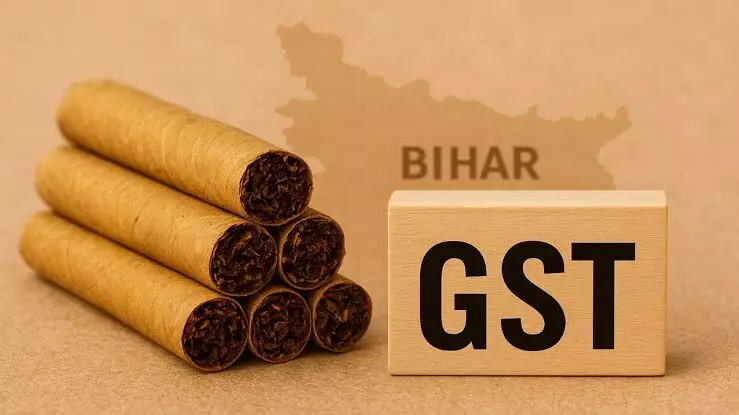
With the Bihar assembly elections approaching, an unexpected controversy has overtaken traditional poll issues. What began as a policy decision in New Delhi has spiraled into a full-fledged political battle between the NDA and the INDIA bloc—centered around the humble, smokeless beedi.
The row was triggered in faraway Kerala, when a state Congress leader linked Bihar to the GST slash on beedis. Finance Minister Nirmala Sitharaman’s announcement—reducing GST from 40 percent to just 5 percent—was quickly branded by the opposition as a calculated favor to poll-bound Bihar, where beedis have deep social and economic roots, especially in rural belts.
Beedi-making is not just an occupation but a generational tradition across Bihar and parts of West Bengal. In districts like Munger, Jamui, and Nalanda, over two lakh families are engaged in manufacturing beedis under various brand names. Workers, often entire families, earn between ₹280 to ₹400 a day, but their livelihood comes at a heavy health cost—chronic lung diseases remain rampant among them.
Nationally, Gujarat tops the list of beedi consumers, followed by Andhra Pradesh, Karnataka, and Maharashtra. Bihar ranks fifth. Alongside beedis, local tobacco forms like khaini dominate in Bihar, Madhya Pradesh, western Uttar Pradesh, and Jharkhand. Districts such as Vaishali, Muzaffarpur, and Samastipur are also major tobacco cultivation hubs, where leading tobacco companies procure raw leaves directly from villages through agents.
The beedi industry is uniquely labor-intensive, drawing in cheap labor. In states like Chhattisgarh and Madhya Pradesh, tendu leaves (tendu patta) serve as the raw material for beedis. In Bastar, Surguja, and Raigarh in Chhattisgarh, and in Mandla and Dhar in Madhya Pradesh, tendu collection is not just work—it is a family tradition among tribal communities.
To regulate this sector, both states have established Forest Development Corporations as nodal agencies for collection, trade, and marketing of tendu leaves. Incentives in the form of annual bonuses are offered to registered pluckers, with Chhattisgarh alone recording nearly 50 lakh registered tendu plucker societies.
But tendu patta has long been a flashpoint. For years, Naxal groups exploited both pluckers and traders, wresting control of the trade and turning it into a parallel economy. Many political leaders—across party lines—rose to power riding on the lucrative beedi network.
Now, leaders and forest officials from Bastar argue that the GST cut could strike at the Maoist economy by boosting legitimate trade. With Home Minister Amit Shah also handling the cooperative portfolio, the Centre is eyeing a strategy: strengthen beedi and tendu patta cooperatives in Maoist-affected belts and dismantle the financial clout of the Left-wing insurgents by March 31 next year.
Interestingly, senior leaders insist that Bihar was not the primary focus of the GST decision. “This is aimed at Chhattisgarh’s Bastar, not Bihar,” one senior official said, countering INDIA bloc’s allegations of electoral appeasement.
Yet, on Bihar’s election ground, perception matters more than policy intent. And in the smoky haze of poll narratives, the beedi has suddenly become a decisive campaign issue.