Bihar’s Madhepura rail factory begins export of ‘Komo’ locomotives to Guinea under ₹3,000-cr deal
First batch of Made-in-India 4,500 HP ‘Komo’ locomotives rolls out from Bihar’s Madhepura plant for export to Guinea under ₹3,000-cr agreement

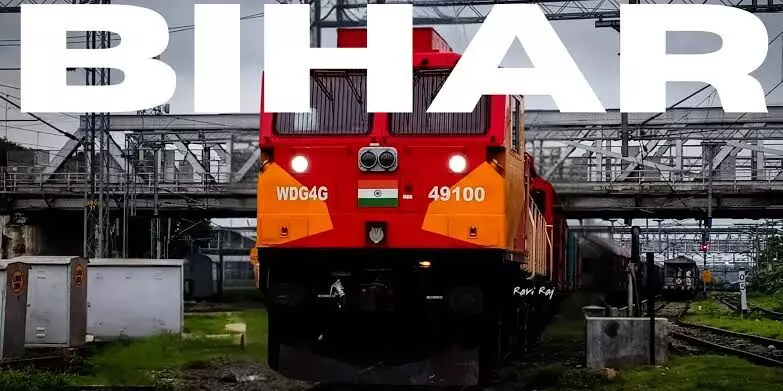
Patna, August 24: Bihar’s Madhepura Electric Locomotive Factory has scripted a new chapter in India’s railway manufacturing story. The plant has dispatched its first consignment of four locomotives to the West African nation of Guinea. The blue-painted engines, christened Komo, will soon run on Guinea’s tracks under a ₹3,000-crore export agreement signed earlier this year.
A Guinean delegation had visited the facility in May-June 2025, finalising the export of 140 high-horsepower locomotives. Within two months, the first batch has been flagged off, making the Madhepura unit India’s newest hub for railway exports under the Make in India initiative.
High-powered engines with global standards
Each locomotive has a power capacity of 4,500 horsepower, fully air-conditioned cabins, and is equipped with event recorders, advanced loco controls, and specialised AAR braking systems. Uniquely, while Indian Railways operates red and yellow engines, Guinea’s export models sport a blue livery.
Built on a sprawling 200-acre site, the Madhepura plant began operations in 2018. Production averages one locomotive every two days, backed by a robust infrastructure — 2,000-plus pillars, 4.6 km boundary wall, 4.8 km of internal roads, and 1.8 km of rail lines inside the premises. Over 10,000 workers, including 1,528 direct employees, power the facility, with 99 per cent hailing from Bihar. Women employees play a crucial role in welding, crane operations, assembly, and testing, with the average workforce age being just 24 years.
Exports set to expand
Since inception, the factory has manufactured 700 locomotives and maintained over 250 units, surpassing maintenance numbers at the Gandhidham (Gujarat) plant. On average, 100 locomotives are produced annually, and plans are underway to scale up production to 6,000 HP engines.
The Madhepura factory is also a model of private investment in Bihar. The Railway Ministry holds a 24 per cent stake, while global rail major Wabtec owns 76 per cent. Built with an initial investment of ₹800 crore, the facility is projected to see investments rise to ₹3,000 crore in the coming years.
Economic boost to Bihar
The factory contributes significantly to Bihar’s economy, generating ₹900 crore annually in GST for the state exchequer — a similar amount going to the Centre. Its power bill alone exceeds ₹50 crore annually. The project has spurred rapid local development, with three hotels, seven restaurants, six schools, three banks, and six ATMs mushrooming in the surrounding areas.
For perspective, Varanasi’s rail factory exported just 15–20 locomotives in the last 50 years. In contrast, the Madhepura unit will export 140 locomotives to Guinea alone, placing Bihar firmly on the global railway manufacturing map.