Bodoland Politics and the Absorbed Calculus: Hagrama, BPF, UPPL, and HBS’s Strategic Gamble
The BPF’s comeback has redrawn Assam’s Bodo political landscape, forcing the BJP and UPPL into tactical dependence as HBS navigates a fragile equilibrium ahead of 2026.

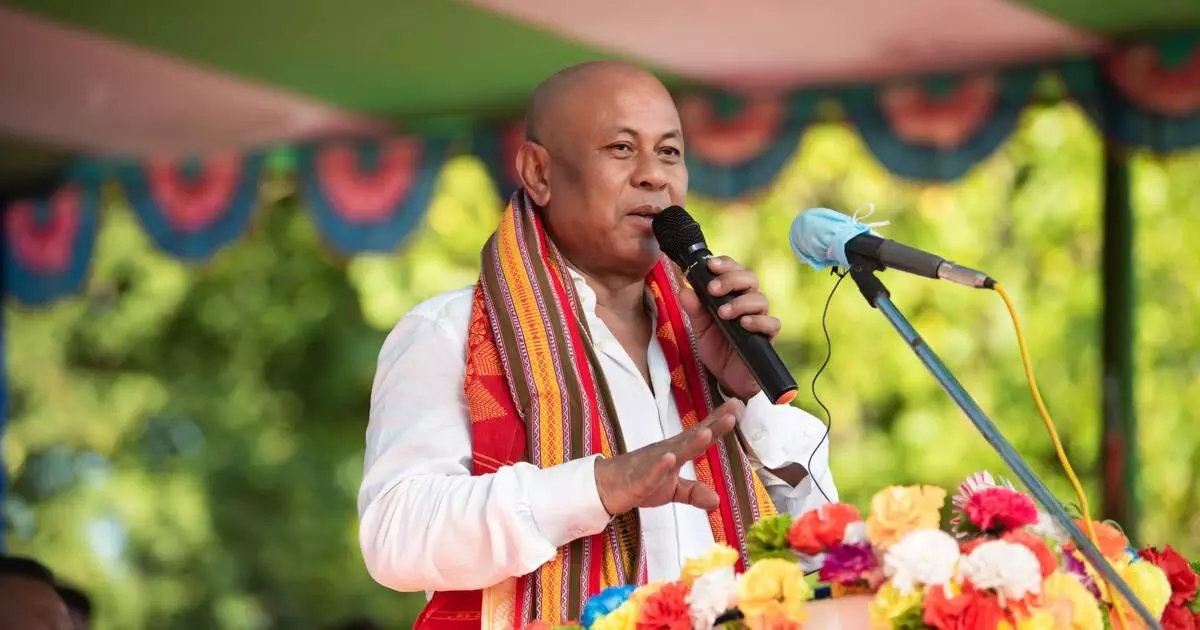
The political landscape of Assam’s Bodoland Territorial Region (BTR) has shifted dramatically following the recent Bodoland Territorial Council (BTC) elections. The Bodoland People’s Front (BPF), led by Hagrama Mohilary, staged a decisive comeback, asserting both institutional control and emotional resonance with the Bodo electorate. This resurgence positions Hagrama as a kingmaker in the 2026 Assam Assembly elections.
In contrast, the United People’s Party Liberal (UPPL), led by Pramod Boro, retains its formal alliance with the BJP, but its political leverage has weakened. The post-BTC period has produced a reactionary and ad-hoc power equation, with HBS employing a strategy of “absorption over alliance loyalty” to balance competing forces in the BTR.
Hagrama’s Strengthened Position
Hagrama’s BTC victory restored both the administrative authority and emotional legitimacy of the BPF in Bodoland. With a renewed mandate, he controls the machinery of local governance and commands the loyalty of Bodo voters, giving him influence over 12–15 critical Assembly constituencies in the BTR belt. This dual advantage — institutional and identity-based — makes him indispensable to any coalition in 2026.
Hagrama’s resurgence also reshapes perceptions: BJP and UPPL must now contend with a Bodo electorate that sees BPF as a credible force capable of delivering electoral outcomes and shaping regional narratives.
Absorbed Politics: HBS and the BPF–UPPL Equation
In a calculated move reflecting his absorbed politics approach, HBS inducted a BPF MLA (Jiron Basumatary) into his ministry while excluding UPPL MLAs, despite UPPL being BJP’s official Bodo ally. This is not mere cabinet reshuffling — it is a strategic signal:
1. Absorption over loyalty: HBS demonstrates that party alliance alone does not guarantee reward; power flows through him personally.
2. Neutralizing BPF resurgence: Co-opting a BPF legislator mitigates potential hostility from Hagrama while keeping the party partially tethered.
3. Pressuring UPPL: The move signals to UPPL that their position is conditional; they must remain dependent on HBS’s patronage to maintain influence.
The effect is a reactionary, short-term equilibrium: both BPF and UPPL are contained but mistrustful, and HBS remains the central arbiter.
Shortcomings and Strategic Risks
While tactically brilliant, HBS’s approach exposes several vulnerabilities:
Ad-hoc management: Balancing BPF and UPPL is reactive rather than structural, leaving the alliance network fragile.
Grassroots alienation: UPPL cadres feel sidelined, and Bodo voters may perceive BJP as manipulative.
Centralization risk: Decisions flow almost entirely through HBS, limiting second-line leadership and organisational depth.
Emotional disconnect: HBS prioritizes tactical leverage over the identity-driven sentiments that dominate Bodo politics.
These factors create a fragile coalition, where short-term stability may give way to voter disillusionment or factionalism.
Implications for the 2026 Assam Assembly Election
Short-term: Induction politics projects HBS as the undisputed arbiter in Bodoland and stabilizes immediate relations with both BPF and UPPL.
Medium-term: The reactionary balance may erode margins in marginal constituencies if UPPL cadres are demotivated or BPF pushes aggressive seat-sharing demands.
Long-term: Without formalised, trust-based alliances that respect Bodo identity and local autonomy, ad-hoc absorption could backfire, threatening BJP’s dominance in the Bodo belt and HBS’s broader electoral ambitions.
A Tactical Gambit with Fragile Foundations
HBS’s strategy of absorbing a BPF MLA over rewarding UPPL exemplifies his short-term tactical brilliance, securing immediate control and mitigating immediate risks. It demonstrates his ability to manipulate competing Bodo parties and maintain BJP dominance.
However, this approach is ad-hoc and reactionary, relying on transactional loyalty rather than durable partnership. The next 12 months will test whether HBS can transform tactical absorption into sustainable political architecture, or whether Bodoland’s emotional and identity-driven politics will expose the limits of his strategy.
In Bodoland, the calculus is clear: Hagrama has regained relevance, BPF and UPPL operate in cautious competition, and HBS holds temporary dominance — but only time will reveal whether this dominance can survive the test of 2026.