CJI B.R. Gavai Calls for Empathy, Accountability, and Long-Term Vision in Legal Aid Movement
At NALSA’s national conference valedictory, Chief Justice urges institutional planning, social audits, and support for grassroots legal aid workers to ensure justice reaches every citizen.

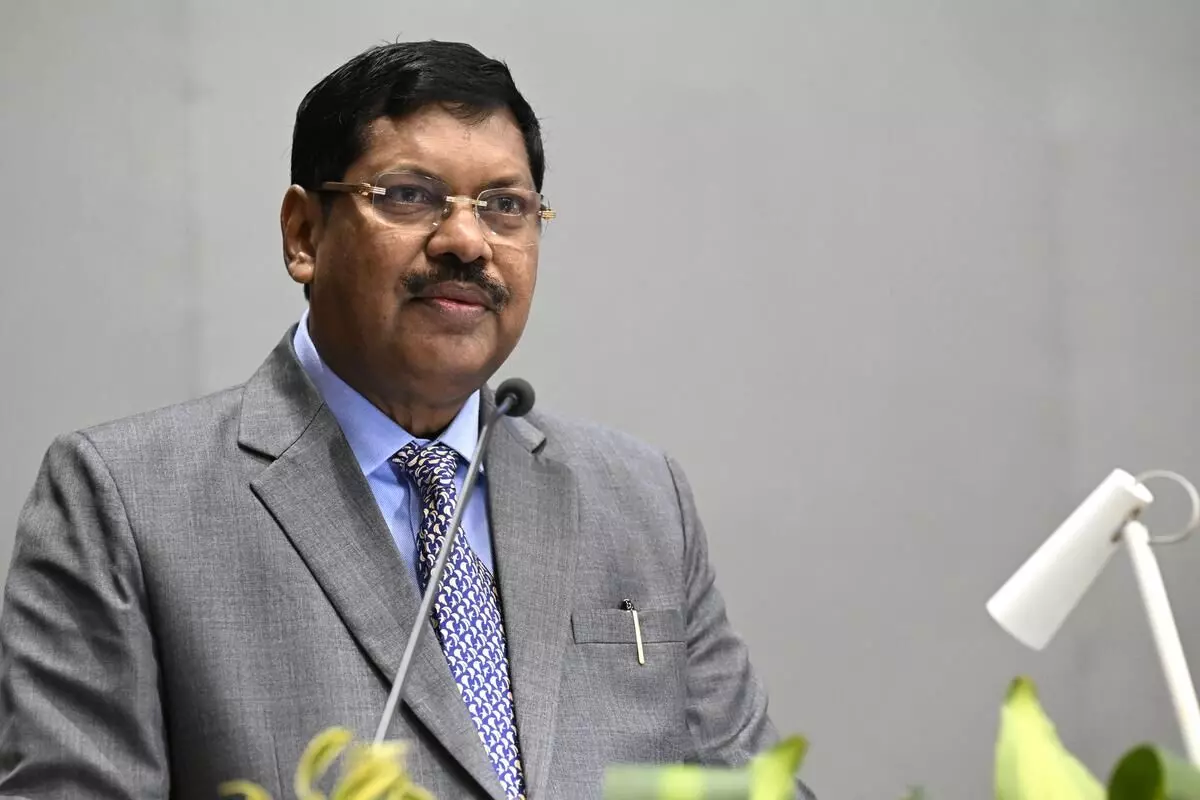
Chief Justice of India B.R. Gavai on Sunday underscored the need for sustained institutional planning, ground-level empathy, and accountability in the legal aid movement.
He said this during his address at the valedictory session of the National Conference on “Strengthening Legal Aid Delivery Mechanisms” held here.
The event, organised by the National Legal Services Authority (NALSA), marked a reflective closure to two days of detailed deliberations on advancing equitable access to justice across the country.
Delivering his valedictory remarks, CJI Gavai said that the legal services movement in India has travelled a long way from modest beginnings to a comprehensive nationwide structure. However, he emphasised that the true measure of progress lies not in the number of initiatives launched, but in the depth of their impact on people's lives.
He stressed the necessity of continuous assessment rather than episodic review: "Progress is never measured merely by intentions. It is measured by our ability to assess real outcomes in the lives of the people we serve.”
He called for institutionalising this evaluative culture through structured social audits, research partnerships, and policy review with the support of academic and professional institutions.
Calling for long-term shared planning in NALSA, CJI Gavai suggested the establishment of an Advisory Committee comprising the current and incoming Executive Chairpersons of NALSA and State Legal Services Authorities to ensure continuity of mission and sustained implementation of key projects.
Reflecting on his own tenure as NALSA Executive Chairman, he recalled visiting remote regions of the Northeast and tribal belts where legal aid camps brought tangible benefits to thousands.
He emphasised that legal aid work requires “administrative imagination” and compassionate engagement rather than a strictly detached judicial approach.
CJI Gavai also highlighted the importance of respecting and adequately supporting paralegal volunteers, panel lawyers, and Legal Aid Defence Counsel, who he called the “backbone” of the legal aid system.
He urged all authorities to ensure timely and dignified remuneration, continuous training, emotional support mechanisms, and recognition frameworks to sustain their morale and commitment.
“Legal aid is not charity. It is a constitutional promise. Each volunteer, each defence counsel, each panel lawyer is restoring dignity where it has long been denied,” he said.
Concluding his address, the Chief Justice said the legal aid movement represents the humane face of the judiciary and affirmed confidence that the deliberations of the conference would guide the next phase of reforms: “When compassion meets commitment, and when law meets lived experience, real transformation becomes possible.”
Speaking after the Chief Justice, Executive Chairman, NALSA (CJI-Designate), Justice Surya Kant expressed pride in the expanding reach of NALSA, noting that its services have now touched some of the most remote and vulnerable communities of India: “NALSA’s imprint is visible in lives that might otherwise have remained unseen and unheard.”
However, he cautioned that the next phase of the legal aid journey must move beyond scale to impact. “The task ahead is to deepen our influence through innovation, technology, and empathetic association,” he said.
Justice Surya Kant highlighted key discussions from the conference, including, Legal Aid Defence Counsel System (LADCS): A structural shift towards coordinated, accountable defense services for the underprivileged.
Role of Panel Lawyers: Described as the operational pillars and first responders to public legal needs.
Para Legal Volunteers (PLVs): The “face of justice” in communities, crucial in spreading awareness, assisting with documentation, and guiding citizens toward legal remedies.
Permanent Lok Adalats: A reaffirmation of the importance of swift, amicable dispute resolution.
Sustainable Financial Support: Legal services institutions require stable fiscal planning to function effectively.
“The road to universal access to justice is long and winding,” he noted, “but our collective resolve, grounded in compassion and constitutional duty, must guide us forward.”
The dignitaries present at the occasion included Justice Vikram Nath, Judge of the Supreme Court of India & Chairperson of the Supreme Court Legal Services Committee, and Judges of the Supreme Court of India. Chief Justices and Judges from various High Courts, R. Venkataramani, Attorney General for India, Additional Solicitor General of India Tushar Mehta, Office bearers of the Supreme Court Bar Association (SCBA) and Supreme Court Advocates-on-Record Association (SCOARA)
Senior Advocates, members of NALSA, delegates from district judiciary, Legal Aid Defence Counsel, Panel Lawyers, and Para Legal Volunteers were also present.