December Belongs to Atal, the Year 2025 Becomes Modimay!
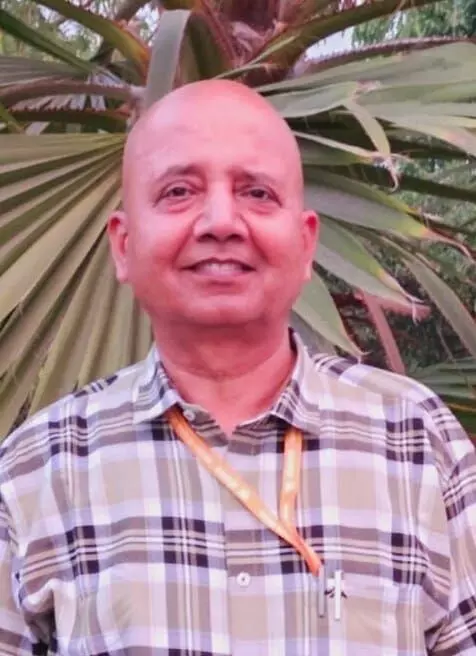
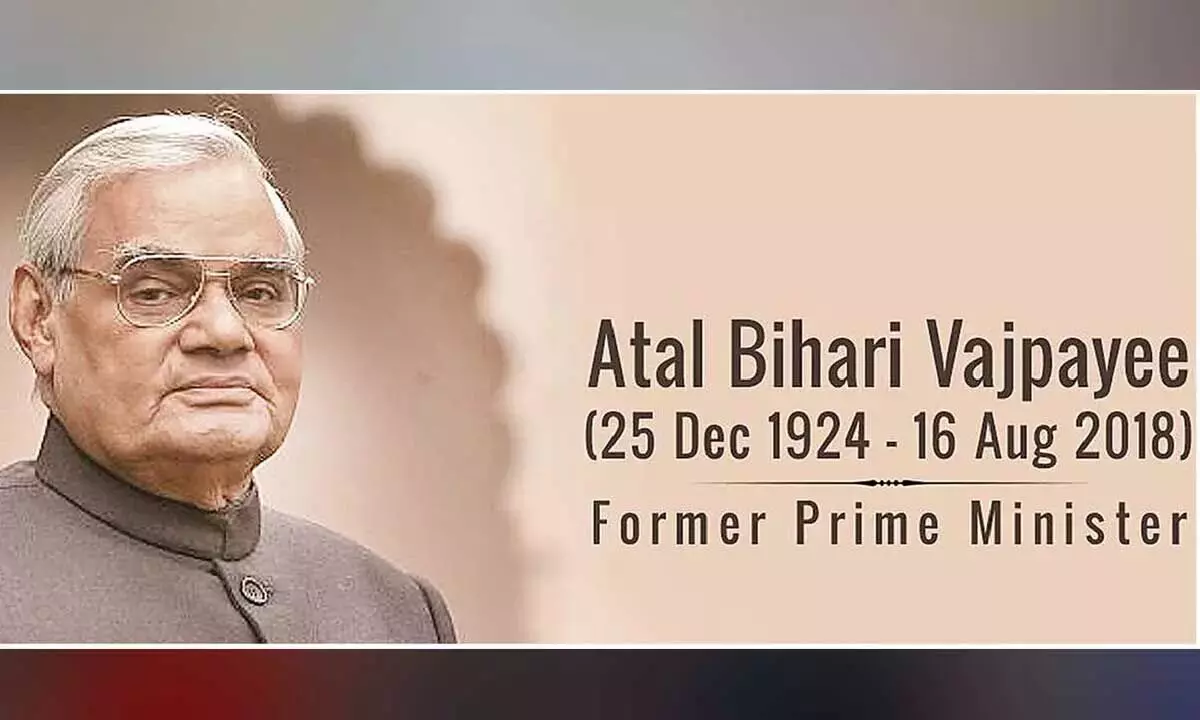
December belongs to former Prime Minister Atal Bihari Vajpayee, while the entire year 2025 belongs to Prime Minister Narendra Damodardas Modi. Both are renowned for their historic contributions, bold decision-making and creative leadership. Both are visionaries and nation-builders. Both carry the qualities of “Atal” (steadfastness) and “Narendra” (leadership). Unique and incomparable, both dominated global attention in their respective times.
Under both leaders, India repeatedly demonstrated courage in decision-making, strong employment generation and a firm response to terrorism and anti-national forces. Youth, women, farmers and soldiers remained central to their governance. Nationalism and cultural resurgence flourished, while disruptive elements—internal and external—were kept firmly in check.
Even though Atal Bihari Vajpayee is no longer physically present, December 2025 appeared deeply “Atalmay”. And in a world influenced by Trump, Putin and Israel, a large part of the globe—including India—appeared unmistakably “Modimay”. Traditionally a bipolar world has now evolved into a multipolar order, driven by bold decisions from China, Brazil and India.
Ironically, the rise of both Atal and Modi was shaped significantly by external forces—particularly the United States and Pakistan—while domestically, their stature was elevated by a disoriented opposition. Above all, however, it was their own indomitable will and relentless work ethic that made them what they became.
The nuclear tests and the Kargil victory immortalised Vajpayee as a great Prime Minister, while the surgical strikes, the COVID victory and the Atmanirbhar Bharat campaign made Narendra Modi an exceptional one.
Yet, both governments shared certain shortcomings whose consequences are still felt by common citizens. Neither could fully eradicate corruption, nepotism, factionalism, lack of transparency, discriminatory appointments or bureaucratic apathy. Both failed to remove ineffective ministers, vice-chancellors and officials in time. Both were also unable to ensure that government schemes and information reached their intended beneficiaries effectively.
Even today, governance deficits are visible. For example, despite the Aam Aadmi Party being out of power in Delhi for months, the Delhi Transport Corporation’s mismanagement has worsened, making public buses scarce for daily commuters—leading people to nostalgically praise the previous system. This shows how much remains to be done.
There are also fundamental differences between the two leaders. Vajpayee was born in colonial India, which made him naturally balanced and accommodating. He valued both opposition and governance. Even while opposing Indira Gandhi, he openly praised her when deserved. He skilfully bridged the divide between colonial and post-colonial mindsets and never hesitated to criticise even those within his own party.
Narendra Modi, born in independent India, is inherently freer in temperament. The world has witnessed his fearless decisions—from Operation Sindoor to tariff battles. He is experimental and innovative. Mann Ki Baat is one of his most creative public outreach initiatives, while the vision of “Viksit Bharat” (Developed India) is an audacious national experiment.
This December felt especially “Atalmay” because 2025 marks Vajpayee’s birth centenary year. From last December to this one, commemorative events were held every month across the country. The celebrations culminated grandly in December 2025—ranging from a Sanskrit-Maithili-Bhojpuri poetry conclave in Delhi on December 24 to the inauguration of Atal Canteens on December 25.
Numerous schemes, awards and programmes in his name were launched nationwide, both by the government and civil society. Even the October seminar at the Hindustani Academy, Prayagraj, was dedicated to late Atalji. Prime Minister Narendra Modi inaugurated Rashtra Prerna Sthal in Lucknow to honour the ideals of late Prime Minister Atal Bihari Vajpayee on December 25, 2025.
Atal Bihari Vajpayee’s personality and legacy were both monumental. Even without politics, he would have been remembered as a great poet, editor and orator.
The Atal–Modi era also expanded national remembrance culture beyond the limited circle of the Nehru–Indira years. Today, icons like Sardar Patel, Lal Bahadur Shastri and P.V. Narasimha Rao are receiving rightful national recognition. The Azadi Ka Amrit Mahotsav, the 150th anniversary of Vande Mataram and Birsa Munda’s 150th birth anniversary became grand national events. Likewise, Guru Tegh Bahadur’s 350th martyrdom anniversary, Ahilyabai Holkar’s 300th birth anniversary, the 50 years of the Emergency and 75 years of the Constitution were commemorated on an unprecedented scale.
The vision of making India a developed nation by 2047 has now become a national consensus—an extraordinary leadership achievement.
This year also saw stronger internal security actions against Naxals and anti-social elements, decisive steps against illegal infiltrators and the formulation of long-term national strategies.
India’s global diplomacy stood out—from Operation Sindoor to tariff diplomacy—keeping India in the global spotlight. Domestically, even opposition leaders often echoed the government’s stand on key national issues. The digital voter identity initiative, the historic Bihar election victory and the announcement of a nationwide digital census could redefine India’s political future. Developments in Bangladesh also remain under close watch.
In essence, 2025 was a decisive year in establishing India as a self-reliant global power. And that is the most significant outcome of this truly Modimay year.