Delhi Govt to Showcase Innovative Clean-Air Solutions at IIT Delhi, Crowdsourcing Next-Gen Technologies
Multi-day evaluation to feature prototypes targeting PM2.5 and PM10 reduction; winning projects to receive up to ₹55 lakh and potential city-scale deployment.

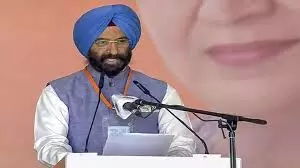
Delhi Government to convene a live, multi-day evaluation and showcase of shortlisted entries at IIT Delhi to find innovative and next-Gen solutions through crowdsourcing. To be organised in the end of December, the event will be anchored by the Internal Technical Evaluation Committee (ITEC), comprising eminent scientists, professors to identify impactful solutions for Delhi’s air.
In the primary screening round, close to 300 entries were examined against strict eligibility and technical criteria, and the most promising ideas are now being called to pitch before ITEC in a transparent, public setting.
Delhi Environment Minister Manjinder Singh Sirsa said this stage is “where ideas meet reality”, as innovators must demonstrate that their models can work on the ground to reduce Particulate Matter (PM) pollutants.
The 'Innovation Challenge' is focused on low-cost, easy-to-maintain, and scalable technologies in two broad categories: Reducing, absorbing or capturing PM2.5, PM10 emissions from BS-IV or below vehicles; and, reducing, absorbing or capturing PM2.5 and PM10 from the ambient air.
Each invited applicant will make a structured presentation and physically showcase their prototype, model, device or equipment before the ITEC panel.
Sirsa said the government wants solutions that can be quickly taken from trial stage to street, depot, or hotspot deployment, turning pilots into city-scale interventions wherever they prove effective. The success of this initiative will be judged not by paperwork but by demonstrable emission reduction, adaptability to Delhi’s conditions and readiness for real-world deployment.
In this event, innovators pitch before a panel of experts, respond to technical questions and receive on-the-spot feedback in full public view. The sessions will be held over multiple days, with 3–4 rounds planned in total, one for each batch of entries screened and shortlisted by the Internal Screening Committee (ISC) and ITEC.
The audience will include government and DPCC officials, along with students and alumni of IIT Delhi, and will be open to the general public through wider outreach.
During the IIT Delhi showcase, the ITEC will evaluate entries not just on innovation and science but also on deployment feasibility, adaptability to Delhi’s conditions, cost-effectiveness, and compliance with environmental and legal norms, solutions meeting threshold scores will advance to field trials and lab testing, with DPCC covering costs up to the guidelines’ ceiling, while those with existing robust test or field trial reports deemed deployable by ITEC may skip directly to the final DPCC-ITEC review of integrated data for potential city-scale adoption.
Sirsa said that winning projects from the Innovation Challenge will receive tiered incentives from DPCC. Winning projects will receive Rs 5 lakh per project upon successful ITEC evaluation and testing, and an additional Rs 50 lakh for solutions verified by NPL-equivalent labs and recommended for government adoption, ensuring funds support proven, deployable technologies that reduce PM2.5 and PM10 in Delhi.
“People have a right to see how decisions are taken on clean-air technologies, which ideas are chosen and why, and how public money is used to support innovation,” Sirsa said
He added that the Innovation Challenge is a way to crowdsource the next generation of solutions from individuals, start-ups, research institutions and industry. Inviting citizens to attend the IIT Delhi showcase, Sirsa appealed to students, technologists and residents to “stand with Delhi’s clean-air mission, question, contribute and help scale up what works for the city’s future.