ECI Tells SC: No Legal Duty to Publish Bihar Voter Omission List
The ECI stated that the law mandates only the publication of the draft electoral roll and the process for filing claims and objections, but does not require a separate list of deleted names.

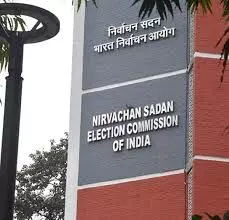
The Election Commission of India (ECI) has told the Supreme Court that it is not legally required to publish a separate list of nearly 65 lakh names missing from Bihar’s draft electoral rolls, nor is it obliged to explain the reasons for their non-inclusion.
In an affidavit filed in response to a petition by the Association for Democratic Reforms (ADR), the ECI defended its ongoing special electoral revision in Bihar, ahead of assembly elections later this year. The Commission said that under the Representation of the People Act, 1950, and Registration of Electors Rules, 1960, it is only required to publish a draft electoral roll and allow time for claims and objections—not maintain or disclose a list of dropped names.
Importantly, the ECI clarified that non-inclusion in the draft roll doesn’t mean deletion from the voter list. It explained that the draft is a work-in-progress document. Names may be missing for several reasons—such as unreturned enumeration forms or data issues during door-to-door verification—but those voters still have the right to file claims during the designated period from August 1 to September 1.
Response to Allegations
ADR had alleged that 65 lakh names had been removed from the draft rolls without proper explanation, transparency, or verification. The NGO also claimed that political parties lacked access to full draft lists, and that booth-level officers (BLOs) were arbitrarily including or excluding names without properly verifying documents.
The ECI dismissed these allegations as “patently false,” accusing ADR of trying to mislead the court and damage the institution’s credibility. It argued that voters omitted from the draft can easily reapply by submitting Form 6 with a declaration. Furthermore, all voters can check their status using their EPIC number online, where they’ll also find their BLO’s contact details.
Commission Defends Process
The ECI said that before the draft was published on August 1, BLOs had already shared lists of people whose forms weren’t received with recognised political parties. Meetings were held across districts, and efforts made to contact those voters. These steps were outlined in a press note on July 27, which, the Commission claimed, ADR had already seen—making its claim of non-disclosure “blatantly false.”
On ADR’s claim that the ECI had deviated from past practices by not publishing a list of deletions, the Commission clarified that the example cited by the NGO referred to a final roll from April 2024—not a draft. The final roll, it said, will contain complete information after the current revision exercise concludes.
On 'Not Recommended' Tags and BLO Role
Responding to concerns about voters being marked “not recommended” by BLOs, the ECI said these tags are administrative in nature and carry no legal weight. The final decision rests with the Electoral Registration Officer (ERO), who is bound to conduct hearings before any deletion.
ECI Hits Back at ADR
The Commission accused ADR of running a “consistent campaign” to undermine its credibility through misleading narratives and asked the Supreme Court to consider imposing heavy costs or even contempt charges on the NGO.
Political Fallout
The issue has triggered sharp political reactions. Union Home Minister Amit Shah, speaking at a rally in Sitamarhi, alleged that the opposition is resisting the revision process because it’s removing “infiltrators” from the rolls. “Infiltrators have no right to vote,” he said, targeting parties like RJD and Congress.
In contrast, the opposition INDIA bloc has raised alarm, claiming the revision is targeting marginalised communities and may be used as a model for voter purges in other states.
Earlier, the ECI had assured the Supreme Court that no eligible voter would be removed from the rolls without due process—including a prior notice, a hearing, and a reasoned order. The Commission also highlighted a 10-point plan to ensure inclusion, with door-to-door verification, outreach to migrants, urban camps, and special support for vulnerable groups.
The case will be heard next on August 12.