From Clinics to Commandos: The Rise of ‘White-Collar’ Jihad in India
Faridabad raids and ricin plots signal a shifting terror landscape — educated, technical cells using labs and laptops to plan attacks on symbolic targets like the Red Fort.
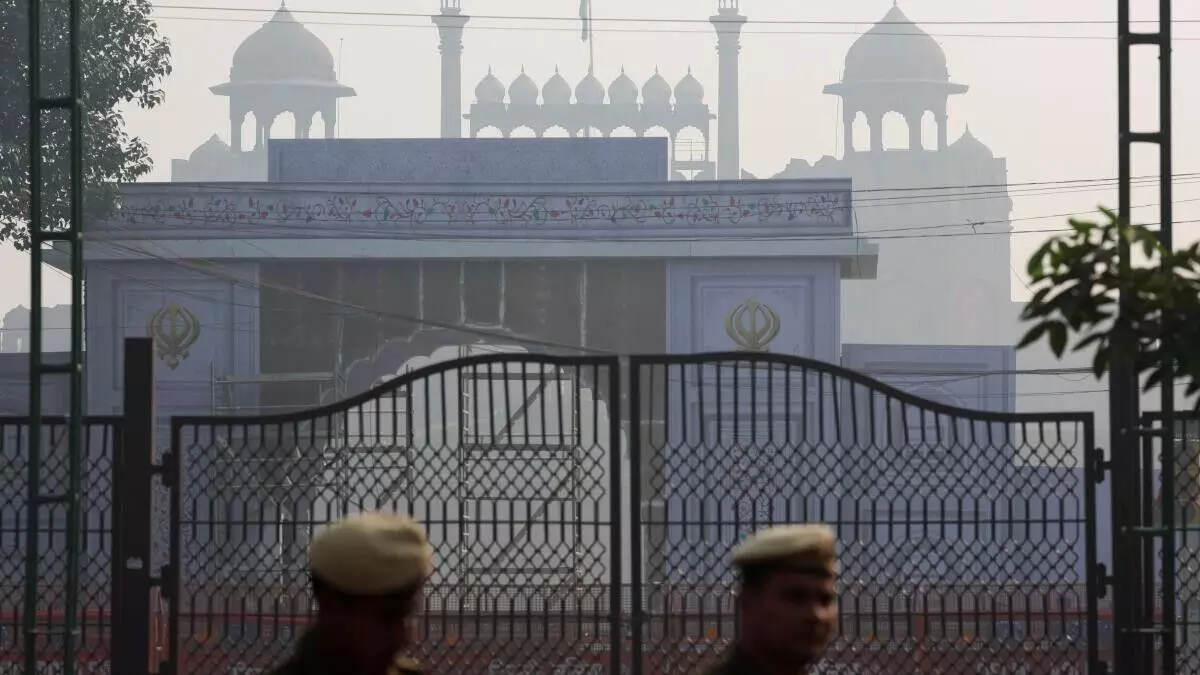
From Faridabad to the Red Fort: How ‘White-Collar’ Jihad Has Changed the Face of Terror
India has witnessed many shades of terrorism over the past decade — from the valleys of Kashmir to the lanes of Mumbai. Recent events, however, make it clear that the face of terror is changing. It is no longer limited to illiterate youths carrying guns or bombs; it has reached white coats, laptops and laboratories. The recent operation in Faridabad is a precise example of this evolving threat. From a doctor’s house there, authorities recovered 2,900 kilograms of explosives and state-of-the-art weaponry. Investigating agencies say this was not a chance discovery but part of a well-thought-out network whose target was the heart of India — the Red Fort.
The Red Fort is a pride of India’s history, the place from which the nation sends a message of strength and unity every Independence Day. That is why it has repeatedly been targeted symbolically in attempts to wound the nation’s soul. When terrorists attacked the Red Fort in Delhi in 2000, it exposed gaps in the country’s security apparatus. But the picture in 2025 India is different. Under Prime Minister Narendra Modi’s leadership, security agencies are now proactive rather than merely reactive. Plots are foiled before they can come to fruition.
The Shadow in a White Coat: The New Face of Educated Terror
This time terror did not shout slogans or brandish weapons. It wore a white coat and tried to appear as a responsible member of society. This is the form of ‘white-collar jihad’ that poses a new challenge for intelligence agencies. Analysts say we have entered an era where “extremism” is born not only from religion or poverty but from the confluence of ideology and technical expertise. People trained in science, engineering or medicine are now capable of making explosives, handling encryption and running digital networks. The “ricin plot” in Gujarat was further proof: there was a plan to use scientifically prepared ricin poison on a large scale, but the ATS destroyed that conspiracy in time.
Political comparisons form part of this discourse. During Congress rule, terrorism was often described as a “product of poverty.” That argument has now fallen apart. The incidents in Faridabad and Gujarat clearly show these conspiracies are not coming from the poor but from an ideologically toxic, educated segment. Over the past decade, the country saw bombings during the UPA years in Delhi, Mumbai, Hyderabad, Varanasi and Ahmedabad. After each incident there were statements — “we are tough on terror” — but little concrete prevention. That was the era when terms like “Hindu terror” were coined to distract from real jihadis and to shape political calculations.
Strong Leadership, Decisive Policy and Intelligence Vigilance Changed the Security Landscape
Since Narendra Modi became Prime Minister, incidents of terrorism in the country have declined. When Modi took office in 2014, the nation was grappling with multiple layers of terror and insurgency — rising violence in the Kashmir Valley, cross-border infiltrations, Maoist attacks, and repeated blasts in urban areas. The picture has dramatically changed over the last decade. India is not only seeing fewer terrorist incidents but its prevention and response policies have become models internationally. According to central government data and security agency reports, since 2014 there has been a sharp decline in violent incidents in Jammu & Kashmir, Maoist-affected areas and the northeastern states. A senior Home Ministry official said, “India is no longer a nation suffering from terror but a nation that responds to terror.” Security agencies report roughly a 70 percent drop in terrorist incidents in Jammu & Kashmir between 2014 and 2023. At the same time, fatalities among security forces have fallen about 60 percent to historic lows. Attempts to infiltrate across the Line of Control (LoC) have halved over the past ten years, attributed to improved cross-border surveillance and rapid response.
The Home Ministry’s report notes that in 2010 there were 96 districts affected by Maoist violence; today that number has fallen to well under 45. Normal life has returned to many parts of Jharkhand, Chhattisgarh, Bihar and Odisha. In the Northeast, peace agreements with communities such as the Bodo, Karbi Anglong and Bru have begun to stem decades-old insurgency problems. After the Uri attack in 2016 and the Pulwama attack in 2019, India’s retaliatory actions — surgical strikes and air strikes — were seen as decisive turning points. These events signaled that India is no longer merely reacting to incidents but striking at terrorism itself.
The Modi Era: Confidence and Autonomy for Intelligence Agencies
Under Prime Minister Narendra Modi’s tenure, security agencies have been given an environment where expectations are placed on results rather than political interference. That is why institutions like the NIA, ATS and IB can now work with greater autonomy. The Faridabad operation reportedly benefited greatly from technical intelligence. Tracking the dark web, encrypted chats and digital funding channels allowed agencies to apprehend the terrorists with precision. Where officials once worked in fear during Congress rule, today they operate with the backing of the nation. This is the contrast between weak politics and strong governance.
Shortly before the Faridabad raid, the Border Security Force seized more than 150 bombs in Murshidabad. These incidents form a pattern: extremist networks are active not just across borders but deep inside the country. Smuggling of weapons and counterfeit currency across the Bangladesh border has long been a concern, but it has now become the backbone of terrorist networks rather than merely an economic crime. The BJP government viewed this threat through a national-security lens rather than appeasement; Congress’s stance was often limited to “vote-bank sensitivities.” The Modi government not only granted operational freedom to intelligence agencies but also equipped them with modern technology. Digital coordination among NIA, RAW and IB increased, drone surveillance was implemented along the LoC, and the national cyber security posture was strengthened to counter cyber-terrorism. As a result, many terrorist plots have been foiled at early stages.
White-Collar Jihad: A New Front, A New Strategy
Security experts call it the “age of urban extremism,” where terrorists now germinate not in slums or border villages but in corporate offices, medical institutions and cyber cafes. Tackling this threat requires not traditional policing but data analytics, artificial intelligence and cyber monitoring. The Modi government’s focus on “digital security” can be seen as a step in this direction. When after the Batla House encounter some elements of the Congress leadership appeared sympathetic toward the suspects, the nation for the first time wondered whether vote-bank politics had become more important than national interest. That question is being raised again today, but the answer is different now. The Modi government’s message is clear: those who threaten India will be found and eliminated.
A New India: That Does Not Bow, But Strikes
An attack on the Red Fort was not merely an attack on stone and steel but an assault on India’s spirit. But today’s India is not one that will be cowed or respond late. The country has leadership that says, “Plots of terror will not mature; they will collapse the moment they are born.” This is the new India — vigilant, confident and decisive. We no longer only mourn; we erase conspiracies. The Faridabad incident is not just a security operation but a national message: whether terrorism breeds in a lab or hides behind a laptop, India is prepared to crush it on every front.