From Pele to Messi: How Kolkata’s Event Mismanagement Turns Spectacle into Chaos

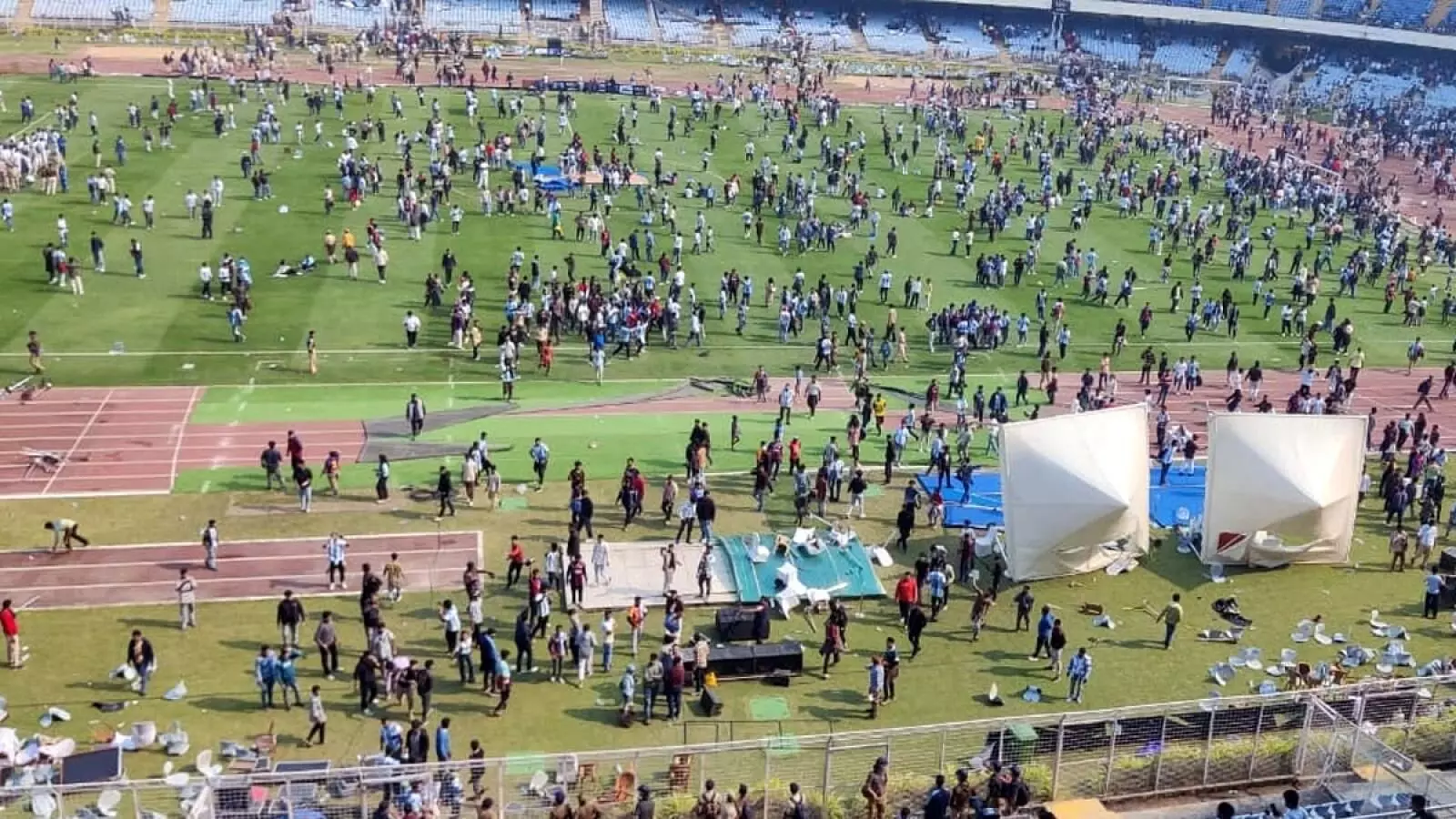
The sight of Lionel Messi, arguably the greatest of all time, being whisked away from Kolkata's Salt Lake Stadium amid a tide of angry, cheated fans and broken seats is more than a one-off logistical failure; it is a painful echo of a deep-seated, systemic problem in the city's event management history.
The chaos surrounding the highly-anticipated 'GOAT Tour of India' event, which saw the prime organiser, Satadru Datta, detained by police, simply highlights that when it comes to hosting major spectacles, Kolkata has a distressing and long-standing history of turning fanfare into fury.
The disaster on Saturday, marked by fans who paid high prices for a poor view and then resorted to vandalism and protests when Messi's brief appearance was obscured by overzealous VVIPs and VIPs was a modern recurrence of old failures. The abrupt end to the celebration, which many rightly called a "scam," raises critical questions about security, planning, and, most crucially, the sheer hubris of organisers in managing mass public events.
To understand the severity of the Salt Lake Stadium incident, one must look into the city's tumultuous past, where a mix of poor planning and the explosive passion of the crowd has repeatedly led to disaster.
The 1967 Eden Gardens Riot--Overcrowding and Arson:
The most violent precedent is the full-scale riot that erupted during the 1966-67 India tour of West Indies cricket team at the second Test match at Eden Gardens. This was not a panicked stampede, but a deliberate act of mass violence sparked by the Cricket Association of Bengal (CAB) selling far more tickets, including counterfeits, than the stadium’s capacity.
When ticket-holders spilled onto the boundary line, the police’s indiscriminate lathi-charge and tear gas ignited a massive retaliation. Fans set fire to the stands and police vehicles, turning the iconic venue into a battleground. The game was suspended, the city was rocked, and the entire episode became an international embarrassment.
The core issue was mismanagement and the disregard for the paying spectator.
The 1968 Rabindra Sarobar Tragedy: Stampede and Atrocity:
Perhaps the darkest chapter was the "Ashok Kumar Nite" cultural show at Rabindra Sarobar Stadium in February 1968. Technical failure led to a massive crowd of 50,000 turning unruly, resulting in a horrific stampede and, chillingly, a reported incident of mass molestation and sexual assault of women in the audience. The trauma was evident in the torn clothes found at the venue. The seriousness of the issue was such that even the Parliament of the country discussed the atrocities in detail.
This tragedy exposed a frightening failure of basic security and crowd control at major events in the city once again.
The Glaring Exception: A Lesson Forgotten:
It is critical to note that Kolkata is capable of hosting peaceful, successful mega-events. The 1977 friendly match between Mohun Bagan and Pele's New York Cosmos at Eden Gardens stands as a historic counter-example. Under the skillful organisation of Mohun Bagan's then Secretary Dhiren Dey, the overwhelming excitement for Pele was channelled into a peaceful and successful sporting spectacle, showcasing the city's love for football without sacrificing order.
The successful management of the 1977 event proves that the problem is not inherent to the city's culture or its crowd; it lies squarely with the quality of the planning and the integrity of the organisers.
The Salt Lake Shame
The Salt Lake Stadium fiasco with Lionel Messi falls squarely into the pattern of 1967 and 1968—a failure driven by greed, overzealousness, and a shocking disregard for the fan experience. Fans paid for a spectacle and received a glimpse obscured by a wall of politicians and dignitaries vying for a selfie.
The Governor's call for organiser's arrest and the Chief Minister's high-level inquiry are necessary first steps. However, the lasting lesson must be about accountability. Until event organisers and stadium authorities prioritise the safety, security, and promised experience of the general public over VIP privileges and quick profits, 'the City of Joy' risks continuing its legacy as 'the City of Chaos' whenever the biggest stars come to town. The ghost of Calcutta's crowds is a perpetual warning: in this city, poor management of a spectacle can quickly turn into a civil disorder.