IIT Madras GDC Symposium Calls for Democratising Innovation and Building India’s Next-Gen Entrepreneurs
6th annual GDC Symposium highlights need for capability-building, mentorship and policy support to scale deep-tech startups and realise the Viksit Bharat 2047 vision

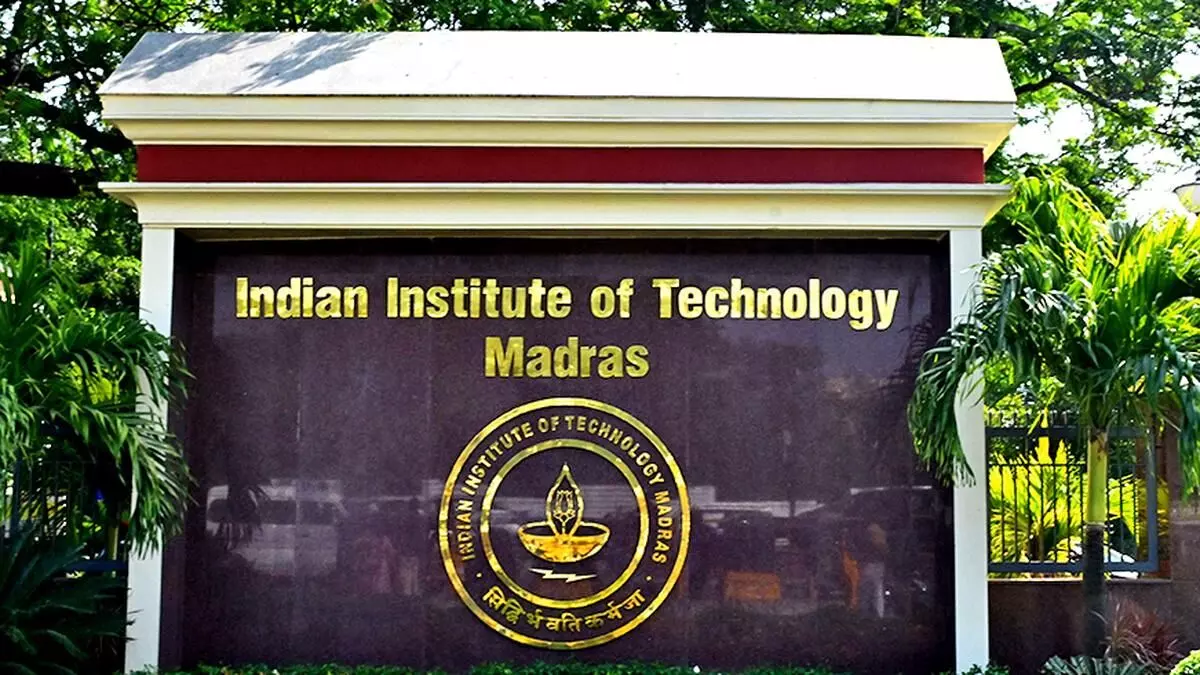
The Indian Institute of Technology-Madras (IIT-Madras) Gopalakrishnan-Deshpande Centre for Innovation and Entrepreneurship (GDC) organised the 6th Annual GDC Symposium, themed “Democratising Innovation Entrepreneurship in India', which focussed on democratising innovation and entrepreneurship in India.
The symposium brought national focus on the role of the entrepreneur as the central driver of India’s deep-tech and innovation-led growth.
More importantly, it debated how to increase the focus of policymaking, mentorship, and funding on “building capable entrepreneurs” as a missing piece of the scaling innovation puzzle in India, a release from IIT-M GDC said today.
Held at a time when India is witnessing a rapid rise of startups from Tier-II and Tier-III cities, increased participation by women founders and wider access enabled by digital platforms, the symposium highlighted a critical gap in the ecosystem--the sustained development of an entrepreneurial mindset and skills.
Through this annual symposium, GDC reaffirmed its commitment to developing the capabilities of faculty and researchers at hundreds of STEM universities across India to build deep-tech startups from Translational research. The role of science, research, innovation, technology and startups is central to achieving the vision of Viksit Bharat@2047
Speakers emphasised that while technology, funding and infrastructure are essential, long-term entrepreneurial success depends on mentoring, nurturing and capability-building of individuals, particularly in deep-tech ventures with long gestation periods.
In his keynote address, Mr. Lakshmi Narayanan, Co-founder and former Vice Chairman, Cognizant Technology Solutions, said, “Scientists and researchers can be entrepreneurial in more ways than one. Besides launching startups to bring their innovations to market, scientists can also be equally impactful by solving difficult technological challenges within the framework of large corporations or government projects. Such successful outcomes are also entrepreneurial successes, which GDC and IITM should encourage.”
Mr Srinath Ravichandran, Co-founder and CEO of Agnikool Cosmos, a deep-tech startup from IIT-Madras, said, “Given a chance, I would always start off with the tagline that 'We are an IIT Madras startup,' because I do not think we should ever fully emerge from that umbrella. It is those first five or six years that shape who the company is, and that culture actually comes from the university environment”.
The symposium explored whether India is investing sufficiently--and in the right areas--to train and prepare entrepreneurs aligned with the national vision of Viksit Bharat 2047.
The discussions underscored that cultivating business acumen, resilience and decision-making is vital to translating cutting-edge research into market-ready solutions.
Speaking on the occasion, Prof. V. Kamakoti, Director, IIT-Madras, said, “Democratisation of Education and Entrepreneurship is happening in a big way at IIT Madras. The online BS Program has enabled nearly 50,000 students, with many of them from financially weak families, get access to best education.
Further, IIT-M is enabling startups and entrepreneurs from all over India to learn from its labs, incubators, faculty, and programs at GDC, he said.
Delivering a lecture on ‘Catalysing a Lab to Market Movement in India’, Prof. Krishnan Balasubramanian, GDC Professor In-charge and Chair Professor, IIT Madras, said, “GDC is playing an expert facilitation role with academic faculty and researchers in guiding their innovations to get to market and create impact. GDC’s role is primarily to change the mindset of faculty from pushing their innovation to the market to listening to the market and accordingly building their innovation.”
A panel on “How Policy in India is Enabling Democratisation of Innovation and Entrepreneurship” was chaired by Mr.Kris Gopalakrishnan, Chairman, Axilor Ventures, and featured experts including Mr Lakshmi Narayanan, Co-founder & Emeritus
Vice Chairman, Cognizant Technologies; Dr.Shashank Shah, Director (Senior Specialist- Education), NITI Aayog, and Mr Adithya Jain, Co-founder and CEO, Tvasta Technologies.
Dr. Shah spoke in reference to NITI Aayog’s ongoing study, with GDC, IIT Madras as the knowledge partner, noting that the study covered over 100 incubators across 18 States of India. The study will provide policy inputs to advance incubation ecosystem in Higher Education Institutions across the nation to achieve the vision of making India the global startup capital.
A second panel, “Creating Dynamic Deep-tech Startups – Hear it from the Founders,” featured entrepreneurs from emerging Indian deep-tech companies that benefited from GDC’s programs. This panel included Mr KV Anand, Chief Innovation Officer of GDC as Chairman; Dr Varun Khandelwal – Co-founder & CEO of Healayantra; Mr Sanidhya Chaturvedi- Co-founder & COO of Folium Sensing; and Mr Lokesh Kabdal, Co-founder & CEO of VyomIC.
A third panel in the form of a fireside chat on “Enabling Grassroots Innovation in Enabling Translational Research in India” brought together Gururaj Deshpande, Co-founder, Deshpande Foundation; Varun Aggarwal, Founder and Trustee, FAST India; and Dr Raghuttama Rao, CEO, GDC IIT Madras.
On the sidelines of the symposium, around 15 deep-tech startups from across India showcased their innovations, offering policymakers, investors and mentors direct insight into the aspirations and challenges of India’s next generation of founders.