In Assam, a Fee Regulation Bill Rekindles Old Fears Among Christians

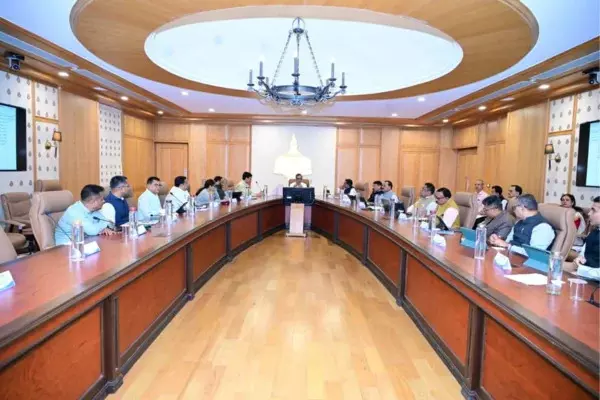
In Assam, a Fee Bill Rekindles Old Fears Among Christians.
For generations, Christian missionaries in Assam have done more than preach the Gospel. They built the schools that lifted tea garden workers into literacy, the health centers that reached villages the government could not, and the vocational institutes that trained young people who had nowhere else to go.
From bamboo-roofed primary schools in the tea estates to sprawling universities on the state’s outskirts, the Christian institutional network runs through Assam like a quiet, steady current. Its alumni include farmers’ children, first-generation tribal learners, and the siblings of bureaucrats who now shape state policy.
For the wealthy, these institutions are an emblem of order and English-speaking modernity.
For the poor, they have long been a doorway to dignity.
But today, a sense of unease is spreading across these same campuses.
A Bill, a Warning, and a Changing Political Climate
When the Assam cabinet approved a bill to regulate private school fees, the proposal appeared administrative on its face. It promised transparency, oversight, and predictability for parents navigating expensive private schooling.
Yet for Christian leaders — who run many of the state’s most sought-after institutions — the bill felt like something else: the beginning of a slow encroachment.
“This is how it starts,” one senior figure in the Assam Christian Forum said, requesting anonymity for fear of political backlash. “First they regulate the fees. Next they regulate how we run our schools.”
The fear is not hypothetical.
It is historical.
Assam’s Christians — a small but socially influential minority — believe their institutions are entering an era where scrutiny is no longer bureaucratic but ideological.
Shifting Power, Sharpening Fault Lines
Since the rise of the Bharatiya Janata Party in Assam, the political map of minority identities has hardened.
The Miya Muslims, associated with migration from Bengal, became the first political target.
Christians, many community leaders now say quietly, appear to be next.
Within the Sangh Parivar, the ideological fountainhead of the Hindu-nationalist movement, there is a long-standing suspicion that Christianity threatens tribal cultural identities. While Muslims are portrayed as inward-looking and socially insular, Christians, especially tribal converts, are depicted as being drawn into a new cultural orbit — one that distances them from customary practices.
The accusation is old. But its political traction is new.
And it lands heavily in Assam, where the Christian population is internally layered:
the tea tribe Christians form the largest group, followed by Mishing and Bodo Christians, each carrying their own story of conversion, education, and community-building through missionary networks.
A Quiet Question: What Comes After Fees?
The Fee Regulation Bill does not explicitly single out Christian institutions. It applies to all private schools.
But the unease stems from what many believe could come next: curriculum monitoring, management interference, and restrictions on how minority institutions operate.
Under India’s Constitution, religious minorities have the right to run their own educational institutions. The Christian community argues that the bill may become a mechanism to dilute that autonomy, one regulation at a time.
“This is not paranoia,” said a former principal of a missionary college. “This is political reading. When the winds shift, institutions like ours feel it first.”
A Paradox at the Heart of Assam
The tension carries a deep irony.
The institutions under suspicion are also the ones doing the work the state struggles to do:
educating remote tribal communities, running hospitals in forested districts, training nurses who staff clinics from Dibrugarh to Delhi.
They are, in many ways, the scaffolding on which Assam’s social mobility has been built.
As the state edges toward the 2026 elections, the Fee Regulation Bill has become more than an administrative document. It is a signal — or a warning — depending on who is reading it.
In the hallways of missionary schools, in the villages where their churches stand, and in the tea estates where their clinics still treat patients for free, a new question echoes quietly:
Is this regulation, or the beginning of something larger?
For now, Assam’s Christians wait. The bill moves forward. And the political climate keeps changing.