India Aims to Become Global Semiconductor Powerhouse by 2035: Ashwini Vaishnaw
With Semicon 2.0 and a roadmap from 28 nm to 2 nm chips, government bets on talent, startups, and a full-fledged manufacturing ecosystem

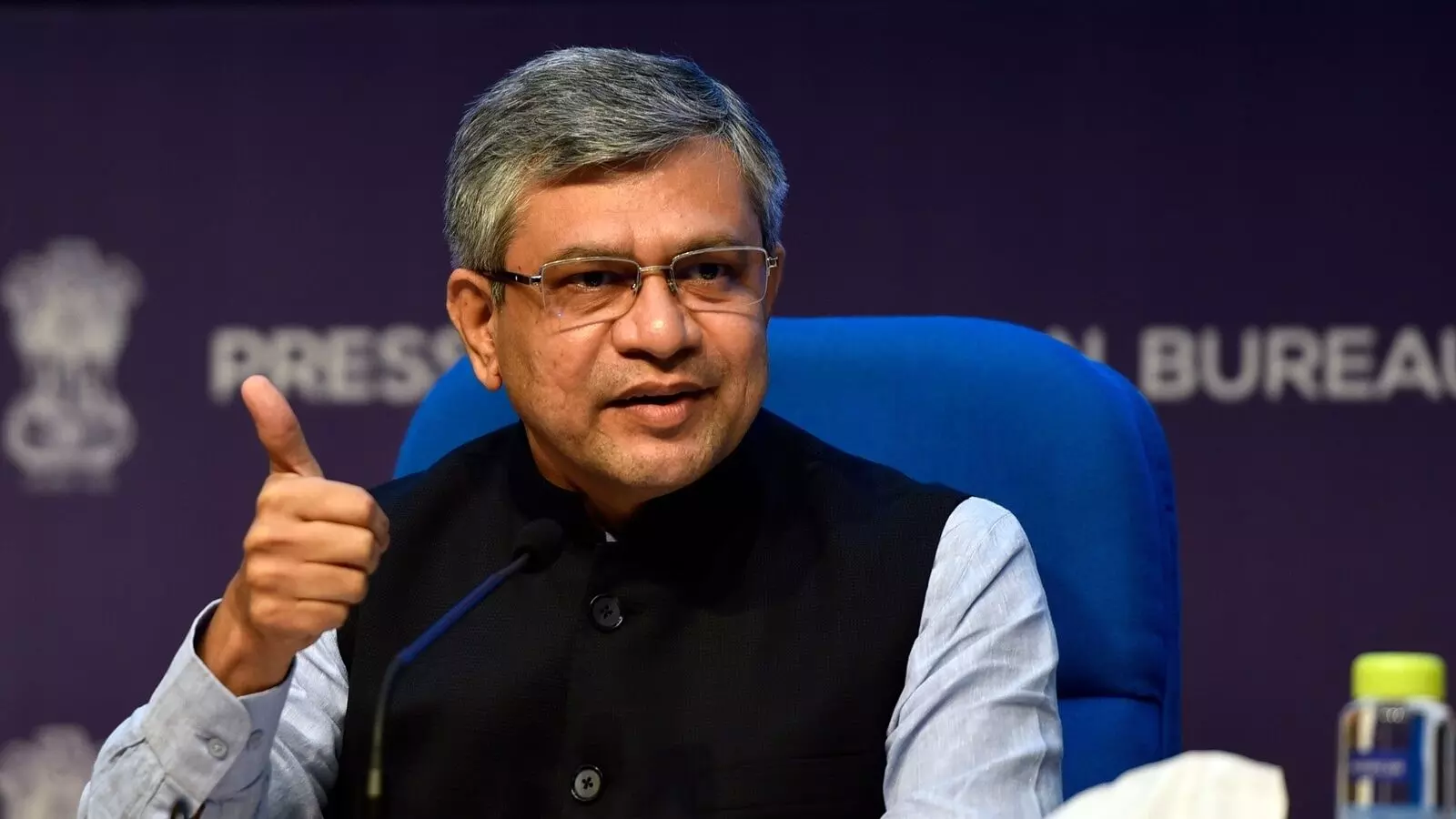
Union Minister for Electronics and Information Technology Ashwini Vaishnaw on Tuesday said he is confident that India will emerge as a major global player in semiconductor manufacturing as the country moves towards 2029 and enters the second phase of its semiconductor mission, Semicon 2.0.
Speaking on the sidelines of an event in New Delhi, Vaishnaw said India has clearly mapped out its technological roadmap—from 28 nanometres (nm) to 7 nm, then from 7 nm to 3 nm—after closely studying how countries such as Taiwan, Japan and South Korea built their chip ecosystems. Based on those learnings and India’s talent base, he said, the country is now working towards developing 2 nm semiconductor technology.
Experts note that moving from 28 nm to 7 nm and eventually to 2 nm marks a generational leap in chipmaking, allowing far greater transistor density, faster processing speeds and improved energy efficiency. Reflecting this progress, Vaishnaw said there is growing global confidence that India will be among the world’s most important semiconductor nations by 2035.
The minister also said India is developing its own intellectual property under the semiconductor mission across six key areas, including radio frequency, networking, power, sensors and memory.
Highlighting the progress made so far, Vaishnaw said that four years into the semiconductor mission, around 10 projects are currently under development, with production for four of them expected to begin this year. He added that 24 startups have already designed semiconductor chips, while students across more than 300 institutions have been trained in chip design.
Addressing a gathering of chip design startups, Vaishnaw said India is undergoing a transformation—from being primarily a service provider to becoming a product manufacturing nation. He noted that the semiconductor journey began in 2022, when Prime Minister Narendra Modi stressed the need to build a complete ecosystem. In a short span of time, he said, two dozen startups have become part of the programme.
Calling the support provided under the semiconductor mission “unique,” Vaishnaw said the government intends to scale it up further. Under the next phase of the mission, the goal is to support at least 50 semiconductor companies in the country.
The government is also investing ₹4,500 crore in the Semiconductor Laboratory (SCL) at Mohali, one of the oldest chip design labs in Asia.
Recently, Vaishnaw visited the headquarters of ASML in Veldhoven, the Netherlands. Describing ASML as the world’s leading provider of lithography equipment, he said the upcoming fabrication plant in Dholera will use ASML technology. He added that ASML’s engagement with India is significant, as several global equipment manufacturers are now considering setting up operations in the country due to India’s strong design capabilities, large talent pool and stable policy environment.