India at a Historic Turning Point as Global Power Shifts Accelerate: BVR Subrahmanyam
Speaking at the Chanakya Defence Dialogue 2025, the NITI Aayog CEO said India is poised to become the world’s third-largest economy by 2027–28, but rising global conflicts, demographic shifts, and AI-driven disruption demand strategic clarity and preparedness.

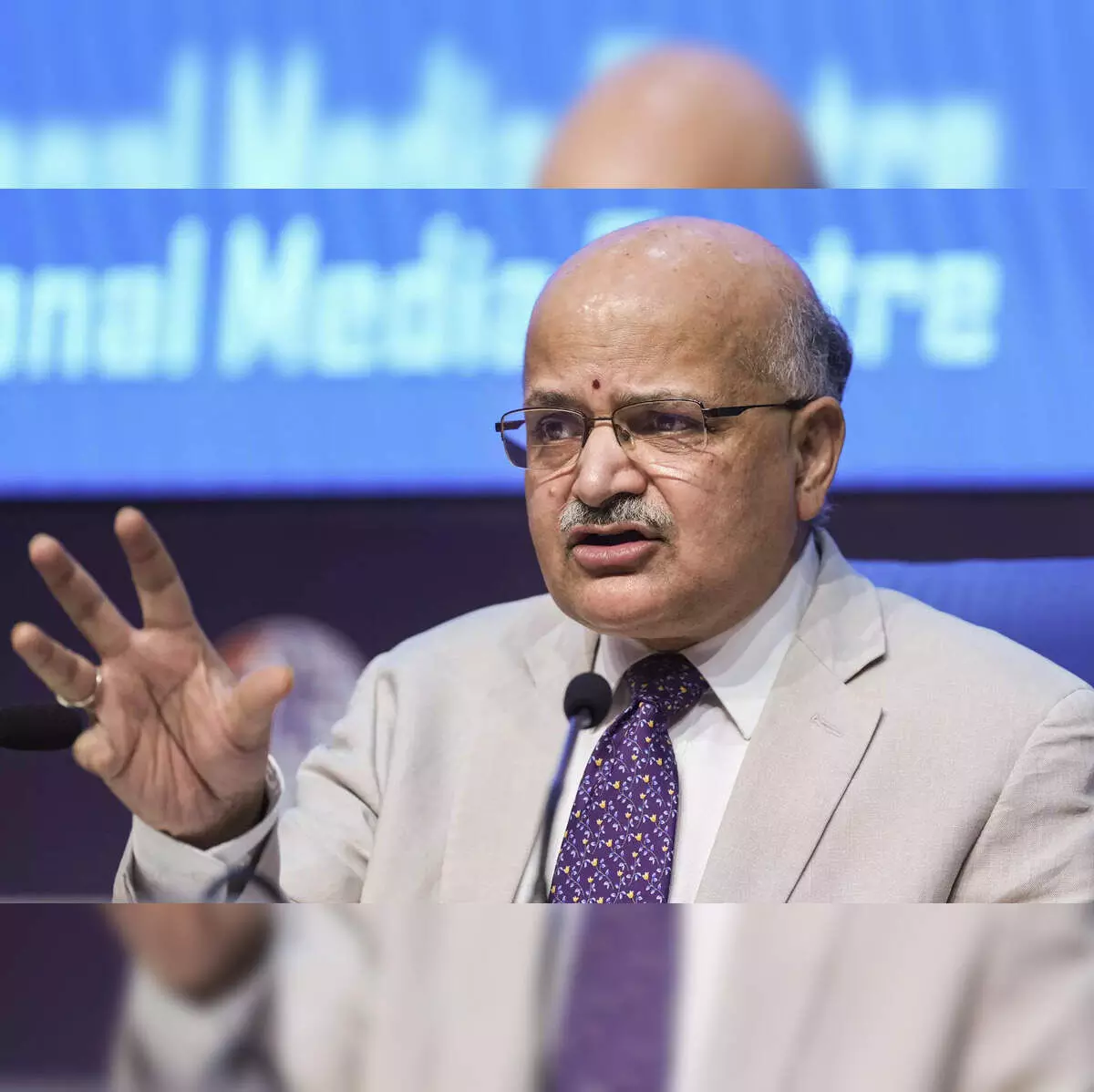
India is living through one of the most defining moments in its history, and how it navigates this period will determine its long-term national goals, NITI Aayog Chief Executive Officer (CEO) BVR Subrahmanyam said on Thursday.
In his special address themed ‘Bharat: A Timeless Legacy & Secure Future @2047’ at the ongoing Chanakya Defence Dialogue 2025, Subrahmanyam noted that current geopolitical conflicts and global shifts are not random events but part of a broader historical pattern that nations must confront with clarity and preparedness.
Calling current geopolitical tensions “a law of history” rather than random disruptions, Subrahmanyam said with India’s basic issues pertaining to challenges of basic survival including drinking water, housing, road and telecom connectivity, healthcare, getting resolved, the goal of the government is to take the country to the next level.
“The nations which have identified this and made their strategies properly have really accelerated their growth, whether it is Germany and Japan after the World War II, or it is Korea after the Korean War, or whether it is Singapore. They have actually been able to accelerate the growth,” he said.
Subrahmanyam emphasised that India is already on its way to becoming a global economic heavyweight. “We are on our way to become the third largest economy in three years’ time… by 2027–28 we will be the third largest economy,” he said.
As India’s global footprint expands, he warned that new responsibilities will follow. “Becoming a global economic power means you will have companies operating all around the world… economic interests all around the world. Protecting those interests when you are the third or second largest economy is going to be of paramount importance.”
Even recent evacuations, he reminded, reflected the complexity of India’s emerging global reach. “Bringing back citizens from Ukraine has been a massive exercise. That kind of exercise will be more common in the future.”
He said India’s rise must be understood in the context of sweeping global realignments. “The world is passing through a demographic transition. For the first time in human history, the population after 100 years will be a billion smaller than what it is today,” he said, calling this shift “a major driver of global political and economic thinking.”
He pointed out that India’s fertility rate has already dipped below replacement levels, while many major economies are shrinking. “By 2100, the Chinese population will be half of India’s… I’m sure they’re thinking about it. That is probably a major reason they are in a hurry to resolve territorial issues.”
On the economic front, Subrahmanyam said the centre of gravity has moved decisively eastward. “Future growth is all going to come from Asia… India will be the largest contributor of incremental GDP in the world in the next 25 years.”
This shift, he said, is unsettling older economic structures. “If the United States suddenly dumps the WTO or trade agreements, it’s not an accident. It’s the shifting dynamics of the global economy.”
He warned that the consensus that shaped the post–World War II order is fading. “The WTO, the World Bank, the IMF — everything is being shaken,” he said. While he described India’s rise as “benign” and beneficial to the world, he added that “incumbent countries do not like the rise of new countries,” noting parallels with earlier periods of power transition.
Subrahmanyam described technology, particularly artificial intelligence, as the most disruptive force of all. “AI is not an IT revolution. It is fundamentally automating cognition. This is as fundamental as the invention of the wheel or the steam engine,” he said. “The world before AI and after AI will be very, very, very different.”