India Set for Over 50% Non-Fossil Electricity by 2035, Says New IEA Outlook
With renewables surging and energy demand rising fast, India’s early clean-energy gains position it as a key driver of global energy trends — but grid expansion and storage remain critical to sustaining momentum.

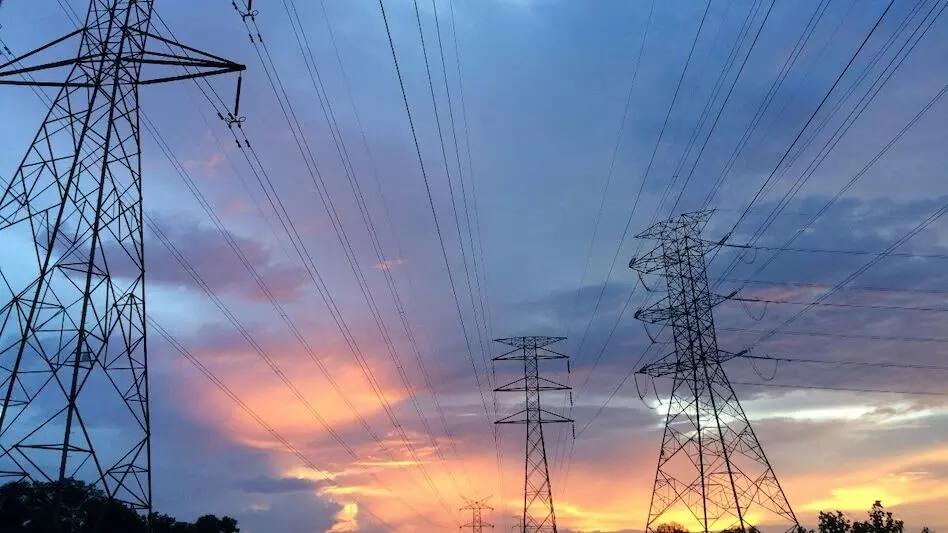
Non-fossil sources will provide over half of India’s electricity by 2035, according to the World Energy Outlook 2025 report published by the International Energy Agency (IEA) earlier this week.
Lauding early achievement of the country’s energy transition targets, Thomas Spencer, one of the main authors of the report, said, “India’s non-fossil electricity capacity has outpaced all previous projections, meeting the 2030 target five years early.”
Experts pointed out that in India, solar and wind power will witness a rise from the present-day 11 percent to over 25 percent by 2030 and to nearly 40 percent by 2035.
While the country’s nuclear power capacity is expected to triple by 2035, from its current 8 GW, this will help lower the carbon intensity of electricity generation, the study highlighted.
The country’s transition to cleaner fuels, particularly, holds importance, as the energy demands are expected to keep growing for years. India today stands at a curious crossroad — its economy is expanding faster than almost anywhere in the world, and yet its per-capita energy consumption remains below the global average.
The IEA said India will be the largest single source of energy demand growth in the world with energy demand increases by over 15 EJ by 2035,which is nearly as much as the demand growth in China and all Southeast Asian countries combined. But even so, its overall per-capita energy use will stay below the global mean till at least 2050.
A large part of this demand rise will come from industry and urban expansion. The report notes that India adds the equivalent of one Bangalore (nearly 1.25 crore people) every year to its cities, while millions of new homes and factories are being built.
Air conditioner ownership is expected to soar, with nearly 250 million new units entering homes over the next decade. All this will require more power, more steel, more cement — and that means more energy.
At the same time, the IEA underlines that India’s economy is “catching up fast with world averages” in energy and economic indicators, showing how rising incomes and industrial activity are changing consumption patterns.
Between 2010 and 2024, India’s GDP growth rate was second only to China’s, and the agency projects an average 6.1 percent growth every year till 2035. Yet because of higher efficiency and the fast penetration of renewables, the energy intensity of growth will keep falling.
While renewables are leading the charge, coal remains an important part of the energy mix, mostly to serve industries such as iron, steel, and cement. The IEA projects a moderate rise in coal demand for India till 2035, largely from the industrial sector, even as coal use for power plateaus.
This is significant because it underlines the complexity of India’s energy story — renewables are booming, but coal still provides the flexibility and base power needed to keep the grid stable.
Despite this, India’s carbon emissions are expected to remain below the world average through the projection period. The report attributes this to the growing share of non-fossil power and continued improvements in energy efficiency. By 2035, the carbon intensity of India’s electricity generation will fall by about 45 per cent.
Globally, the IEA finds that India, Southeast Asia, and Africa will be the major engines of demand growth, while advanced economies in Europe and North America see their consumption stagnate or decline.
China, which once dominated global demand trends, is now expected to see its energy use level off as the economy matures and population declines. In contrast, energy demand in Africa will rise strongly for electrification and mobility, while India’s growth is led by industry and cities.
The report also notes that India’s clean-energy investments are now overtaking fossil investments. In 2015, every dollar spent on fossil generation was matched by a dollar on non-fossil sources; by 2025 that ratio had flipped to 1:4 in favour of renewables. The country has invested over USD 113 billion in solar PV over the last decade, compared with USD 112 billion in fossil power.
Still, the transition will not be effortless. The IEA warns that grid flexibility, the ability to absorb variable solar and wind power, remains a challenge. India will need over 230 gigawatt-hours of new battery storage and about 200,000 km of new transmission lines by 2030 to keep pace with rising renewables.
Without such expansion, the country risks under-utilising its clean-energy capacity. Looking ahead, the IEA said India’s trajectory will be central to whether the world stays on course for its climate goals. The country’s rapid industrial growth and rising electricity needs make it a key player in shaping global emissions trends.
India has pledged to reach net-zero emissions by 2070, and the current pace of renewable expansion gives that goal more credibility than before. Still, the report noted that sustaining this momentum will require faster investment in grids, storage, and flexible generation to keep up with surging demand.
In short, India’s energy story is now one of growing needs matched by growing responsibility — and how it balances the two will define the next phase of its development.