Indian Railways Nears 100% Electrification, Joins World’s Most Advanced Rail Networks
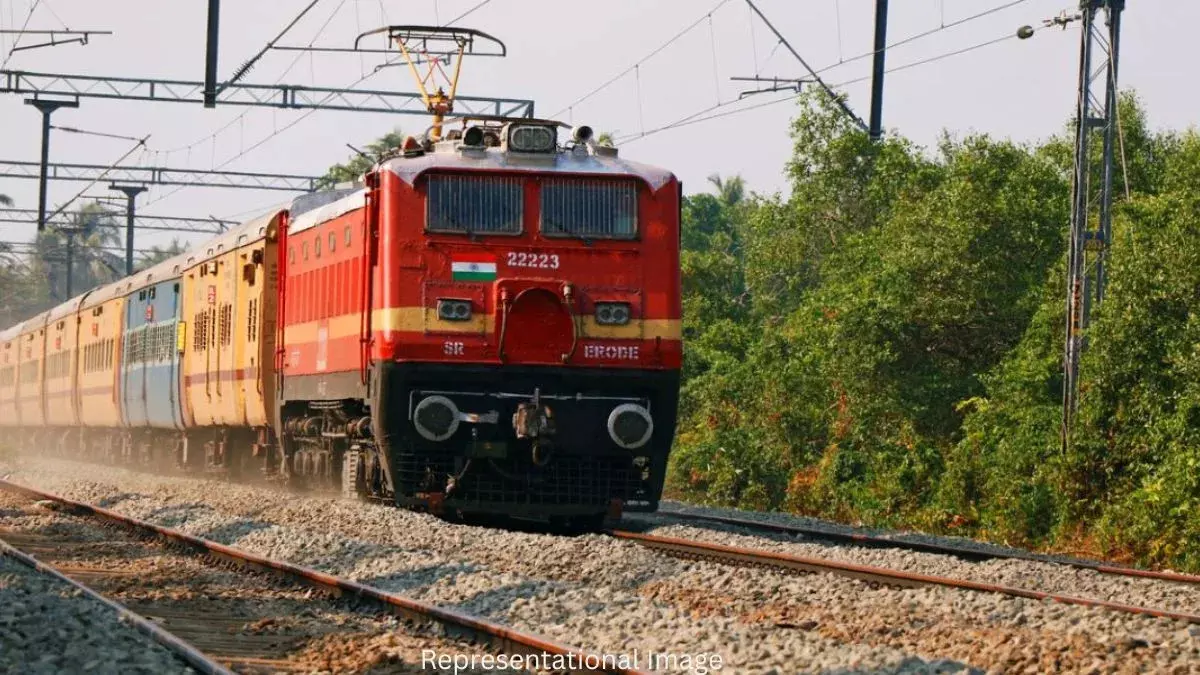
With 99.2 per cent of its railway network now electrified, Indian Railways has firmly established itself among the world’s most advanced rail systems, marking a major milestone in its journey towards sustainable and cost-efficient transportation.
As global rail networks show wide variations in electrification levels, India’s rapid progress underscores the scale of its infrastructure transformation.
Driven by the goal of achieving 100 per cent electrification of the Broad Gauge network and backed by an aggressive shift towards renewable energy, particularly solar power, Indian Railways is not only reducing its carbon footprint but also cutting operating costs by nearly 70 per cent compared to diesel traction, reinforcing its vision of a cleaner, greener and more self-reliant rail ecosystem.
Switzerland leads the list with a full 100 percent, followed by China at 82 percent. Spain records a strong 67 percent, while Japan stands at 64 percent. France follows with 60 percent, and Russia is placed at 52 percent while United Kingdom is at 39 percent.
Electrification has accelerated from just about 1.42 km per day between 2004 and 2014 to an average of more than 15 km per day between 2019 and 2025. The pace underscores a transformative shift in how quickly the network is being modernised. Electrified track share rose from 24 percent in 2000 to 40 percent in 2017, and crossed 96 per cent by the end of 2024.
As of November 2025, India has electrified an impressive 69,427 RKMs, covering about 99.2% of its railway network, out of which 46,900 RKMs have been electrified between 2014 and 2025, the ministry stated.
With 25 States/Union Territories being 100% electrified, with no remaining BG route kilometers pending, only five States have residual sections under electrification, together accounting for just 0.8 per cent of the total BG network.