India’s ASEAN Absence: Domestic Imperatives and Diplomatic Optics

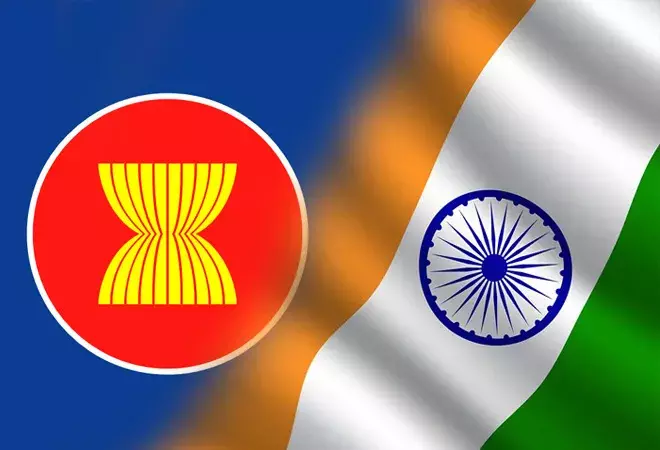
India’s decision to be represented by the External Affairs Minister rather than the Prime Minister at the ASEAN Summit in Malaysia has stirred quiet but notable diplomatic discussion. The choice comes at a time when India’s ‘Act East Policy’ remains central to its Indo-Pacific vision — yet the domestic political calendar is exceptionally crowded.
At first glance, the explanation appears procedural — the Prime Minister’s virtual participation, scheduling pressures, and the onset of the Diwali season. But in diplomacy, symbolism often weighs as heavily as substance. For ASEAN observers, the absence of India’s top political leadership signals that domestic priorities may be momentarily eclipsing regional diplomacy.
Domestic Imperatives Before Global Engagement
India is entering a decisive electoral phase. The Bihar Assembly polls and other state elections are shaping the national political mood. In a federal democracy as vast and participatory as India’s, the electoral cycle demands the leadership’s sustained attention. Political legitimacy at home remains the foundation of credibility abroad — a truth governments across democracies recognise.
Still, the timing of the ASEAN summit — coinciding with India’s festive season and intense campaigning — created a visible contrast. While other major powers fielded their heads of government, India opted for ministerial-level representation. The move, though administratively sound, projects an image of strategic distraction at a time when the region expects continuity and visibility from New Delhi.
ASEAN’s Centrality and India’s Long-Term Calculus
For over a decade, India has framed ASEAN as the core of its eastward engagement — economically, culturally, and strategically. Projects like the India–Myanmar–Thailand Trilateral Highway, maritime cooperation under the Indo-Pacific Oceans Initiative, and robust defence ties with Vietnam, Indonesia, and Singapore underscore New Delhi’s intent.
Yet ASEAN diplomacy thrives not only on policy but on leadership chemistry. Summits are where reassurance is built and political trust is renewed. The absence of India’s top leadership, therefore, risks being read as a temporary dilution of focus, even when policy continuity holds.
In an environment where China remains assertive and the U.S. is renewing its Southeast Asia activism, every gap in high-level presence becomes strategically conspicuous. Beijing’s consistent attendance and economic engagement fill such voids swiftly.
Balancing Domestic Consolidation and External Commitments
India’s approach reflects a classic dilemma of emerging powers — how to reconcile domestic political imperatives with global expectations. Managing economic growth, social stability, and coalition dynamics at home is indispensable. But these same domestic strengths should ideally empower, not constrain, external engagement.
Delegating representation to the External Affairs Minister ensured continuity of dialogue and signalled that India remains committed to ASEAN mechanisms, even amid political flux. Yet, diplomacy runs as much on perception as on policy. And in geopolitics, perception often shapes reality.
Reading the Signal, Not the Sentence
It would be simplistic to interpret India’s absence as a strategic retreat. More accurately, it is a temporary recalibration of bandwidth. India continues to invest in defence cooperation, digital partnerships, and resilient supply chain initiatives with ASEAN.
However, sustained virtual participation — if it becomes a pattern — could erode India’s image as a proactive regional stakeholder. The Act East Policy, built on sustained visibility and trust, needs both strategic focus and symbolic presence.
Diplomatic Implications and the Road Ahead
For ASEAN members, India’s role as a stabilising partner in the Indo-Pacific remains valued. Reassurance, however, will depend on tangible follow-through — early scheduling of bilateral visits, ministerial-level engagements, and visible progress on connectivity projects.
For New Delhi, reaffirming leadership presence at upcoming ASEAN-related summits will be crucial to restore equilibrium between domestic politics and regional diplomacy.
The larger lesson is clear: domestic and foreign policy are not rival arenas but mutually reinforcing spheres. Political stability strengthens diplomacy; consistent diplomacy, in turn, amplifies political strength. The challenge lies in ensuring that electoral compulsions do not interrupt the rhythm of India’s external engagement — particularly in a region where influence rests as much on continuity as on conviction.
India’s limited participation in the Malaysia ASEAN Summit underscores the tension between domestic political intensity and global diplomatic expectations. Leadership visibility, even when symbolic, carries strategic weight. As India continues to aspire toward a leading role in the Indo-Pacific, aligning its political timetables with external commitments will remain a delicate but essential balancing act.