India’s Defence Reforms Reshape Military Readiness in the ‘Year of Reforms’

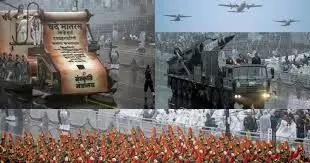
As India marks its 77th Republic Day on Monday, the country’s defence landscape stands transformed by a year of sweeping reforms. Declared as the ‘Year of Reforms’, 2025 witnessed far-reaching changes across the tri-services, rapid advances in indigenous technology, the raising of new battalions, and decisive operations against terrorism.
A strong focus was placed on deeper integration among the Army, Navy and Air Force, guided by the JAI framework—Jointness, Aatmanirbharta and Innovation—which has emerged as the cornerstone of India’s defence transformation. These reforms aim to build a cohesive, self-reliant and technologically advanced force, capable of meeting emerging threats and responding effectively across the full spectrum of operations.
Highlighting that future battlefields will blur traditional service boundaries, Chief of Defence Staff (CDS) General Anil Chauhan called for swift, decisive and joint responses across domains to secure victory in future conflicts. Addressing Ran Samwad, the first-ever tri-service seminar on war, warfare and warfighting, held at the Army War College in Dr Ambedkar Nagar, Madhya Pradesh, on August 26, 2025, the CDS underscored Aatmanirbharta in defence and integrated logistics as critical enablers for success in future wars.
Describing jointness as the foundation of India’s military transformation, General Chauhan stressed the need to institutionalise joint training and rapidly absorb evolving technologies such as artificial intelligence, cyber capabilities and quantum technologies to enhance operational effectiveness. He emphasised the importance of serious research into the multiple dimensions of warfare, including leadership, motivation, morale and technology, stating that India’s vision of being Sashakt, Surakshit, Aatmanirbhar and Viksit can only be realised through collective participation by all stakeholders in building future-ready forces.
India also recorded unprecedented growth in its defence industrial sector. Defence manufacturing output rose to Rs. 1.51 lakh crore in FY 2024–25, an 18 per cent year-on-year increase and nearly double the levels of FY 2019–20. Defence exports reached a record Rs. 23,622 crore, reflecting the growing capability and global competitiveness of the domestic defence ecosystem.
This momentum was reinforced in the Union Budget 2025–26, which allocated Rs. 6.81 lakh crore to the Ministry of Defence, including Rs. 1.80 lakh crore for capital acquisitions. Notably, 75 per cent of the modernisation budget was earmarked for procurement from indigenous sources, strengthening the push for self-reliance.
Policy reforms also gained pace with the review of the Defence Acquisition Procedure (DAP) 2020 and the introduction of the Defence Procurement Manual 2025. These measures are expected to simplify procurement processes governing nearly Rs. 1 lakh crore in annual revenue purchases, while supporting the long-term goal of achieving Rs. 3 lakh crore in defence production and Rs. 50,000 crore in exports by 2029.
Indigenous aerospace capabilities were further strengthened with the establishment of new production lines for the LCA Tejas Mk-1A and the HTT-40 trainer aircraft at Hindustan Aeronautics Limited’s Nashik facility. Approval of the execution model for the Advanced Medium Combat Aircraft (AMCA) also enabled greater public–private participation in the development of a fifth-generation fighter.
The Defence Acquisition Council approved capital acquisitions worth over Rs. 3.84 lakh crore, while record contracts valued at Rs. 2.09 lakh crore were signed—92 per cent of them with domestic industry—covering fighters, helicopters, missiles, artillery, radars and naval platforms.
Infrastructure and ecosystem development continued with the inauguration of the BrahMos Integration and Testing Facility in Lucknow, the DPSU Bhawan in New Delhi to enhance coordination among defence public sector undertakings, and the successful conduct of Aero India 2025, further positioning India as a global hub for defence and aerospace innovation.
The Headquarters Integrated Defence Staff (HQ IDS) played a central role in advancing jointness, integration and capability development across the services. Drawing lessons from ongoing operations and large-scale military exercises, HQ IDS pushed structural and procedural reforms to strengthen tri-service coordination and operational preparedness.
During the year, eight Joint Doctrines and Manuals were promulgated, along with key Joint Orders and Instructions, and the Defence Procurement Manual 2025 was issued to streamline acquisition processes. A renewed emphasis on Multi-Domain Operations, particularly in cyber and space domains, enhanced preparedness for future conflict scenarios.
Progress was made on over 350 capital acquisition cases, supported by the Annual Acquisition Plan 2025–27 and a strong thrust on indigenous procurement under the Buy (Indian-IDDM) category. Operational Research and Systems Analysis (ORSA) was used to optimise capabilities and generate efficiencies, while jointness was further institutionalised through 197 initiatives spanning operations, intelligence, logistics and training.
In September, a month after Prime Minister Narendra Modi announced Mission Sudarshan Chakra to develop an Iron Dome–like air defence system, Defence Minister Rajnath Singh confirmed the formation of a committee to examine the project and prepare a realistic action plan. The announcement was made during the Combined Commanders’ Conference 2025 in Kolkata.
The proposed system aims to create a resilient air defence framework capable of detecting, tracking and intercepting enemy missiles, drones and aircraft using both conventional and directed-energy weapons. It is expected to integrate assets such as satellites and radar networks, recognising that many modern missiles ascend before descending onto their targets.
The initiative will leverage advanced technologies including artificial intelligence, high-performance computing, data analytics and quantum technology to improve decision-making and threat assessment. Plans also include the creation of an integrated network spanning land, air, sea, undersea and space domains, enabling commanders to access a unified, real-time operational picture.