ISRO launches India’s heaviest military satellite GSAT-7R, boosting Navy’s maritime communications
Weighing 4,410 kg, the indigenously built satellite launched aboard LVM3-M5 strengthens real-time surveillance in Indian Ocean.
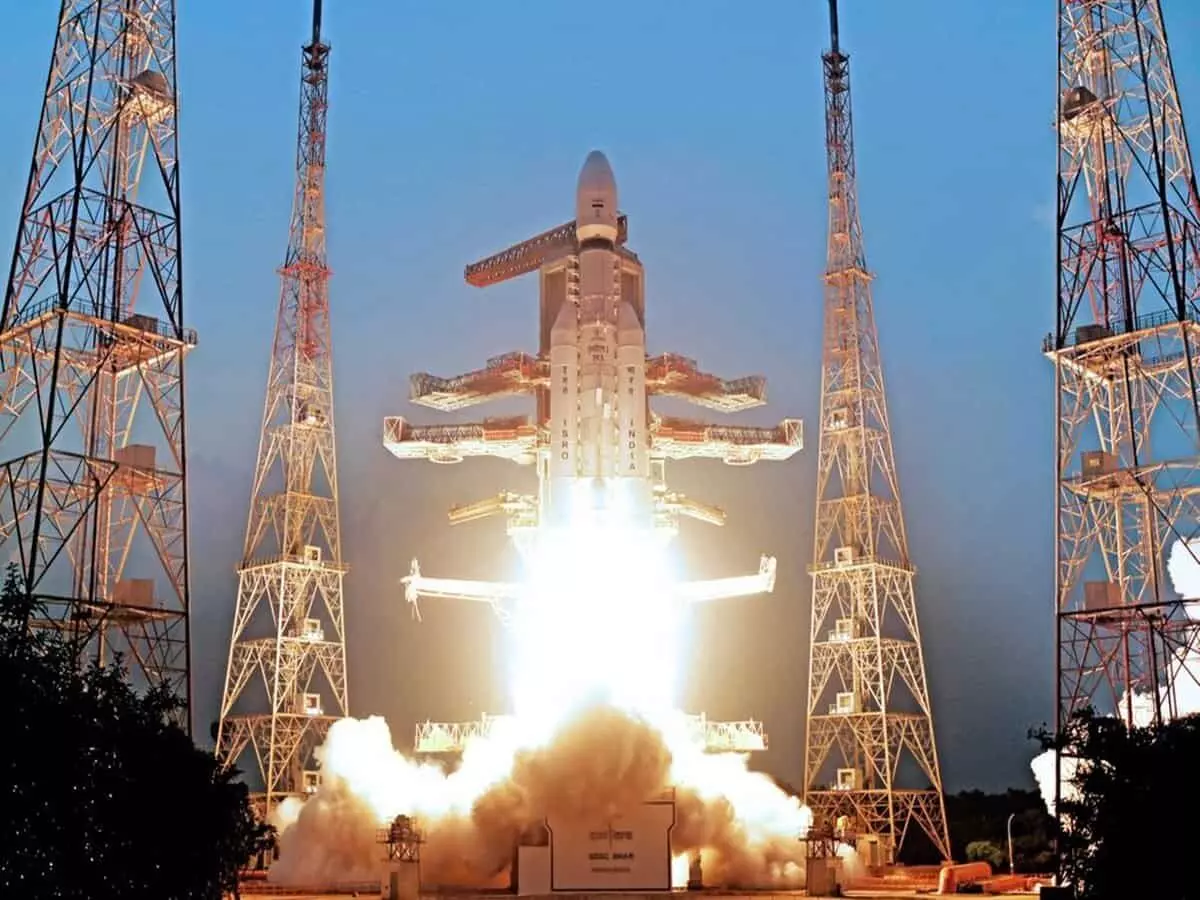
India on Sunday reaffirmed its status as a global space power after the Indian Space Research Organisation (ISRO) successfully launched the Indian Navy’s advanced communications satellite, GSAT-7R (CMS-03), from the Satish Dhawan Space Centre, Sriharikota.
Weighing around 4,410 kilograms, GSAT-7R is India’s heaviest and most powerful communications satellite to date. It was launched aboard the LVM3-M5, popularly known as the ‘Bahubali rocket’, marking another milestone in India’s growing space-defence capability.
Shortly after the successful launch, ISRO announced, “CMS-03 successfully separated. Mission successful.”
India’s maritime communications leap
The GSAT-7R, developed using entirely indigenous technology, will serve as a dedicated military communications satellite for the Indian Navy. It will establish secure, real-time connectivity among naval ships, submarines, aircraft, and command centres, enabling faster information sharing and operational coordination.
The satellite’s multi-band transponders will support voice, data, and video links, enhancing the Navy’s communication range across vast oceanic distances. According to officials, this capability will significantly improve India’s maritime domain awareness, particularly in the Indian Ocean Region (IOR).
Strategic importance
The launch comes at a time of increasing geopolitical competition in the IOR, where China’s expanding naval presence has prompted India to strengthen surveillance and response mechanisms. The GSAT-7R will give India enhanced situational awareness, faster decision-making, and secure strategic communications — key to maintaining a technological edge in maritime defence.
The new satellite is part of ISRO’s growing defence space infrastructure, following earlier launches of GSAT-7 (Rukmini) and GSAT-7A, which serve the Navy and Air Force respectively.
Strengthening India’s space-defence ecosystem
Experts say the mission marks another step toward Atmanirbhar Bharat (self-reliant India) in space technology. The use of the LVM3 launcher, capable of placing heavy payloads into geostationary orbit, underscores India’s capacity to independently meet its strategic satellite requirements.
With this success, ISRO continues to expand its dual-use capabilities — advancing both civilian and military space applications.
The GSAT-7R will soon become operational after a series of in-orbit tests, linking India’s naval assets across the Indian Ocean and further reinforcing its position as a major maritime and space power.