Jaishankar Stresses Need for Trade Deal with US That Respects India’s Core Interests
External Affairs Minister highlights ongoing challenges in India-US relations amid global shifts, calling for strengthened domestic capabilities to navigate turbulent times.

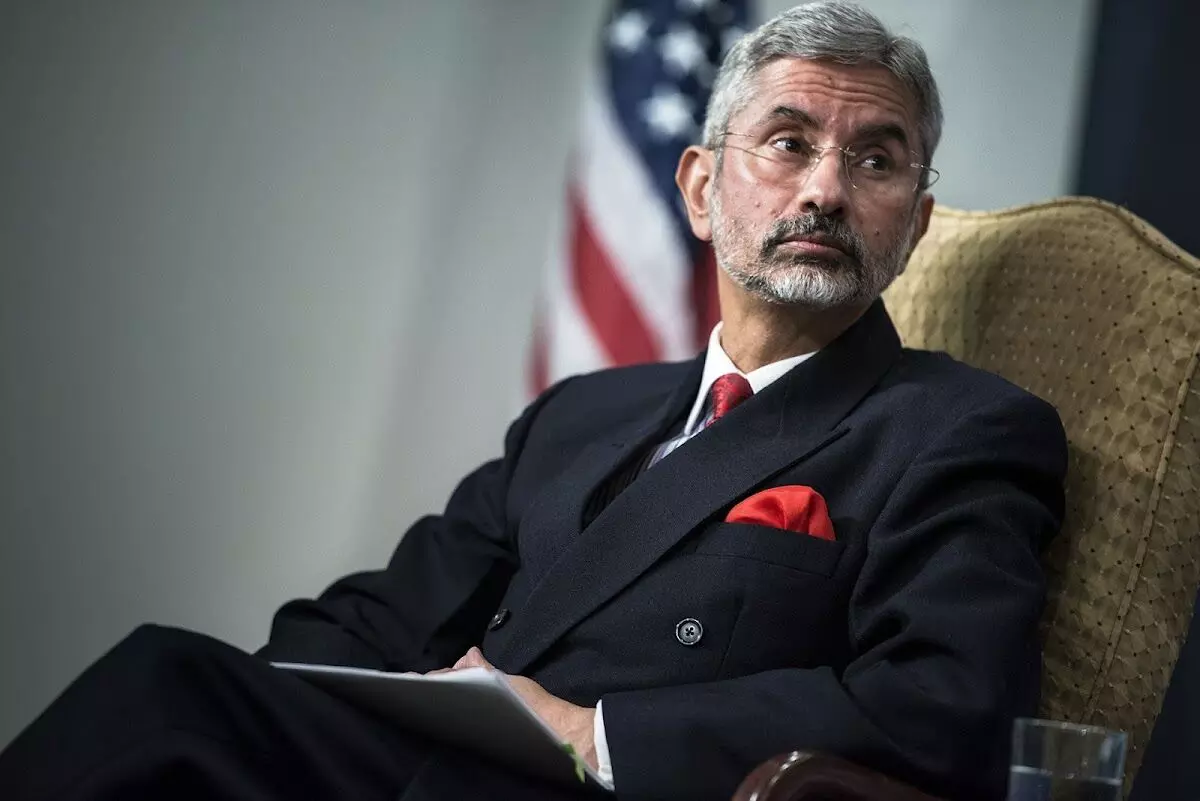
India’s External Affairs Minister S. Jaishankar recently highlighted that many of the current challenges in India-US relations stem from the inability to finalize a trade agreement. Speaking at the Kautilya Economic Enclave in New Delhi, Jaishankar stressed that any trade deal must respect India’s core interests or "red lines."
Jaishankar acknowledged that the US, being the world’s largest market, makes a trade understanding essential. However, he pointed out that despite the ongoing tensions, much of the India-US relationship is continuing as usual, or even expanding in some areas. The minister was candid about the difficulties in concluding a trade deal, attributing much of the strain to unresolved tariff issues, including the 25% reciprocal tariffs imposed by the US, as well as punitive levies related to India’s energy imports from Russia. He emphasized that other countries buying Russian energy haven’t faced similar penalties, which India considers unfair.
Trade talks between the two countries resumed after a thaw following a conversation between Prime Minister Narendra Modi and former US President Donald Trump earlier this year. But Jaishankar noted that the negotiations are ongoing, with no clear timeline for a deal yet.
Beyond trade, Jaishankar addressed the broader global changes reshaping geopolitics and economics. He spoke about the weakening of international rules and regimes, the growing importance of supply chain resilience, and the shifting balance of power as major nations reassess their alliances. Without naming China directly, he referred to how the concentration of global manufacturing in one country has significant implications for economies worldwide. He also highlighted shifts in energy landscapes, with the US emerging as an energy exporter and China leading in renewable energy.
Jaishankar discussed the evolving nature of warfare, citing recent conflicts where stand-off and “contactless” weapons played decisive roles. He also pointed out the increased use of sanctions and competition over critical minerals as new dimensions of global rivalry.
For India, Jaishankar said the challenge is not only to defend its interests but also to continue rising amid these turbulent times. This requires investing in advanced manufacturing sectors like semiconductors, electric vehicles, and space technology, as well as strengthening the country’s comprehensive national power. He emphasized that the solution lies not just in external relations but also in building internal capabilities, including human resources, infrastructure, energy, food, and health security, to thrive in an increasingly complex world.