J&K Cloudburst Tragedy: Rescue Efforts Continue in Chisoti as Death Toll Rises to 60
The Kishtwar flash floods destroyed a makeshift market, a security outpost, 16 homes, government buildings, three temples, a 30-meter bridge, and more than a dozen vehicles.

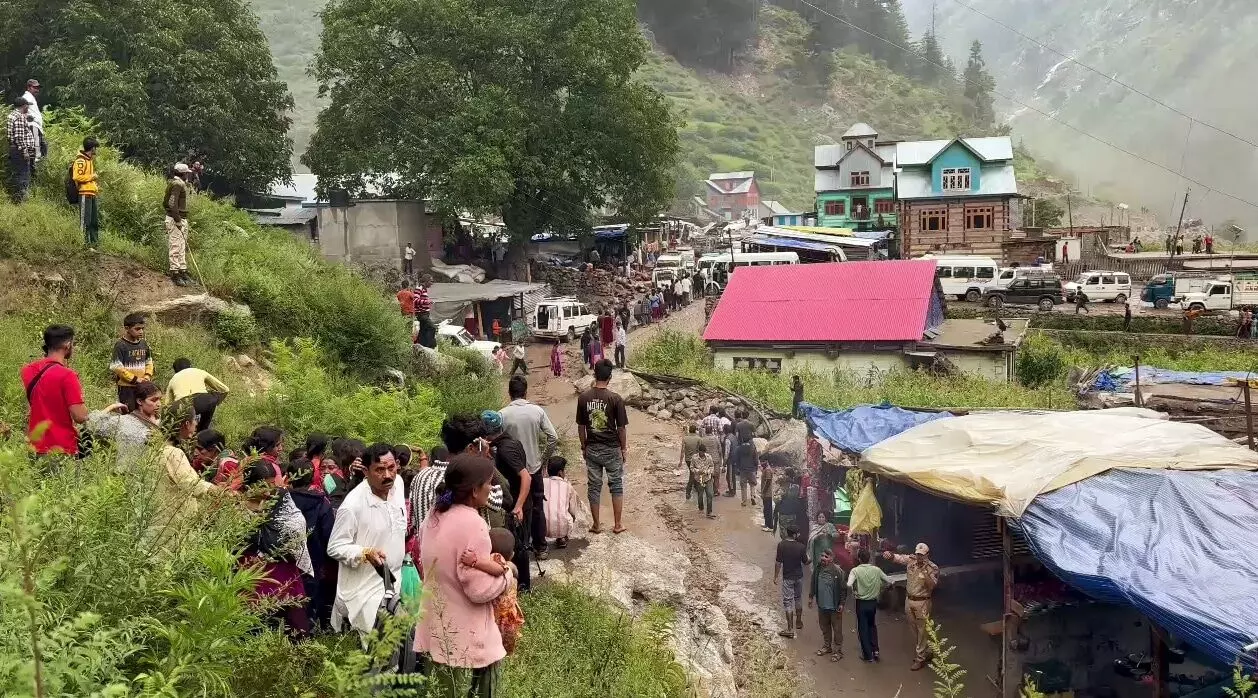
Rescue and relief operations entered their third day on Saturday in Chisoti village of Jammu and Kashmir’s Kishtwar district, where a devastating cloudburst has claimed at least 60 lives, left over 100 injured, and many more still missing.
Authorities have ramped up efforts with nearly a dozen earthmovers deployed by the civil administration, along with specialised rescue equipment and dog squads from the National Disaster Response Force (NDRF). Despite the ongoing efforts, 75 people remain officially unaccounted for. However, locals and eyewitnesses fear the actual number could be much higher, suggesting that hundreds may have been swept away by the sudden flash floods and buried under rubble, boulders, and debris, according to a PTI report.
Among the dead are two personnel from the Central Industrial Security Force (CISF) and a Special Police Officer (SPO) of the local police.
The cloudburst hit around 12:25 pm on August 14, targeting Chisoti — the last motorable village en route to the revered Machail Mata temple. The flash floods wiped out a large portion of the village, including a makeshift market, a community kitchen set up for yatra pilgrims, a security outpost, 16 homes, several government buildings, three temples, four water mills, a 30-meter-long bridge, and over a dozen vehicles.
The area also served as the starting point for the Machail Mata yatra, an annual pilgrimage that began on July 25 and was scheduled to end on September 5. The 8.5-kilometre trek to the 9,500-foot-high shrine has been suspended for the third consecutive day.
Jammu and Kashmir Chief Minister Omar Abdullah visited the flood-ravaged village on Saturday. He was briefed by Indian Army officials and used a virtual reality headset to assess the extent of the devastation caused by the cloudburst.
Union Minister Jitendra Singh and Jammu and Kashmir Director General of Police Nalin Prabhat also visited the site late Friday night to review rescue operations. Meanwhile, state minister Satish Sharma visited grieving families, offering condolences and promising government assistance.
According to PTI, 46 bodies have been identified and 34 have already been handed over to families in Kishtwar, Jammu, Udhampur, and Doda. Most of these victims have since been cremated.
The Indian Air Force has kept two Mi-17 helicopters and one Advanced Light Helicopter on standby in Jammu and Udhampur, ready to assist in rescue and relief efforts if needed.
Videos from the site show a horrifying picture — torrents of muddy water gushing down slopes, uprooting trees, destroying homes, and blanketing everything in silt and debris. What was once a lush green valley has been reduced to a devastated brown wasteland.
Police and security personnel have constructed a temporary wooden log bridge to help stranded pilgrims return from the shrine. Local BJP MLA and Leader of Opposition Sunil Sharma estimated that around 15,000 people were at the temple when the cloudburst occurred. Of these, around 4,000 have already been evacuated, while the rest are being moved out via a Bailey bridge built by the Indian Army.
As rescue teams continue to dig through debris and search for survivors, officials say the priority remains the safe evacuation of stranded pilgrims and providing immediate relief to affected families. With dozens still missing, and many areas still inaccessible, the full scale of the tragedy is yet to be realised.