Kiren Rijiju Reveals PM Modi Refused Special Exemption in Bills Targeting Jailed Ministers
Rijiju revealed that PM Modi informed the Cabinet about a recommendation to exclude the Prime Minister from these bills.

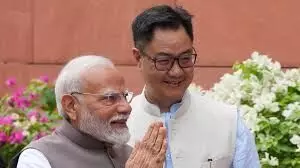
Union Minister Kiren Rijiju on Saturday shared that Prime Minister Narendra Modi refused to grant himself any special exemption while the government was drafting bills that could remove the Prime Minister, Chief Ministers, or ministers from office if they are jailed for serious crimes.
Rijiju said that during a Cabinet meeting, Modi was informed about a recommendation to exclude the Prime Minister from the scope of these bills. However, Modi rejected that idea.
“PM Modi told the Cabinet that the recommendation was to keep the Prime Minister out of the bill, but he didn’t agree. He refused any special protection, saying the PM is also a citizen and should be treated like one,” Rijiju told ANI.
Rijiju also pointed out that most Chief Ministers belong to the ruling party and if they commit any wrongdoing, they should step down. “Ethics must matter. If the Opposition truly cared about ethics, they would have supported this bill,” he added.
The three bills in question — the Constitution (130th Amendment) Bill, the Jammu & Kashmir Reorganisation (Amendment) Bill, and the Government of Union Territories (Amendment) Bill — propose that any sitting minister, Chief Minister, or even the Prime Minister can lose their position within a month if they are arrested or detained for 30 consecutive days for an offense punishable by at least five years in jail.
These bills were introduced by Home Minister Amit Shah amid strong opposition protests, with lawmakers even tearing the draft papers and throwing pieces in the Lok Sabha. Despite the uproar, the bills were passed by voice vote and sent to a joint parliamentary committee for further review.
Opposition leaders have criticized the bills, calling them “draconian” and “unconstitutional,” and claim they are designed to target Chief Ministers of opposition-ruled states through central agencies.