Know Nitish Kumar: The Political Journey of Bihar’s Most Enduring Leader
From his socialist beginnings and caste-savvy politics to becoming ‘Sushasan Babu,’ Nitish Kumar’s five-decade rise reveals how he shaped Bihar’s governance and remained Chief Minister through shifting alliances and changing political tides.

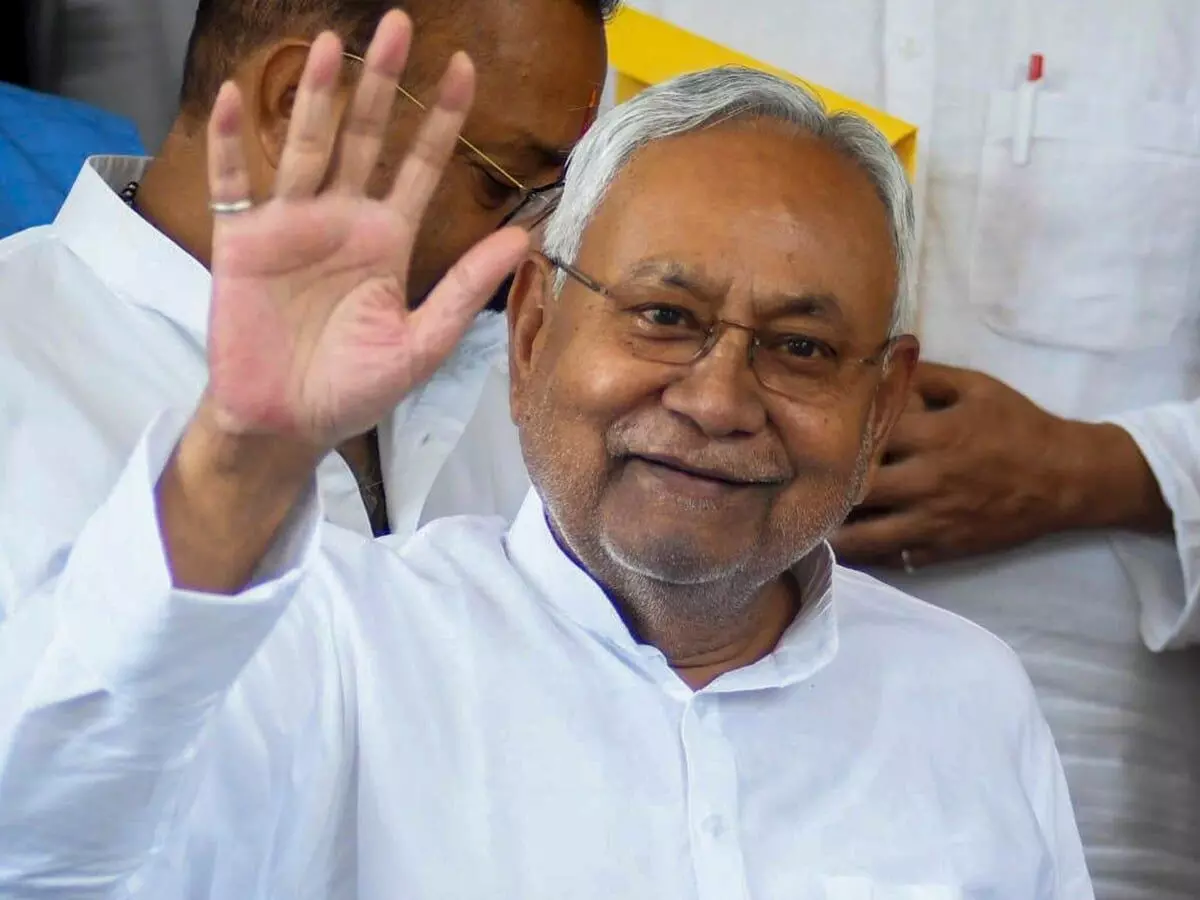
Nitish Kumar, Bihar’s most influential leader, is once again at the helm of power. He took oath as Chief Minister of Bihar for a record 10th time on Thursday, silencing critics who raised questions about his ability to govern the state.
Excellent pre-poll strategy, energetic election campaign, and the stunning result once again demonstrated his ability to adapt, endure, and hold influence in one of India’s most unpredictable political arenas.
Nitish Kumar has been the central figure in Bihar politics for the past two decades. As Chief Minister, he has greatly influenced the political and social structure of Bihar, earning the title of ‘Sushasan Babu’.
Ram Manohar Lohia’s socialist ideas, Karpoori Thakur’s mentorship, and Jayaprakash Narayan’s mass movement from 1974 to 1977 shaped his five-decade political journey, from a young activist to one of the state’s most consequential leaders.
He entered electoral politics in 1985 by winning the Harnaut Assembly seat, and by 1989 had moved onto the national stage as a Lok Sabha MP. He was subsequently elected to the Lok Sabha in 1991, 1996, and 1998, serving as union Minister holding portfolios ranging from Railways to Road Transport and Agriculture.
During this period, Lalu Prasad Yadav dominated Bihar, garnering strong support from the backward castes. When corruption charges eroded Lalu’s voter base, the engineer-turned-politician Nitish Kumar sensed an opportunity to rise to prominence in Bihar politics.
Nitish gradually began to attract the backward castes, particularly the Kurmi-Kushwaha community. He also made inroads into the Extremely Backward Classes (EBCs). By harnessing this caste equation, he countered the Yadav community’s solidarity with Lalu Yadav.
After a fractured mandate in 2000, Nitish Kumar became the Chief Minister of Bihar for the first time. However, this term lasted only seven days, as he lacked a majority.
His real breakthrough came in 2005, when the JD(U)-BJP alliance won a clear mandate and he assumed charge as Chief Minister. Nitish consolidated his support base by strengthening welfare and reservation measures for EBCs, who comprise nearly 36 percent of the population, women, and Pasmanda Muslims. He also cultivated an influential constituency among women, who now form nearly half of the state’s electorate.
Its impact was visible in the 2010 elections, when Nitish Kumar won a landslide victory. The JDU and BJP alliance won 206 out of 243 seats. The NDA’s vote share also reached nearly 40 per cent. During his second full term (2010-15), he established the image of ‘Sushasan Babu’.
The years that followed highlighted Nitish’s remarkable political acumen. He walked out of the BJP-led alliance in 2013, joined hands with Lalu Prasad Yadav in 2015 to form a powerful Grand Alliance, and then returned to the BJP two years later. Similar political realignments continued over the past five years, yet through every turn, he managed to retain the Chief Minister’s chair.