Modi’s Reform Express Speeds Past Accountability, Leaving India Bruised
Modi’s Rajya Sabha speech highlights reforms but leaves key issues like defence gaps, financial opacity, and women’s safety unaddressed, say critics.

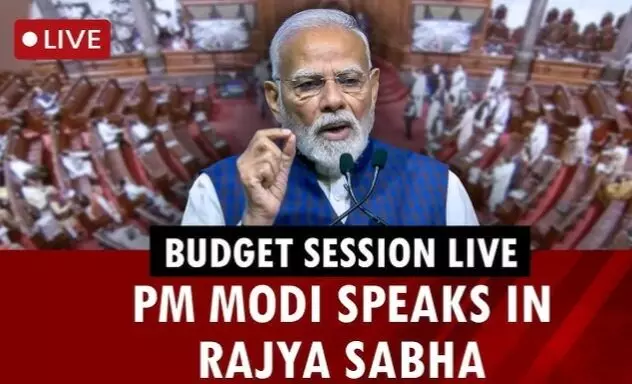
Prime Minister Narendra Modi’s latest speech in the Rajya Sabha was a familiar performance—sharp attacks on Nehru, Indira Gandhi, and the Congress party, wrapped in the rhetoric of reform and transformation. He painted himself as the leader who sees “140 crore solutions” where Nehru once saw “35 crore problems.” Yet behind the theatrics lies a troubling reality: the government’s evasions on defence accountability, financial transparency, women’s safety, and the commercialization of religion in BJP-ruled states.
Modi’s choice to quote Indira Gandhi’s recollection of Nehru was not accidental. It was a deliberate attempt to frame the Congress legacy as one of despair and failure. But critics argue that this selective quotation was taken out of context, ignoring the fact that Nehru’s remark was a metaphor for the scale of challenges in a newly independent nation. By reducing history to soundbites, Modi sidestepped the pressing issues of his own tenure.
The unanswered questions are glaring. A former defence chief has alleged that the BJP government failed to act on crucial reforms, leaving gaps in preparedness that compromise national security. Independent reports have pointed to a staggering ₹34 lakh crore in unaccounted public funds, a figure that has embarrassed even BJP insiders. Civil society voices highlight the surge in crimes against women in BJP strongholds—Madhya Pradesh, Uttar Pradesh, and Uttarakhand—where NCRB data shows rising sexual violence and trafficking. Yet Modi’s speech offered no roadmap for systemic reform in policing or justice delivery.
Equally disturbing is the growing commercialization of religion. Uttarakhand has faced allegations of selling Himalayan lands to businessmen like Randev Ragishankar, while government-backed mahants consolidate control over temples and religious institutions. What was once sacred space is increasingly being turned into political and economic capital. This trend, mirrored in other BJP states, undermines the spiritual sanctity the party claims to defend.
Modi’s emphasis on trade deals with the European Union and the United States was meant to showcase India’s global rise. Indeed, these agreements are significant, but they coexist with domestic contradictions. High GDP growth has not translated into equitable distribution, leaving small farmers struggling despite schemes like PM Kisan. International investors may praise India’s reforms, but ordinary citizens—farmers, women, and marginalized communities—feel neglected. The mantra of “reform, perform, transform” rings hollow when basic accountability on defence and financial management is missing.
Political analysts like Dr. Satish Misra have described Modi’s speech as “political theatre rather than governance.” Defence officials lament procurement delays and lack of strategic clarity. Activists decry the government’s silence on women’s safety. Economists warn that the ₹34 lakh crore gap in financial reporting undermines trust in governance. These voices converge on a single point: Modi’s government excels at narrative but falters on accountability.
The opposition’s walkout during his speech was symbolic of a larger truth. Modi may dominate the stage with his rhetoric, but the questions he avoids are louder than the applause he seeks. India may be riding the “Reform Express,” but without addressing defence gaps, financial opacity, rising crimes, and religious profiteering, the journey risks derailing.
Modi’s Rajya Sabha performance was not just an attack on Congress; it was an escape from accountability. The Prime Minister’s words may inspire confidence abroad, but at home, they leave citizens grappling with unanswered questions and unfulfilled promises. Reform without responsibility is rhetoric, and rhetoric without accountability is betrayal.