Operation Rahat Brings Hope: Punjab Government’s Relief Efforts in Action
Punjab ministers lead on-ground flood relief under Operation Rahat, restoring homes, services, and hope for affected families.

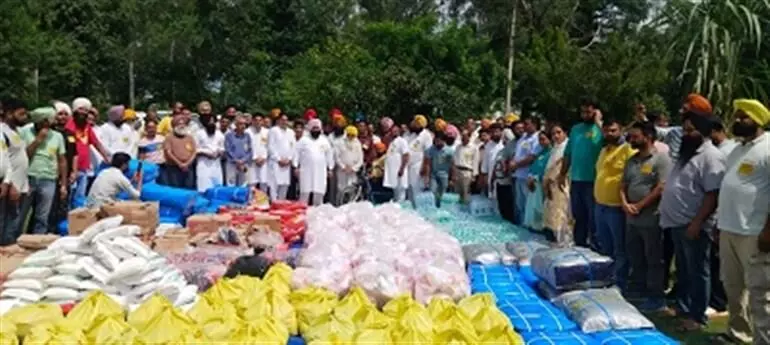
The devastating floods that swept across Punjab left homes submerged, fields ruined, and livelihoods shattered. Amid this crisis, the state government launched “Operation Rahat”, an emergency relief initiative spearheaded by Chief Minister Bhagwant Mann. Beyond administrative orders, what has stood out is the visible presence of cabinet ministers on the ground, offering both aid and accountability.
Education Minister Harjot Singh Bains has emerged as a face of relief operations. Moving beyond official duties, he contributed ₹5 lakh from his family to repair nearly 50 homes, opened his residence to flood-hit citizens, and personally monitored village-level relief. His swift coordination ensured fogging, medical supplies, and livestock vaccinations were in place. Notably, Bains has set a tight timeline: land inspection reports within three days, electricity restored in 24 hours, and damaged roads repaired in 48 hours.
His humane side was also evident when political disruption risked a life. During a Congress-led highway blockade in Shri Anandpur Sahib, an ambulance carrying a critical patient was trapped. Bains intervened, using his pilot vehicle to clear the way—a moment captured on video and widely shared, bringing him public praise while raising uncomfortable questions about the opposition’s protest tactics during a humanitarian crisis.
Relief Across Portfolios
Other ministers have also rolled up their sleeves:
Cabinet Minister Harbhajan Singh ETO and his family provided relief materials and animal fodder in villages, with Singh himself reinforcing riverbanks alongside locals.
Rural Development Minister Tarunpreet Singh Sodhi distributed ration and water supplies across villages.
Transport Minister Laljit Singh Bhullar physically joined villagers to prevent an embankment breach in Ghullewala while overseeing material distribution.
Cabinet Minister Barinder Kumar Goyal supervised aid delivery personally, ensuring no pocket was left unattended.
Health Minister Balbir Singh deployed medical kits, drinking water, and essentials through coordinated outreach.
Finance Minister Harpal Singh Cheema worked directly with volunteers at the Derba office to prepare relief kits, underscoring the government’s hands-on approach.
“Operation Rahat” is more than a relief mission—it is also a governance test and a political showcase. By mobilizing ministers on the ground, the Mann government projects an image of accessibility and responsiveness, in stark contrast to an opposition that risks being seen as obstructionist rather than constructive.
While floods have tested Punjab’s resilience, the state’s relief drive has underscored a crucial narrative: in times of crisis, political leadership is judged not by speeches in assemblies, but by muddy boots in the villages.