Ops. Vengeance: ULFA-I’s Kakapather Army Camp Attack and Its Political-Military Implications

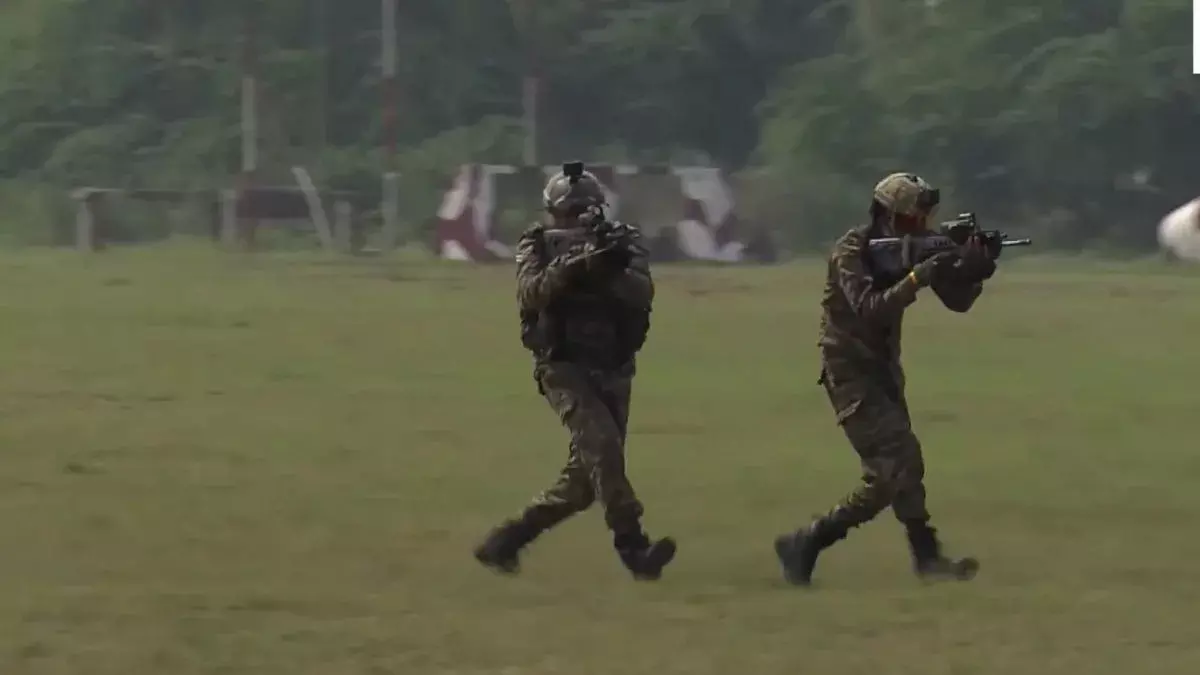
On 17 October 2025, ULFA-I officially claimed responsibility for the attack on the Kakapather Army Camp, describing it as a retaliation for drone strikes on their Myanmar-based camps in July 2025. Codenamed “Ops. Vengeance”, the operation reflects the outfit’s evolving military-political methodology: more calculated, precise, and adaptive to challenging operational environments.
When compared with the Daisajan Army Camp attack of 2002, led by Jiten Dutta, several contrasts stand out. The Daisajan strike occurred in a favorable operational landscape: villages were largely sympathetic, and the proximity to Dibru Saikhowa National Park provided natural cover and concealment. In contrast, Kakapather presented a militarily unfavourable terrain — open, exposed, and well-lit, with minimal natural protection. ULFA-I cadres engaged in close-quarters combat for over 40 minutes, navigating threats from a police station less than 700 meters away and another Army post just 9 kilometers distant. Exit points that historically served as entry routes, such as the Assam–Arunachal border, were now used as withdrawal paths, with vehicles left strategically to evade pursuit.
This operational shift demonstrates ULFA-I’s tactical maturation: even in adverse conditions, it can execute high-risk, symbolic strikes, signaling resilience and operational sophistication. The attack also illustrates a key evolution in insurgent strategy: leveraging politico-military signaling to project strength despite constrained ground conditions.
Beyond the battlefield, the strike carries significant political reverberations. Assam’s political environment remains highly volatile, with the double-engine government evolving into a dual power-center structure lacking prominent public visibility. In this context, attacks like Kakapather serve as a direct and symbolic challenge to the Himanta Biswa Sarma-led BJP government, highlighting gaps in coordination and preparedness. The strike amplifies public anxiety, reshapes security narratives, and provides insurgent outfits with a resonant message of persistence.
In sum, Ops. Vengeance reflects both the operational adaptability of ULFA-I and the complex interplay between security and politics in Assam. While reminiscent of the Daisajan strike in historical character, the 2025 attack underscores the changed operational landscape, where insurgents act in tactically adverse conditions and the political stakes for the state government are increasingly pronounced.