Politics First, Security Later: Assam’s Identity Question and the Chicken Neck Dilemma
From "50 years of safety" to "20-year takeover" warnings, CM's flip-flop reveals how electoral mobilization trumps genuine strategic concerns

Politics First, Security Later: Assam’s Identity Question and the Chicken Neck Dilemma When Chief Minister Himanta Biswa Sarma declared after the recent delimitation of constituencies in Assam that “till fifty years Assamese people are safe, politically and as a jati,” it was meant as a reassurance. The delimitation, redrawing boundaries of Legislative Assembly Constituencies (LACs), was showcased as a safeguard against demographic erosion and political displacement. Yet, the same Sarma now warns that within two decades “unknown faces” may lead Assam, unsettling the very community he claimed was secure. This contradiction exposes the uneasy intersection of electoral politics and national security in Assam: politics first, security later.
The Delimitation Paradox
Delimitation was presented as a corrective — a firewall against the fear that indigenous Assamese might be politically overwhelmed by waves of migration. The BJP under Sarma projected it as a historic defense of Assamese identity. The promise of “50 years of safety” was not just mathematics, it was a psychological shield for an anxious society.
But Sarma’s recent alarm that “unknown people” could take over Assam in just 20 years punctures that shield. It implies that delimitation was never a long-term solution, but a temporary electoral maneuver. If the demographic tide is so unstoppable, then the delimitation exercise was more about optics than durable protection.
Biharis: Pre- and Post-Partition Shadows
The deeper roots of this anxiety lie in the Bihari Muslim question, which continues to cast a shadow on Northeast politics.
Pre-Partition: Bihari Muslims were deeply woven into North Bihar’s agrarian and trading networks. While some supported the Muslim League’s call for Pakistan, others opposed Partition and remained loyal to the Congress. Unlike Punjab or Bengal, Bihar was not split, so migration was not forced. Many stayed back, trusting in India’s secular framework.
Post-Partition: A significant section, however, did migrate to East Pakistan, where they became known as “Biharis” or Urdu-speakers.” After 1971, these communities were stranded — stateless in Bangladesh, unwelcome in Pakistan. Those who stayed in Bihar, especially in the Seemanchal belt (Kishanganj, Katihar, Araria, Purnia), lived along the edge of the Siliguri Corridor, creating a demographic overlap with Bengal and Assam.
This dual history — those who left and those who stayed — gave rise to a lasting perception problem. The Bihari Muslim identity became associated with Partition’s unfinished business, raising recurring questions of loyalty and belonging. Today, their presence near the Chicken Neck corridor feeds the narrative of “unknown people” — a term Sarma weaponizes for politics, but which intelligence agencies also flag in security reports.
Seemanchal and the Demographic Twist
The Seemanchal region today is a demographic hotspot — districts with 60–70% Muslim populations, sharing porous borders with Bangladesh and West Bengal, and culturally linked to Assam’s socio-political space. For Assam, the fears are twofold:
1. Demographic Spillover: As population flows continue, the fear is that electoral and cultural weight will one day tilt toward outsiders, diluting Assamese identity.
2. Political Spillover: The Seemanchal factor bleeds into Bengal and Assam, where anxieties about “vote-bank politics” and migrant identities create volatility.
Thus, when Sarma talks of “unknown faces” becoming leaders of Assam, it is not just rhetoric — it reflects a deeper unease about how Seemanchal’s demographic trajectory might one day shift the balance of power in Assam.
The Chicken Neck Factor
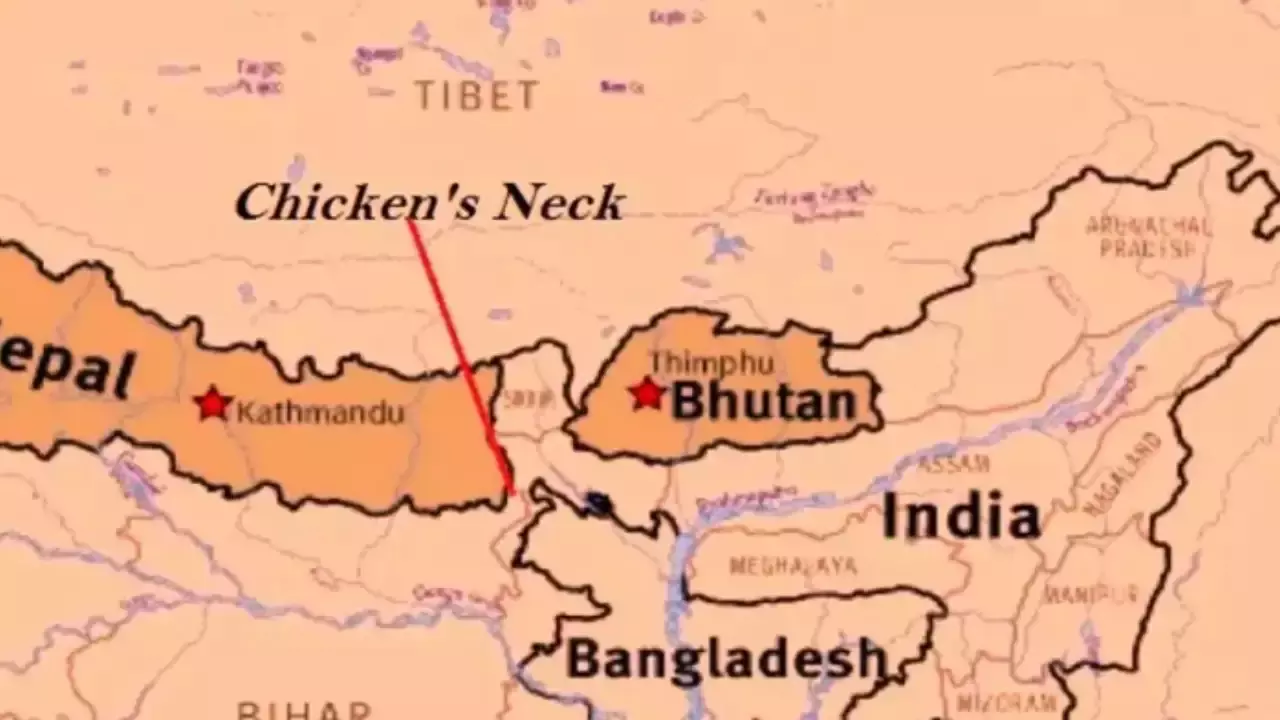
The Siliguri Corridor, or Chicken Neck, magnifies these anxieties. Barely 22 kilometers wide, it connects mainland India to the Northeast. Its vulnerabilities are well-documented:
Radical infiltration: Groups like HUJI, JMB, and ISI networks in Bangladesh have historically used this belt to push operatives into India.
Identity overlap: The Urdu-speaking Bihari Muslim population straddling Bihar, Bengal, Bangladesh creates a grey zone of identities that complicates detection.
Strategic fragility: In the event of external conflict, demographic ambiguity in this narrow corridor could paralyze India’s connectivity to its Northeast.
In this context, Sarma’s “unknown people” warning could have been framed as a national-security alert. Instead, it becomes a populist slogan.
Politics of Fear, Not Policy of Security
Sarma’s oscillation — from the assurance of 50 years of safety to the panic of a 20-year demographic takeover — illustrates a larger pattern:
Electoral Mobilisation: Demographic fears are dramatised to consolidate Assamese support behind the BJP.
Security as Theatre: Genuine national-security concerns are reduced to props in a political performance.The danger here is clear. When security is politicised, it loses credibility. Delhi begins to treat warnings as local rhetoric rather than strategic alerts. Assamese society, meanwhile, is trapped in perpetual insecurity — unsure if they are truly threatened, or simply being mobilised for electoral ends.
The Assamese Identity Question
At its core, this is about the century-old Assamese fear of demographic and cultural erosion — jati, mati, bheti (identity, land, hearth). Every NRC, every delimitation, every rhetorical “unknown people” is an echo of that fear. But when leaders play double games — assuring safety on one hand, sounding alarms on the other — it deepens fatigue and distrust.
Assam today sits at the intersection of historical legacies (Bihari Muslims pre- and post-Partition), demographic anxieties (Seemanchal and beyond), strategic fragility (Chicken Neck Corridor), and political theatre (HBS’s double words).
The contradiction between promises of 50 years of safety and alarms of a 20-year takeover reveals the larger paradox: politics first, security later.
For Assam, this is the most dangerous outcome. A state that guards India’s gateway to the Northeast cannot afford to treat national security as an electoral slogan. Unless history, demography, and strategy are addressed with clarity, Assam’s identity question will remain trapped in rhetoric — while the real vulnerabilities around the Chicken Neck corridor only grow sharper.