Punjab Drug Menace & Gangsterism Roots During Akali Rule | Baltej Pannu

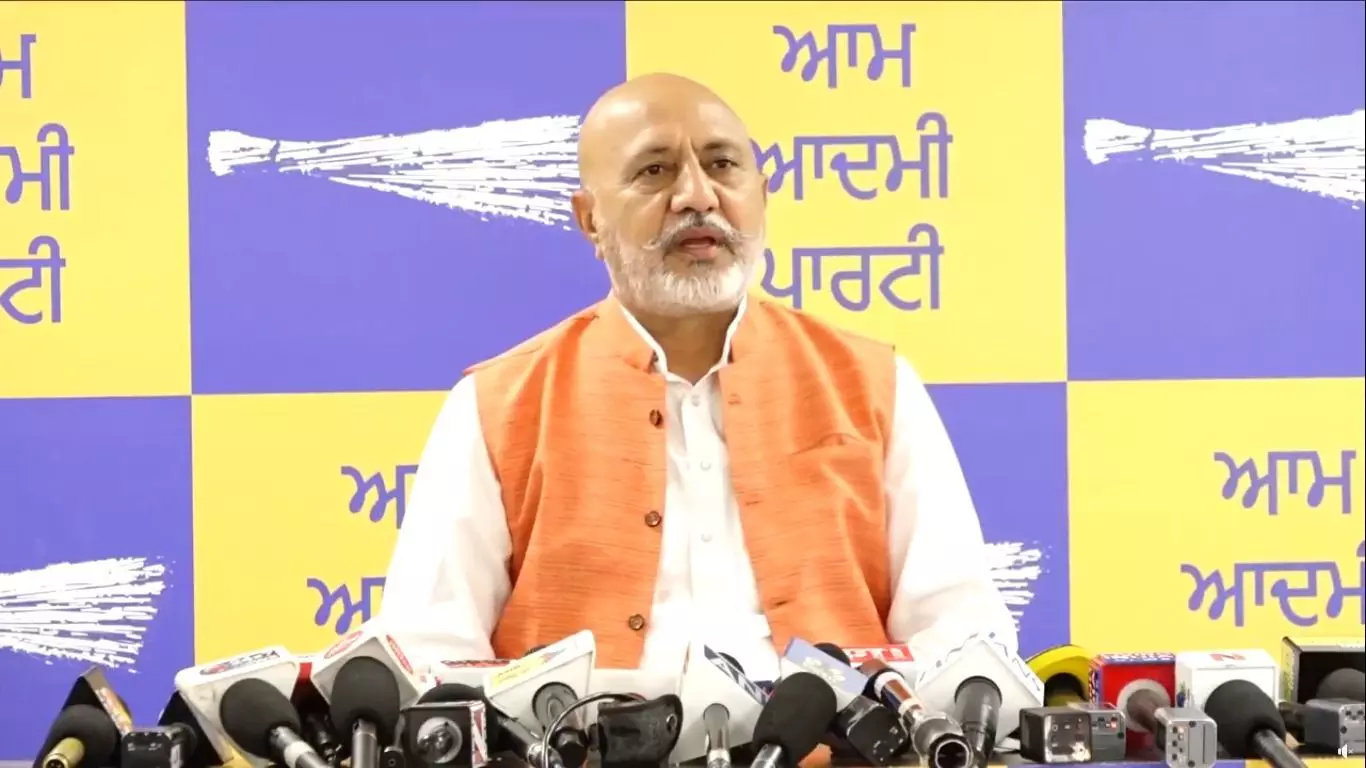
Chandigarh:The political temperature in Punjab rose sharply on Wednesday after the Aam Aadmi Party (AAP) launched a counterattack on Shiromani Akali Dal chief Sukhbir Singh Badal over his recent assertion that drug traffickers and gangsters would be declared “terrorists” in the first Cabinet meeting if his party returns to power.
Addressing a press conference at the party office here, AAP Punjab’s State Media In-charge Baltej Pannu said the statement was “a cruel joke on Punjabis” who, he claimed, had witnessed the peak of the drug menace during the Akali regime from 2007 to 2017.
Pannu alleged that the roots of ‘chitta’ and organised gangsterism in the state could be traced back to the decade-long rule of the Akali Dal-BJP government. “Before 2007, the word ‘gangster’ was not part of Punjab’s everyday vocabulary. It was during that period that criminals flourished under political patronage,” he said, accusing the previous regime of allowing a parallel culture of intimidation to take shape.
Recalling incidents from that period, Pannu referred to the Nabha jailbreak and other high-profile crimes, alleging they reflected a breakdown of law and order. He further claimed that individuals who once moved around with impunity in vehicles fitted with hooters and security cover later emerged as notorious gang figures.
The AAP leader contended that the proliferation of drugs intensified between 2007 and 2017, reaching what he described as its “peak” during the second term of the Akali-led government. “Whenever drug smugglers were arrested, photographs with senior Akali leaders would surface shortly after. Recommendations for their release would follow. It is ironic that those under whose watch this happened now promise swift action in their first Cabinet meeting,” Pannu said.
Projecting the current dispensation’s efforts, Pannu maintained that the government led by Chief Minister Bhagwant Singh Mann was pursuing an “honest and sustained” campaign against drugs and gangster networks. He said committees had been formed down to the village level and that the police had been directed to act without fear or favour.
The AAP functionary also invoked the incidents of sacrilege at Bargari and Burj Jawahar Singh Wala and the subsequent police firing at Kotkapura, saying these episodes remain etched in public memory. “Those who are themselves facing legal scrutiny in firing and sacrilege-related cases should refrain from sermonising on law and order,” he remarked.
In a pointed challenge, Pannu said Badal should use his next public rally to explain what steps were taken during his tenure to curb the drug trade and how the narcotics network expanded during those years. “Punjabis have not forgotten the cost paid by their families and their youth. Political statements cannot erase a decade of lived experience,” he added.
The exchange signals that the issue of drugs and law and order will remain central to Punjab’s political discourse in the run-up to the next electoral battle, with both sides sharpening their narrative around accountability and governance.