Shashi Tharoor Slams Dynastic Politics, Sparks BJP Response Ahead of Bihar Polls
Congress MP cites Nehru-Gandhi family and other political dynasties, calling lineage-based leadership a threat to Indian democracy and meritocracy.

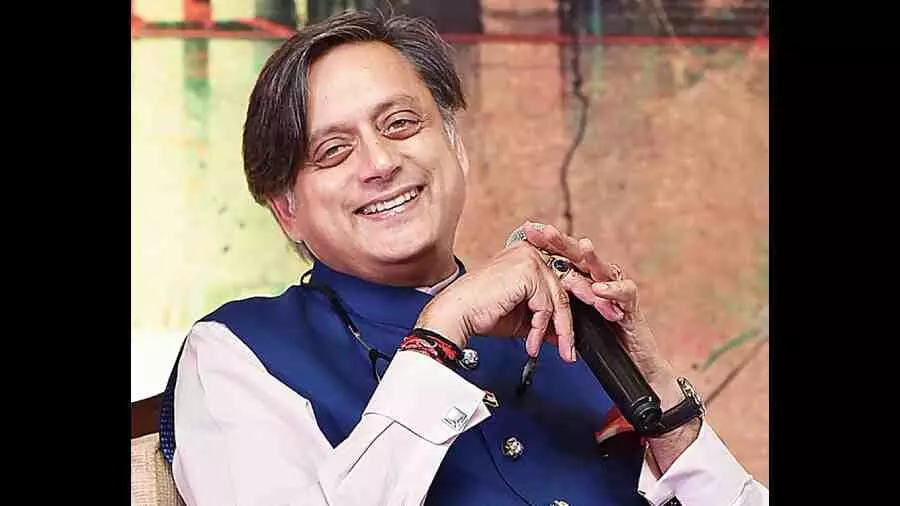
Congress MP Shashi Tharoor’s recent article critiquing dynastic politics has sparked fresh debate ahead of the Bihar assembly elections, drawing reactions from the ruling Bharatiya Janata Party (BJP). Writing for Project Syndicate on October 31, Tharoor highlighted the Nehru-Gandhi family as a prime example of how political leadership in India often becomes a birthright rather than a merit-based responsibility.
BJP spokesperson Shehzad Poonawalla described Tharoor’s words as a “direct attack” on Rahul Gandhi of the Congress and Tejashwi Yadav of the RJD, calling into question the entitlement of political heirs. Poonawalla’s comments, shared on X, suggested potential political repercussions for Tharoor’s candid critique.
Tharoor, who has often been at odds with his party, stressed that dynastic politics can allow leaders to remain in power despite poor electoral performance. Using the Congress as an example, he noted that successive defeats have not prevented members of the Nehru-Gandhi family from retaining central leadership roles. He also pointed out that most Indian political parties remain personality-driven, with leadership selection often opaque, leaving meritocracy sidelined.
The MP cited several other family-led parties across India, including the Samajwadi Party in Uttar Pradesh, Shiv Sena in Maharashtra, Biju Janata Dal in Odisha, and the Badals’ Akali Dal in Punjab. He also referenced political dynasties beyond India, noting families like the Bhuttos and Sharifs in Pakistan and the Rajapaksas in Sri Lanka.
Tharoor linked dynastic politics to structural and cultural factors in India, such as branding, name recognition, low literacy rates, and residual feudal attitudes. He argued that when political power is determined by lineage rather than capability or grassroots engagement, governance quality suffers.
While Tharoor’s article does not mention Tejashwi Yadav directly, BJP leaders have interpreted it as targeting Bihar’s prominent political heir. The piece underscores Tharoor’s long-standing critique of nepotism within Indian politics, emphasizing that meaningful reforms, including internal party elections and transparent leadership processes, are essential to curb dynastic dominance and strengthen Indian democracy.
In the context of ongoing electoral battles, Tharoor’s critique of political inheritance resonates as both a reflection on party culture and a pointed commentary on India’s broader political landscape.