Supreme Court Declines to Interfere in VIP Darshan Practice at Mahakaleshwar Temple
Court says entry into the Garbhagriha is an administrative matter, not for judicial scrutiny; petitioner withdraws plea with liberty to approach authorities

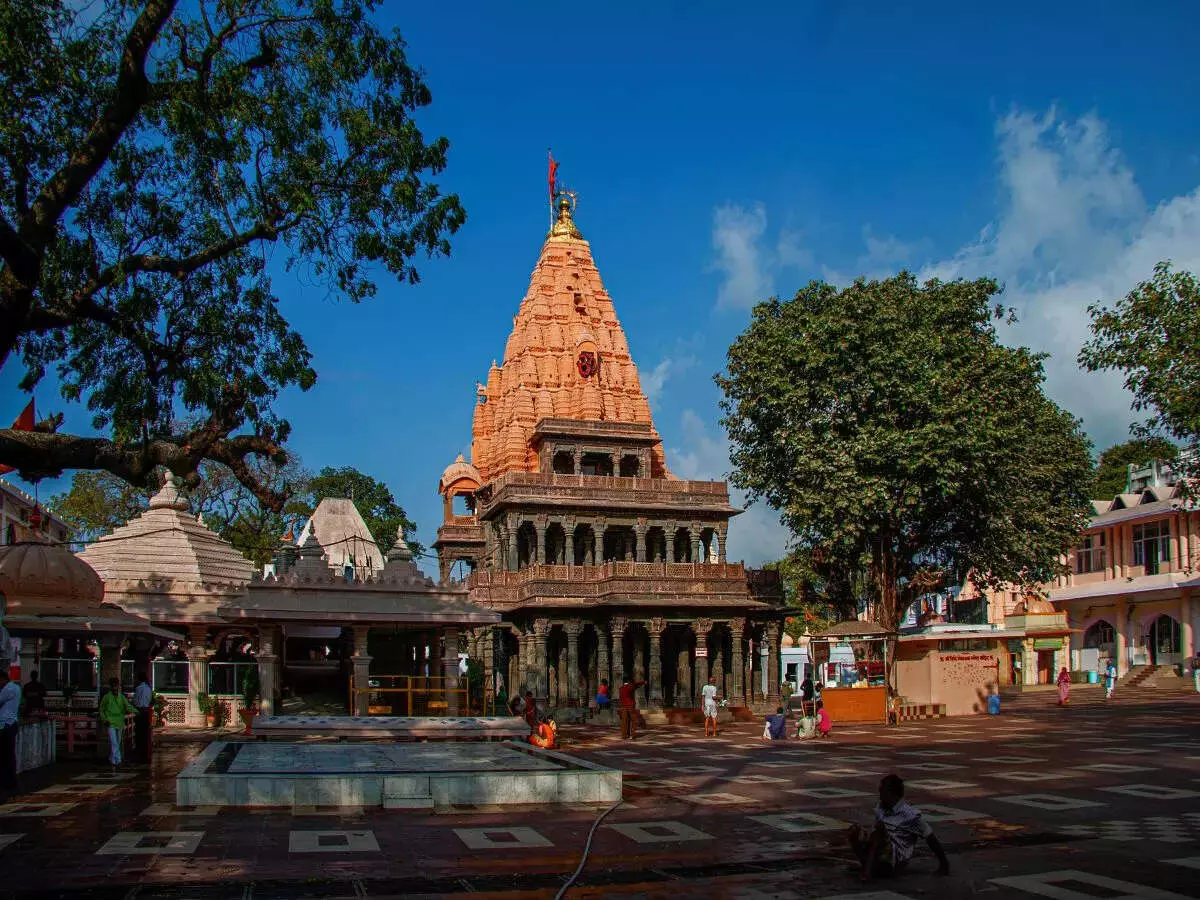
The Supreme Court on Tuesday declined to hear a petition challenging the practice of “VIP darshan” at the Shri Mahakaleshwar Temple in Ujjain, saying the issue is not something courts should decide. After the Court made it clear that it was not inclined to interfere, the petitioner chose to withdraw the case, seeking permission to instead approach the concerned authorities. The Court allowed this request.
The case was heard by a Bench comprising Chief Justice of India B.R. Gavai, Justice R. Mahadevan, and Justice Joymalya Bagchi. The petition was filed by Darpan Awasthi, who had challenged a Madhya Pradesh High Court decision that rejected his plea against the alleged preferential treatment given to “VIPs.” According to the petitioner, VIPs are allowed entry into the Garbhagriha (the innermost sanctum of the temple) to offer water to the deity, while ordinary devotees are denied the same access.
Advocate Vishnu Shankar Jain, appearing for the petitioner, argued that this practice violates Article 14 of the Constitution, which guarantees equality before the law. He contended that there should be a uniform policy for entry into the Garbhagriha and that people should not be discriminated against based on their VIP status. He further argued that if certain individuals are allowed entry based on recommendations from officials like the Collector, then other similarly placed devotees should also be given the same opportunity.
The Supreme Court, however, was not convinced. Chief Justice Gavai observed that decisions regarding who should be allowed entry into the Garbhagriha fall within the domain of temple administration, not the judiciary. He remarked that if courts start deciding who can or cannot enter a temple’s sanctum, it would place an unreasonable burden on the judiciary.
The Chief Justice also cautioned that applying Article 14 inside the sanctum could open the door to claims under other fundamental rights as well. He noted that this might even lead to demands for rights such as freedom of speech under Article 19 within the sanctum, which could seriously complicate religious and administrative practices.
Although the petitioner clarified that his challenge was limited to discrimination and argued that there should either be a complete ban or equal access for all without selective permissions, the Bench remained unconvinced.
Following the Court’s refusal to intervene, the petitioner withdrew the petition. The Court recorded that he is free to submit his suggestions or recommendations to the appropriate authorities instead.
The Supreme Court also referred to the Madhya Pradesh High Court’s findings. The High Court had noted that the records of the Mahakaleshwar Temple Managing Committee did not show any absolute ban on entry into the Garbhagriha. It observed that VIPs are allowed entry with the approval of the Collector and the Administrator of the Managing Committee.
The High Court had further held that deciding who qualifies as a “VIP” is entirely within the discretion of the competent authority and cannot be examined in writ proceedings. It pointed out that there is no fixed list or formal definition of VIPs and that permissions are granted on a case-by-case basis depending on the individual’s status at a particular time.
Since the term “VIP” is not defined in any law or rules, the High Court held that anyone permitted by the competent authority can be treated as a VIP for that specific occasion. It also described the petitioner as being personally aggrieved and dismissed the petition as not maintainable.