Supreme Court Seeks Centre’s Long-Term Plan to Tackle Delhi-NCR Air Pollution Crisis
Bench demands detailed report on AQI monitoring systems, stresses strict enforcement of CAQM orders in Punjab and Haryana, and rejects calls for a blanket construction ban ahead of next hearing on November 19.

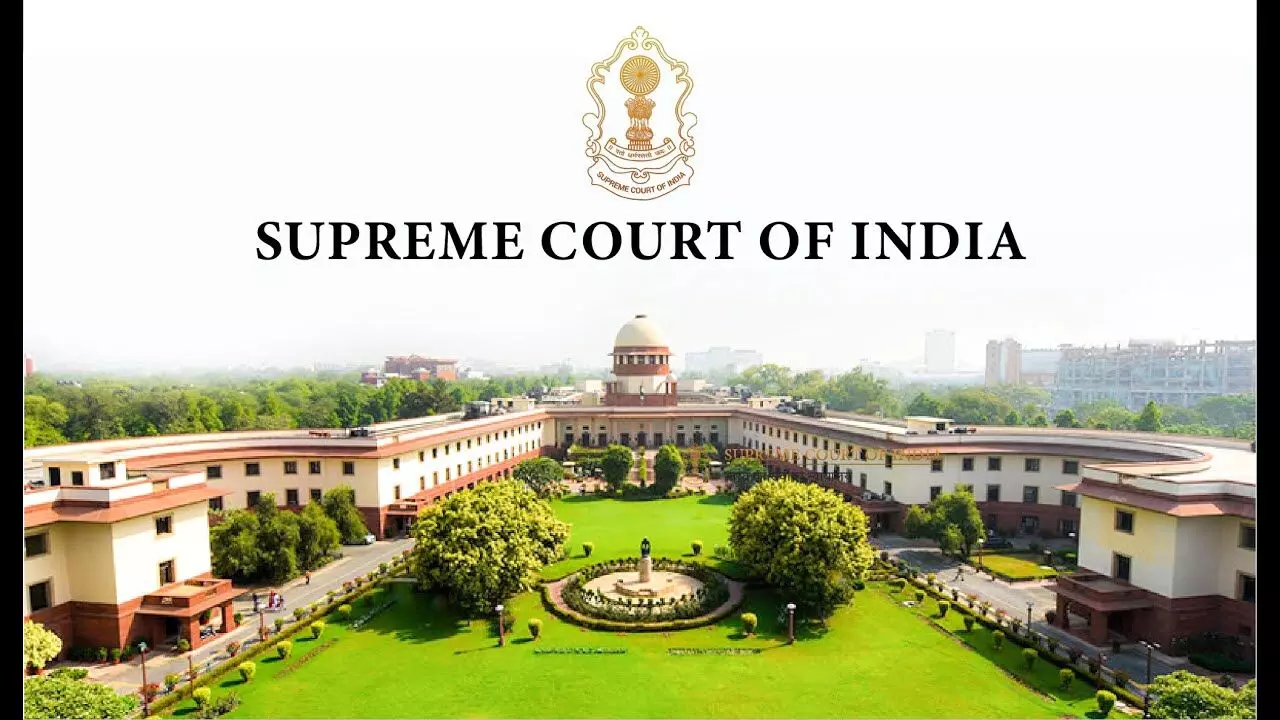
The Supreme Court on Monday granted a day’s time to the union Government to explore and present possible long-term measures to curb the alarming levels of air pollution in Delhi-NCR.
The direction was issued after the Centre sought time to deliberate on a comprehensive strategy to tackle the recurring air quality crisis.
A Bench comprising Chief Justice of India BR Gavai, and Justices K Vinod Chandran and NV Anjaria also asked the union to file a detailed report on the nature and efficiency of the Air Quality Monitoring Stations operating in Delhi-NCR, in view of concerns raised over the accuracy of AQI readings.
During the hearing, Senior Advocate Gopal Sankarnarayanan, appearing for intervenors, submitted that the threshold for “Severe Plus” air quality in India begins at AQI 450 , while WHO standards consider 50 as hazardous, urging the imposition of stricter restrictions, including a year-long ban on construction to reduce pollution levels.
The CJI declined to accept the suggestion, observing that construction work supports the livelihood of a large workforce in Delhi-NCR, and such a blanket ban would adversely impact thousands of families dependent on the sector.
On the contribution of stubble burning in Punjab and Haryana to the pollution crisis, the CJI referred to the measures issued by the Commission for Air Quality Management (CAQM) in its communication dated November 13, 2025, and stated, “If the directions issued by CAQM to Punjab and Haryana are scrupulously implemented, the issue of stubble burning can be addressed to a large extent.”
The Court directed the Chief Secretaries of both states to ensure strict implementation of the CAQM directives.
The Court recorded the submission of ASG Aishwarya Bhatti that the Ministry of Environment, Forest and Climate Change held a meeting on November 11 with the environment departments of concerned states to deliberate on the pollution issue.
The Bench then posted the matter for November 19, directing the ASG to apprise the Court of the Union’s proposed plan of action.
The ASG informed the Court that AQI-monitoring equipment currently in use does not reflect readings beyond 999 and sought directions to the CPCB to file a response regarding the present monitoring infrastructure.
She explained that 83 monitoring stations are operational, including 39 in Delhi. Hourly readings are recorded and the city’s AQI is computed based on the highest 24-hour index.
Pollution hotspots such as Anand Vihar show significantly higher levels as compared to greener zones like Lutyens’ Delhi
Amicus Curiae Senior Advocate Apprajita Singh pointed out media reports and videos alleging that water was being sprinkled around AQI stations to reduce readings artificially.
The ASG rejected suggestions of manipulation and clarified, “Our equipment is among the best in the world. Water sprinkling is part of GRAP-III measures and is being carried out across the city, not just around monitoring stations.”
She added that buildings with more than five floors must now install anti-smog guns, and water sprinkling helps wash tree leaves, improving their ability to absorb pollutants.
The Bench directed, “According to the amicus, the equipment is not suitable for Delhi city. ASG counters that the equipment used is one of the best in the world. The union is directed to place on record the nature of the equipment being used and its efficiency.”
The matter will now be heard on November 19.