Supreme Court Warns AI-Generated Fake Judgments Are Judicial Misconduct, Not Human Error

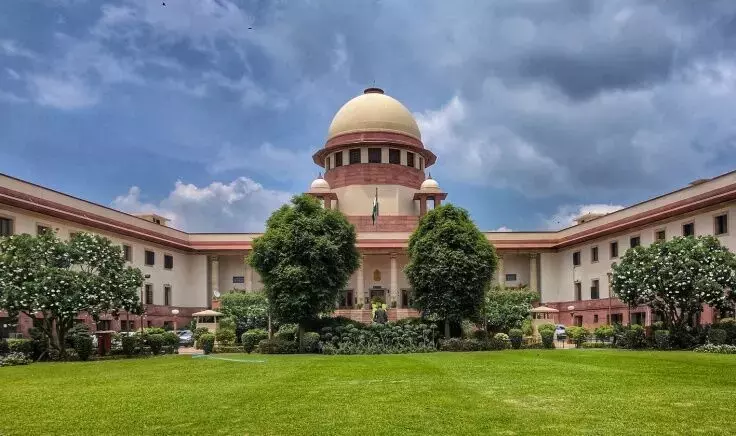
The Supreme Court of India has drawn a firm and unprecedented line against the growing misuse of Artificial Intelligence in the country's courts, declaring that the use of fabricated, AI-generated judgments in legal proceedings will henceforth be treated not as an inadvertent error but as a direct act of serious judicial misconduct — with legal consequences for those responsible.
The matter reached the Supreme Court through a challenge to an Andhra Pradesh High Court order. A trial court in Andhra Pradesh, while rejecting objections to an Advocate-Commissioner's report in a property dispute, had cited several old judgments in its August 2025 order — judgments that, upon scrutiny, turned out to be entirely fictitious and fabricated by an AI tool. When petitioners challenged the order before the High Court, the truth emerged. Although the High Court issued a warning to the trial court, it proceeded to decide the case on merits rather than addressing the deeper integrity issue. The Supreme Court has now stepped in, temporarily restraining the trial court from proceeding further on the basis of the disputed report.
A bench of Justices P.S. Narasimha and Alok Aradhe issued notices to the Attorney General, the Solicitor General, and the Bar Council of India, seeking their responses on the matter. Recognising the gravity of the issue, the court appointed senior advocate Shyam Divan as amicus curiae to assist in examining the systemic implications. The bench made clear that this was not a dispute confined to a single case — it went to the heart of the credibility of India's entire justice delivery system.
The court also expressed deep concern that AI tools are being used rapidly and indiscriminately in judicial proceedings even where they have not been officially sanctioned, significantly undermining the dignity of the legal process.
The problem, the Supreme Court emphasised, is not limited to judges at the trial court level. On February 17, a separate bench headed by Chief Justice Surya Kant had already expressed alarm after lawyers cited a completely non-existent case — referred to as 'Mercy vs. Mankind' — in court proceedings. AI-drafted petitions, including a public interest litigation seeking guidelines on political speeches, have also come under sharp judicial scrutiny.
The court has issued an unambiguous warning: any judge or lawyer who knowingly or recklessly relies on non-existent legal sources — whether generated by AI or otherwise — will face serious legal consequences. The next hearing in the matter is scheduled for March 10.